

Fancy Product Designer is a product designer you install and run yourself: a plugin for WordPress and WooCommerce, and an app for Shopify. Zakeke is a hosted visual commerce platform that adds 3D configuration, AR, Virtual Try-On, Visual CPQ and production-ready files across a wider set of stores. If you sell flat printed products on WooCommerce and want to own the software outright, Fancy Product Designer is the better fit.
Choose Fancy Product Designer when the catalogue is flat printed goods, the store is on WooCommerce or Shopify and nowhere else, and owning the code and hosting the data yourself matters more than breadth.
Choose Zakeke when the business needs 3D configuration, AR, Virtual Try-On, Visual CPQ or production automation alongside personalization, across more than one platform, with a path from self-service to Enterprise.
| Comparison area | Fancy Product Designer | Zakeke |
|---|---|---|
| Core positioning | Self-hosted product designer for WooCommerce, plus a Shopify app | Visual commerce across personalization, 3D, AR, VTO, CPQ and 3D assets |
| 3D configuration | Real-time 3D preview of the customised design | Yes, full 3D product configuration |
| Visual CPQ | Conditional logic and per-option pricing, not a full quote flow | Yes |
| Design to Print / personalization | Yes: this is the core of the product | Yes, with a dedicated Visual Product Customizer |
| AR | Not a documented Fancy Product Designer feature | Yes |
| Virtual Try-On | Not a documented Fancy Product Designer feature | Yes |
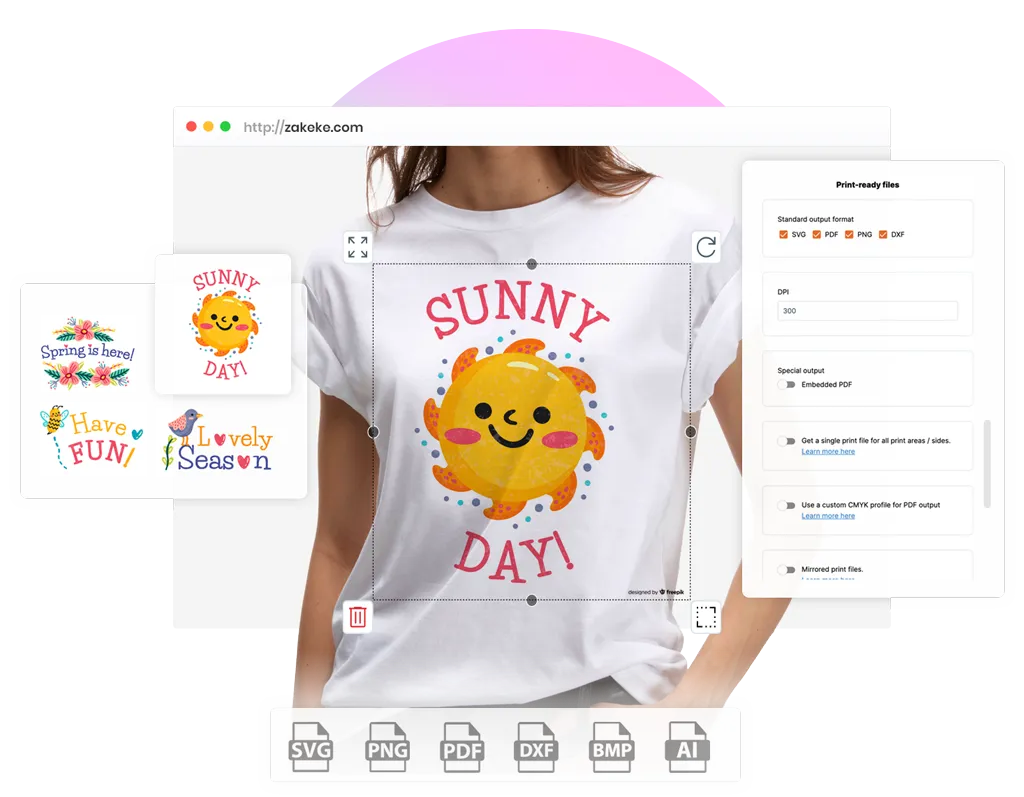
| Production-ready files | Yes: print-ready export with set resolution and colour profiles | Yes: PDF/PNG/SVG/DXF |
| API | JavaScript API in the self-hosted plugin | Yes |
| Enterprise systems | WooCommerce and Shopify, with no ERP/PIM/CRM programme promoted | Native commerce plus API/PIM/enterprise |
| Self-management | Yes: you install it and you run it, updates included | Self-provisioning plus Enterprise |
| Pricing | WooCommerce: one-off licence per site. Shopify: published monthly plans. Checked September 2026 | Published self-provisioning plans plus Enterprise |
The difference is not a single feature. It is who owns the software. Fancy Product Designer on WooCommerce is a plugin you buy once and install on your own site: the code sits on your server, you decide when to update it, and you carry the hosting and the patching. Zakeke is a hosted platform, so the configurator, the 3D rendering, the file generation and the updates run on Zakeke’s side and your store connects through a native integration or the API.
Every other difference on this page follows from that one. A plugin can be deep inside a single design canvas and still have no reason to build AR, because AR needs rendering infrastructure that a plugin on shared hosting cannot provide. A hosted platform carries that infrastructure by design, and charges a subscription for it.
Fancy Product Designer suits a merchant whose personalised range is a defined, stable part of the catalogue: apparel, mugs, cards, signage, engraving, sold from one WooCommerce or Shopify store. The vendor states more than 20,000 customers across its platforms, and the product is built for exactly that shape of business.
Zakeke suits a business where visual commerce is the growth plan rather than a feature: several product categories, more than one sales channel, production that has to keep up, and a roadmap that will eventually need 3D, AR or Virtual Try-On rather than only a design canvas.


A design canvas answers one question: what will my artwork look like printed on this product? Visual commerce answers a longer list. What does the finished object look like from every angle, what does it look like in my room or on my face, what does this combination of options cost, and what file does the machine need to make it.
Fancy Product Designer is very good at the first question. Zakeke is built around the whole list, which is why one account covers 2D personalization, 3D configuration, AR, Virtual Try-On, quoting and production-ready files instead of asking you to bolt four tools together.
Both products export files intended for production. Fancy Product Designer exports PDF, JPEG and PNG, and its Shopify listing states that files come out print-ready with the correct resolution and colour profiles. That covers most flat printing well.
Zakeke exports PDF, PNG, SVG and DXF. The difference that matters is the vector output: DXF and SVG are what a cutter, an engraver or a CNC machine expects. If your production only prints, both are fine. If it also cuts, engraves or routes, vector output stops being a nice extra and becomes the job.

The wording on each vendor’s site is worth reading carefully here. The Fancy Product Designer Shopify listing offers real-time 3D previews for products such as t-shirts, jerseys, embroidery and phone cases. That is a 3D preview of artwork built on a 2D canvas: genuinely nicer than a flat mockup, and not the same thing as configuring a 3D model where the geometry changes, parts swap in and out, and rules decide which combinations can be built at all.
Zakeke does the second kind, and that feeds the quoting side: option-level rules and dependencies drive a price the shopper sees while configuring, which is what Visual CPQ means in practice. Fancy Product Designer does offer conditional logic and dynamic pricing by material, colour, text or graphic, so simple pricing rules are covered. A quote flow for a complex configured product is not.
Neither augmented reality nor Virtual Try-On appears in Fancy Product Designer’s documented feature set, on its own site or on its Shopify App Store listing. That is a statement about scope rather than a criticism: a self-hosted plugin has no reason to run a rendering pipeline.
Commercially it decides two categories. Furniture and home goods, where the shopper wants the object in their room before committing, and eyewear, jewellery and cosmetics, where they want it on their face. If you sell either, this row of the table is the decision and the rest of the comparison is detail.

Fancy Product Designer installs like any WordPress plugin and the vendor states that no coding skills are required. Getting to a working customiser is an afternoon of work if the products are simple.
Zakeke is self-provisioning too: connect the store, configure the products, go live, with no implementation project in between. The difference arrives afterwards. With the plugin you own the WordPress version, the PHP version, the theme conflicts and the security patches. With the hosted platform those stop being your problem, and in exchange the vendor, not you, sets the release schedule.
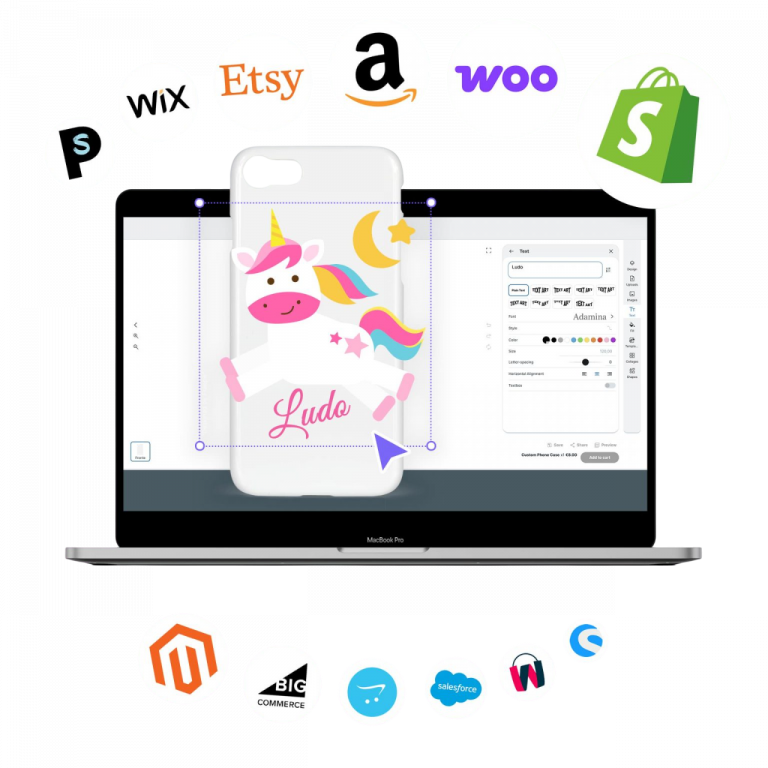
Fancy Product Designer runs on WordPress, WooCommerce and Shopify. Outside those three there is no native path.
Zakeke runs natively on a wider set of commerce platforms and exposes an API for stacks that are not on the list, alongside PIM and enterprise system connections. If you are on one platform and certain you will stay, that breadth is worth nothing. If you run a second store elsewhere, or expect a replatform within two years, it is the difference between one customiser and two, configured twice and maintained twice.

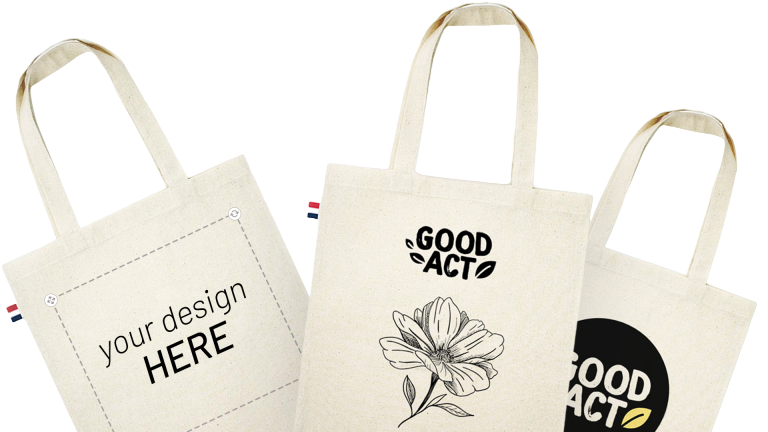
The design file is only the start. Somebody has to get it to production with the order attached, at the right size, in the right colour space, in the right place in the queue.
Fancy Product Designer hands you the file and the order inside WooCommerce or Shopify admin and leaves the routing to you or to whatever you have already built. Zakeke is designed to pass production the finished file with the order data attached, which is the part that decides whether personalised orders scale past the point where a person can check them by hand.

A self-hosted designer keeps its costs flat as orders grow, which looks like an advantage until the manual work grows with the volume: files checked one by one, artwork resized by hand, a spreadsheet holding the queue together. That labour is the real cost of personalisation at scale, and it is invisible on any pricing page.
Zakeke’s argument is not that it is cheaper per month. It is that the file leaves the store already correct and already attached to its order, so growth in volume does not become growth in headcount.
Both products handle the easy rules: this colour only on that material, an embroidered name costs more. The split shows in the hard ones. Rules depending on several options at once, combinations that are impossible and must be blocked before checkout, print areas that change shape when the base product changes, and a bill of materials that has to be right before the file reaches a machine.
That is configuration logic rather than canvas logic, and it is why a configurator and a design plugin remain different categories of product even though the shopper sees a similar screen.

One of the fairest things to say about Fancy Product Designer is that it is an excellent starting point: low cost, quick to install, no commitment beyond the licence. The question is what happens when it works. When personalised products become a real share of revenue, the demands change: a second channel, a production queue too big to check by hand, a customer asking for a configured quote, a marketplace that wants 3D assets. Zakeke’s plans exist so that growth is a plan change rather than a migration.
14-day free trial, standard plans, native ecommerce integrations and a practical route to validate real products quickly.
Product Customizer, 3D Configurator, AR, VTO, Visual CPQ, production automation and 3D asset management as requirements expand.
Tailored architecture and commercial model for complex catalogues, integrations, governance, workflows and larger organizations.
Prices below were checked in September 2026 and either vendor can change them. Fancy Product Designer: the WooCommerce licence is listed at 99 US dollars, one licence per website or domain; the Shopify app publishes four monthly plans, from 30 to 290 US dollars a month, with a 14-day trial. Zakeke: self-provisioning plans are published, with a 14-day free trial, and Enterprise is quoted per account.
The sticker price is not the whole cost on the self-hosted side. A plugin you own also needs hosting able to handle image processing, time to keep WordPress and the plugin current, and someone to fix it when a theme update breaks the canvas. Those are real numbers that never appear on an invoice. Count them honestly in both directions: for a small shop they may genuinely be close to zero.
On the Shopify App Store the app holds 4.8 out of 5 from 47 reviews as of September 2026, and the vendor states more than 20,000 customers across its platforms.
Praise is consistent on two points: support that answers quickly and usefully, and the absence of usage fees. The recurring complaint concerns flexibility in the design canvas, with fixed aspect ratios named as a constraint on what customers can lay out. Read that as a healthy signal for what the product is: a small, well-supported tool that does flat design work cheaply, with the rigidity you would expect from a plugin rather than a platform.
When the entire catalogue is flat printed goods and will stay that way; when the store is on WooCommerce only and no replatform is planned; when order volume is low enough that handling files manually is not a burden; when owning the code and hosting the data is a requirement rather than a preference; and when the budget genuinely favours a one-off licence over a subscription.
When the project needs 3D configuration where the model itself changes rather than a 3D preview of flat artwork; when AR or Virtual Try-On would move conversion, in furniture, eyewear, jewellery or cosmetics; when there is more than one sales platform now or soon; when production needs SVG or DXF rather than only PDF and PNG; when personalised volume has passed the point where files can be checked by hand; and when the vendor, not your team, should own updates and security.
If you sell one personalised product with two options, both are more than you need: a variant with a text field and a clear brief to your printer will do the job for nothing. If your configuration logic lives in an ERP that must stay the source of truth for pricing and feasibility, neither tool should own that logic; you need a configurator that reads your rules, and that is an integration project rather than an app install. And if what you actually need is a design service, because customers want a person to lay out their artwork, no configurator solves that. In that case, start from the wider picture: Zakeke alternatives compared.
Fill in the form to see how brands like yours boost conversions with tailored, hyper-realistic 3D product experiences powered by Zakeke.
For flat print customization on WooCommerce or Shopify, yes. It covers the design canvas, per-option pricing and print-ready export at a low one-off cost. It is not an alternative when the project needs 3D configuration, AR, Virtual Try-On or platforms beyond WordPress and Shopify.
Its Shopify listing offers real-time 3D previews of the customised design, which renders 2D artwork on a 3D shape. That is not 3D product configuration, where the model itself changes as options are chosen.
Neither is listed in its documented features, on the vendor's site or on its Shopify App Store listing, as of September 2026.
The WooCommerce licence is listed at 99 US dollars, one per website or domain. The Shopify app publishes four monthly plans from 30 to 290 US dollars, with a 14-day trial. Checked September 2026.
WordPress, WooCommerce and Shopify. Zakeke integrates natively with a wider set of commerce platforms and also offers an API for custom stacks.
Besides Zakeke, the usual shortlist includes Customily for print-on-demand production files, Kickflip for simple Shopify configuration, and Lumise, another self-hosted WooCommerce designer with a similar licence model. Which one fits depends on whether the need is a design canvas or a configurator.
Yes, and it is a normal path. The catalogue stays where it is, in WooCommerce or Shopify, and the customiser is what changes. The work is rebuilding the customisable products and their rules, not migrating the store.
This comparison is published by Zakeke and is therefore not independent third-party editorial content. It was prepared using current public product documentation, pricing pages and app-store listings, plus third-party review signals where relevant. The competing product is credited where it is the stronger fit, and time-sensitive claims are date-stamped.