

Is Virtual Try-On Worth It?
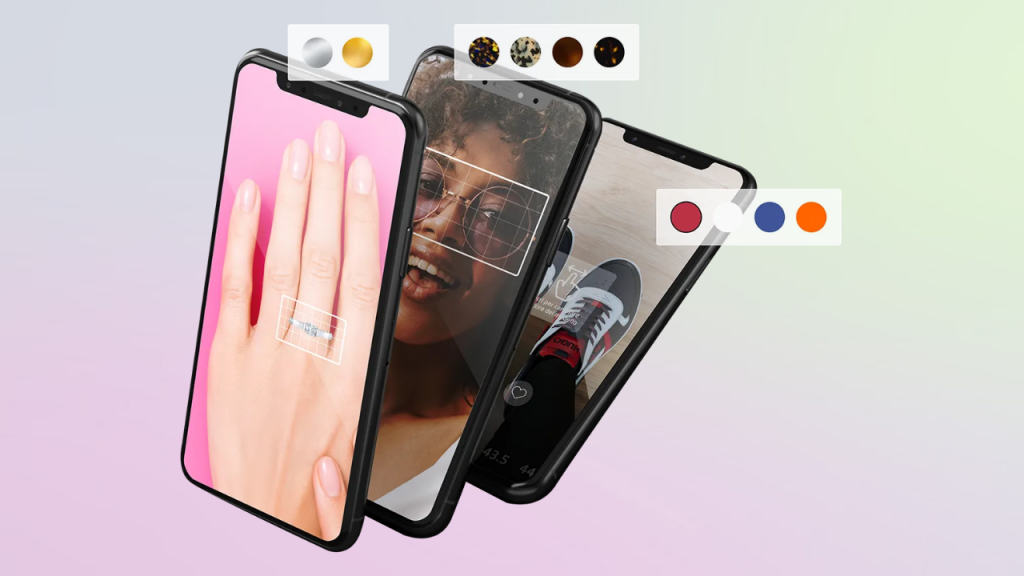
With an increased customer demand for interactive and fun shopping experiences, virtual try-ons have gained sizable attention. But, is it worth it? This article helps you understand what a virtual try-on is, the benefits and downsides of using it, if it’s safe to use, and the best way that you can create one for your business. What Is A Virtual Try-On? Virtual try-on is a game-changer for eCommerce. Think of it like bringing the dressing room experience right to your customers’ screens. It typically involves the use of augmented reality (AR), artificial intelligence (AI), and/or 3D modeling to superimpose digital representations of products onto images or live video feeds of the user. Customers can then see how the products would look on themselves in real-time or through uploaded photos. It is particularly prevalent in industries such as fashion, cosmetics, eyewear, and jewellery, where the fit and appearance of products are important factors in the purchasing decision. Take clothing, for instance. With virtual try-ons, customers can see how different styles and sizes fit their body shape without ever setting foot in a store. That means fewer returns due to sizing issues and happier customers overall. But it’s not just clothes and online boutiques. Virtual try-on works wonders for things like makeup, eyewear, and even furniture. Customers can see how a lipstick shade complements their skin tone or how a pair of glasses suits their face shape — all without leaving their couch. Why To Use Virtual Try On? Imagine this: your customers can see how that cool jacket or those sleek sunglasses will look on them before hitting that buy button. That’s like having a personal stylist right in their living room! When shoppers feel confident about their choices, they’re more likely to make the purchase. And happy customers mean more sales for you! Returns can be a headache, right? But with virtual try-on, you’re giving your customers the power to make informed decisions about size and style. That means fewer returns for you to deal with – saving time and money in the long run. Virtual try-on isn’t just about selling products; it’s about creating an experience. It’s like bringing the fitting room to your customers’ devices! When shoppers can interact with your products in a fun and personalized way, they’re more likely to come back for more. In a sea of online stores, standing out is key. So, imagine scrolling through your social media feed and seeing a friend trying on the latest fashion trends virtually. Pretty cool, right? It’s not just fun – a virtual try-on is smart marketing too. By showing off this tech on platforms like Instagram or TikTok, you can create buzz and get people talking. You could promote virtual try-ons as a QR code in a billboard or print ad. Using any reliable QR code generator, you can create QR Codes for a virtual-try experience, simplifying the process for shoppers but also adding a touch of convenience and innovation to their shopping journey. Such campaigns let your target audience try out your product for themselves! It sets your brand apart from the competition. Virtual try-on isn’t just about making sales; it’s also about learning what your customers want. By analyzing data on usage and feedback, you can fine-tune your offerings and marketing strategies. It’s like having a crystal ball in your customers’ minds! How Do I Create A Virtual Try On? Zakeke offers a Virtual Try-On tool for you to allow customers to virtually try on your products before making a purchase. It uses WebAR technology to deliver hyper-realistic detail on any device, without the need for any downloads. This technology can be integrated across platforms using QR codes, links, or iframes. For eyewear shopping, Zakeke offers an AI-driven scale technology that accurately measures head size. The Pupillary Distance tool simplifies the calculation of pupillary distance by fitting the head in an on-screen frame. Customers can design their perfect eyewear, hats, jewels, or glasses and instantly try them on their faces via the website. This technology leverages runtime 3D models, providing customers with a fully customized experience. The best part is that this tool can be seamlessly integrated with all eCommerce platforms. Is Virtual Try-On Safe? Virtual try-on can be safe if you take solid steps to keep customer data safe and respect their privacy. The first step is to ensure that the virtual try-on features respect the privacy and intellectual property laws in your jurisdiction. Privacy laws in the AR/VR space are still evolving despite recently introduced laws like GDPR in Europe. As such, while using robust tools like Zakeke can keep eCommerce stores and their customers safe from a cybersecurity standpoint, it is important to make sure that you are not sidestepping potential privacy issues. As a business, here are some things to ensure you are not compromising the privacy of your users while deploying virtual try-on technology: Use plain language to communicate this with your customers so they know exactly what they’re agreeing to. And hey, you should give them the option to say no if they’re not comfortable. To make customers feel sure that nobody’s messing around with their virtual try-on session, you should have solid ways of checking that it’s them. Think of stuff like double-checking their identity and making sure only the right people can see their info. Before you start taking pictures or videos of your customers for virtual try-ons, you should ask for their permission. They should be able to say yes or no, with no questions asked. What Are The Challenges Of Virtual Try On? Unless you’re using a third-party tool like Zakeke for providing a virtual try-on experience to your customers, setting up virtual try-on tech can be a bit tricky and might take some serious investment in software and tech know-how. Sometimes, what you see in a virtual try-on isn’t exactly what you get in real life. That could lead to some disappointment for customers if things don’t match up, leading to an
Zakeke Joins NVIDIA Inception Program

It’s official: We’ve joined NVIDIA Inception, an exclusive program designed to foster a select group of startups worldwide at the forefront of industry innovation. As a leading SaaS company in the Visual Commerce field, we’ve always aimed to revolutionize the way customers interact with brands, empowering merchants with advanced tools for live product personalization, advanced 3D visualization, and immersive Augmented Reality and Virtual Try-On experiences. This new partnership with NVIDIA Inception is a testament to our commitment to pushing the boundaries of innovation. Since our founding in 2017, Zakeke has grown to support over 10,000 global customers across more than 400 sectors in over 200 countries. Our diverse client base includes major fashion houses like Colmar and Testoni, tech giants such as HP, and eco-conscious brands like Ecocup, showcasing the wide applicability and demand for our solutions. This new synergy, leveraging access to resources from NVIDIA Inception such as technical training and NVIDIA’s top-tier hardware and software, together with our innovation, will empower us to accelerate our growth. This collaboration will enhance our platform’s development and the introduction of new AI-based features, further elevating the customer experience and simplifying internal processes for merchants. “We are highly enthusiastic about this new synergy with NVIDIA. By blending the technology and expertise from NVIDIA Inception with Zakeke’s architecture and innovation, we are confident we can accelerate our platform’s development and enhancement, focusing on maximizing AI’s power to offer an unparalleled customer experience.” said Angelo Coletta, CEO & Co-Founder of Zakeke. “I believe this opportunity is a crucial step for Zakeke and will serve as a strong foundation for reaching new heights and leading the most innovative revolution in shopping as the go-to, all-in-one Visual Commerce platform globally.”
Virtual Ring Try On Experiences: The Future Of Jewelry E-Commerce

What if you could bring a jewelry showroom home? With today’s technological advancement, it has become a reality. In the dynamic world of eCommerce, brands need to keep up with technological advancement and customers’ expectations. And customers crave personalization and interactive experiences like the ability to try items on from the comfort of their homes. In this article, we will take a look at the state of jewelry e-commerce today, especially at what Augmented Reality has to offer for jewels online shopping, developing technologies like virtual try on jewels and virtual ring try on. The Rise of AR & Virtual Try On in Jewels E-Commerce Nowadays, almost anything can be bought online, and jewelry is no exception. The value of this market is predicted to hit $31.9 billion by 2025. As technology evolves, online shopping brings the purchasing experience closer and closer to what customers get in brick-and-mortar stores. There is nuance to it, however. While some product categories have a better time selling online, others require additional efforts to be as appealing to the customer’s eye. With jewels, especially with rings, the issue lies in visualizing the final look of the piece on the customer’s hand. Rings vary in size and shapes, and even with complex 3D product visualization tools, it can be difficult to imagine how a ring would look when on a finger. This is where Virtual try-on comes into play. This software applies a meticulously generated model over the customer’s hand captured on camera. The ring size is adjusted to match the size of the hand, and the customer gets an accurate representation of the size, shape, color, and position of the jewelry piece. The cohort of AR try-on users is, to little surprise, led by Gen Z. In 2024, the earliest zoomers are old enough to consider marriage, and this is when not one, but two sets of precious rings are required. This is a good chance to leverage the power of augmented reality features for ring sales online. How Exactly Virtual Ring Try On Works Most jewelers offer this service on their dedicated websites or in mobile apps. To try on a ring virtually, the user begins by uploading a clear photo of their hand or selecting a hand model that closely resembles yours. Some virtual try on app like Zakeke’s Virtual Try-On and Banuba’s TINT, Zakeke’s Partner, offer virtual try-on on a live camera input. This way, no photos are required, and a ring can be previewed on the user’s hand in real-time and in motion. Then, using innovative technology, the website or app overlays images of different rings onto the user’s hand, allowing them to see the jewelry from various angles and perspectives. After choosing a ring from the catalog in the store, customers can see how it looks on their hand, compare it with other options, and share pictures or save their favorites for later. The interface is made to give a realistic preview of the ring, considering things like size, shape, and gemstone brightness. A good example of this technology in action is wedding and engagement ring retailers like James Allen. The company features the virtual ring try on functionality in their app where users can preview a catalog and envision the piece of their choice on their fingers. Ciella & Co. allows users to preview up to two rings on a pre-set hand image or upload a photo of their own. This helps the brand ensure customer satisfaction and, consequently, secure the sales. 5+1 Benefits AR Jewels Can Bring To Your Business Rings are the type of jewelry that require accurate visualization and are extremely unpredictable when it comes to trying them on due to factors like varying virtual ring sizes, different hand shapes, or the need for precise fit and style. Unlike other jewelry items, rings must fit comfortably and securely, so customers need to be able to accurately visualize how they will look and feel before making a purchase. Think about an engagement ring. The fear of getting the wrong size or not choosing the most suitable one is great. A virtual engagement ring try on app could be the solution to solve this problem. Let’s see why introducing Web AR try-on technology to ring eCommerce can offer several benefits for both customers and businesses! 1. Enhanced Customer Experience AR try-on technology allows customers to virtually try on rings from the comfort of their own homes. This immersive experience enhances engagement and satisfaction by providing a realistic preview of how the ring will look on their hand without the need to visit a physical store. This is especially relevant when shopping for engagement and wedding rings: this type of jewelry is typically worn regularly, and it is only natural to want them to look and fit perfectly. 2. Increased Confidence in Purchase Decisions Whether precious or not, for weddings or for everyday looks, seeing how a ring appears on their hand through AR can help customers feel more confident in their purchase decisions. They can visualize how the ring will complement their style and fit with their other jewelry before committing. 3. Reduced Return Rates Just like virtual try-on in fashion, also virtual ring try on can help businesses reduce the likelihood of returns due to sizing or style preferences. Customers are more likely to be satisfied with their purchase when they have a clear understanding of how the ring will look and fit before buying. 4. Personalization and Customization Virtual try-on is a great way to implement also product customization and personalization options for rings. Matching AR with ring design can be crucial for improving conversions. Just think about it: customers can experiment with different metals, gemstones, and design elements to create a ring that truly reflects their individual tastes and preferences and then immediately try-on it virtually from their screens! This technology goes beyond mere aesthetics: hyper-realistic visualization and AR enable customers to instill sentimental value in their rings by adding meaningful symbols or
How to Optimize Printing Fulfillment for E-commerce Success
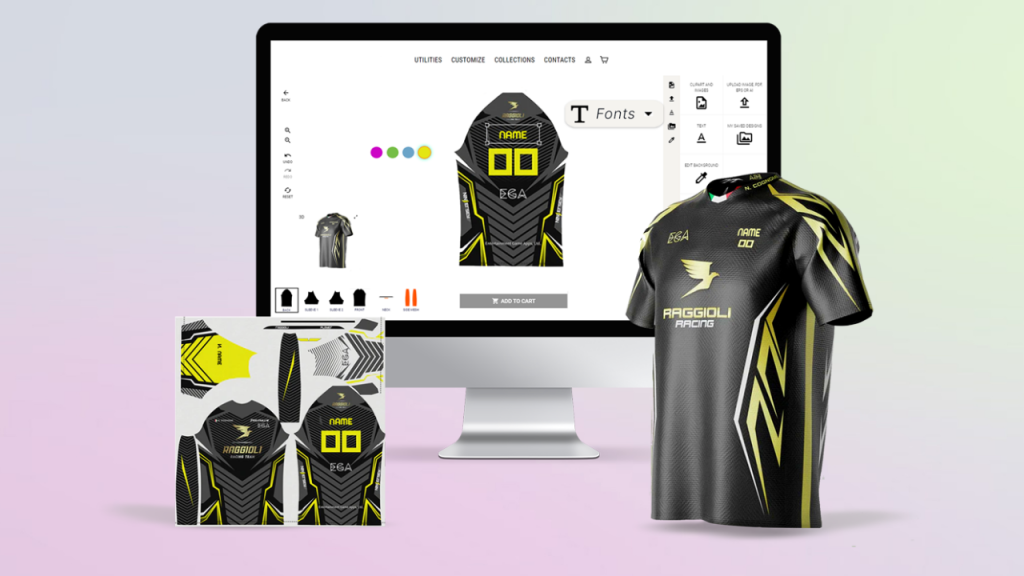
The e-commerce industry is undergoing an enormous metamorphosis, moving from a domain dominated by mass production to a bustling forum for customized engagement. Before you start exploring every aspect of optimization, it is important to understand why optimization is such a sensitive yet one of the most crucial components while working to build a successful e-commerce business. Enhanced customer satisfaction, streamlined processes, and a competitive advantage in the market are all directly correlated with optimized printing fulfillment. Deliveries that are on time and free of errors enhance customer loyalty and brand reputation. The increasing demand for customized printed items might be caused by the need of modern consumers for distinctive products that align with their own definition of innovation. These products address the rising need for self-expression and a feeling of ownership, whether it’s a phone cover with a customized artwork design or a t-shirt embroidered with priceless memories. Nevertheless, mastering the complex art of printing fulfillment is essential to establishing a successful e-commerce business centered around individualized products. This complex process, which is frequently an invisible hand, is what makes a customer’s imaginative vision a reality; it necessitates careful planning, astute alliances, and ongoing optimization. The integration of cutting-edge technologies is the foundation of printer fulfillment optimization. The integration of cutting-edge technologies is the foundation of printer fulfillment optimization. Purchasing cutting-edge printing supplies and implementing cutting-edge methods can greatly increase the printing process’s efficiency, accuracy, and quality. Using high-resolution printing and investigating eco-friendly material possibilities are just two ways that keeping up with technical changes may keep your company at the forefront of the personalized product industry. Without any further delay, let us delve into the details of printing fulfillment. Printing Fulfillment: An Explanation Printing fulfillment within an e-commerce business involves the intricate process of transforming digital designs or customer orders into physical, personalized products for shipment. This is particularly essential for businesses specializing in customizable products such as clothing, accessories, and various merchandise. The journey from a customer’s order to the delivery of a tangible, customized product encompasses several crucial steps: 1. Order Placement The Order placement process initiates when a customer places an order on the e-commerce platform, selecting personalized options or uploading specific designs. Information, including the chosen design, product specifications, and shipping details, is collected during this phase. 2. Order Processing Then there is order processing. Once an order is received, the e-commerce system processes the information and forwards it to the printing fulfillment center. Order processing involves validating the design, checking inventory, and initiating the production workflow. 3. Design to Product After the initial stages, the process of digital design to physical product is started. The digital design provided by the customer undergoes translation into a physical product using various printing techniques, such as screen printing, digital printing, or sublimation. Advanced printing technologies ensure high-quality and accurate reproduction of the customer’s design. 4. Quality Control The paramount component of printing fulfillment is quality control. Rigorous quality control measures are implemented at different stages of production to ensure the final product meets or exceeds customer expectations. Inspections may include checking for color accuracy, print alignment, and overall product quality. 5. Order Packaging Following successful quality control, the product moves to the packaging stage. Packaging is carried out with care, often including branded materials, and may involve adding promotional items or personalized touches to enhance the unboxing experience. 6. Shipping and Logistics Shipping and logistics are the holders of the gleaming spotlight after the packaging has taken place. The packaged product is then handed over to the logistics team for shipping. Shipping options chosen by the customer during the ordering process are applied, and the product is dispatched to the designated address. Last but not least comes the delivery, this final step involves the product reaching the customer, who can then enjoy their personalized item. Tracking information may be provided to keep the customer updated about the delivery status. In addition to these steps, there are certain aspects of printing fulfillment in a successful e-commerce business. For instance, printing fulfillment is vital for businesses offering customizable products, enabling customers to add a personal touch to their purchases. Streamlining the printing fulfillment process is crucial to meet customer expectations for quick turnaround times while maintaining high-quality standards. In addition, rigid quality control ensures that the final product meets specified standards, minimizing errors and enhancing customer satisfaction. Moreover, e-commerce businesses often integrate their platforms with printing technologies to automate order processing and reduce manual errors. In essence, printing fulfillment in an e-commerce business serves as the link between digital creativity and tangible, customized products. It necessitates a combination of advanced technologies, efficient workflows, quality control measures, and strategic partnerships to provide customers with a seamless and satisfying experience from order placement to product delivery. Challenges in Printing Fulfillment As much as printing fulfillment sounds like an impressive fascination, thousands of challenges dwell behind it. These include: For companies hoping to give their clients a dependable and flawless printer fulfillment experience, recognizing and resolving these issues is essential. Overcoming these challenges and improving overall operational efficiency can be accomplished through the development of strategies, technology investments, and strategic alliances. Why It Is Important to Optimize Printing Fulfillment Even though printing fulfillment seems simple, it needs to be optimized if you want to succeed in the e-commerce space, especially if you sell bespoke printed goods. This is the reason why: There’s more to optimizing printing fulfillment than just product delivery. It’s about giving your customers a flawless and satisfying experience, developing a solid brand identity, and setting up the foundation for long-term success in the dynamic world of e-commerce. And this helps in shaping your ideas into a 3D model. Optimizing Printing Fulfillment: Main Steps Learning the art of printing fulfillment is essential in the dynamic world of e-commerce, where customized products are king. The unseen force is responsible for bringing customers’ ideas to life and creating a smooth, satisfying experience that increases brand loyalty and propels business success.
10 Advantages of Creating 3D Catalogs for E-Commerce
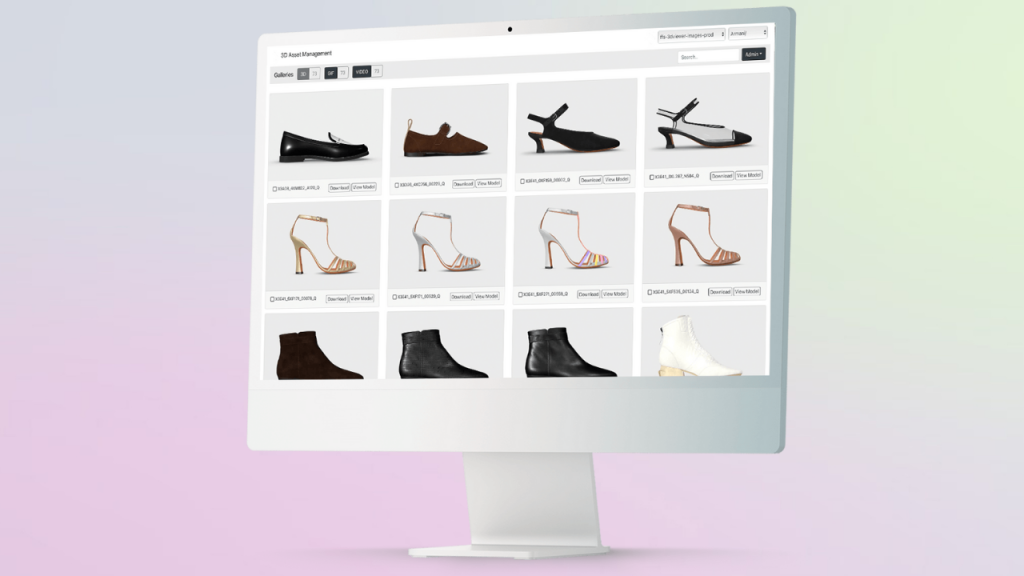
E-commerce businesses have a wealth of tools these days to better serve customers, and attract new ones. One of the most innovative pieces of tooling that you may not be trying yet is the 3D catalog, which can easily be incorporated into ecommerce websites. 3D experienceis revolutionizing the e-commerce world and it’s definitely time to embrace the 3D revolution! Learn about the ins and outs of the 3D catalog and the numerous benefits you can expect to enjoy when you dive into this new shopping frontier. Understanding the 3D Clothing Catalog A 3D catalog transforms static images and standard product descriptions to revolutionize the shopping experience. With 3D modeling, customers can interact with digital products listings in unprecedented ways. They can zoom in to inspect textures and seams and view items from all perspectives, creating an immersive and engaging experience. By offering a preview of their products in 3D, businesses provide consumers with a detailed understanding of each item, bridging the gap between online and in-store shopping — which is critical as retailers’ in-person capabilities shrink with the skyrocketing increase in storefront rent. 10 Benefits of Going 3D With Your Catalog Let’s talk about 10 advantages you may get the chance to enjoy if you develop a 3D catalog. Allows Customers to See How Products Will Look on Them Think of 3D catalogs as being like online changing rooms, better than any ordinary website experience they would have. After all, when a customer goes to a regular website, they’ll maybe just get some basic two-dimensional photos of models, with no chance to customize or see themselves with the products. However, when a prospective customer goes to a website with a 3D catalog, they’ll be able to see products from every conceivable angle, with the chance to zoom in and out. They’ll also be able to input their measurements and personal characteristics like skin tone to see exactly how an item will look on them. This level of product visualization is critical to building a great customer experience in the digital age. Valuable Conversion Tool for Ecommerce Businesses can invest enormous amounts in SEO or paid advertising to get prospective customers to their websites. But that’s only half the battle of earning a person’s business. You still have to get them to buy. A 3D catalog is a terrific way to help guide someone through the buyer’s journey. Instead of just getting information from a retailer or brand’s website, they’ll get a personalized experience that can translate to a higher likelihood that they will do business. New Way for Customers to Engage It hasn’t always been easy in recent years for clothing businesses to attract customers. A business has to do a lot to earn a sale, whether it’s in person or online. Creating a 3D catalog provides another way to reach customers in good times or bad. These catalogs give customers an avenue to find a clothing retailer or brand and engage with it as they’re comfortable. Engagement can mean different things, too. It will be easier to get a customer through the virtual door the first time by having a virtual catalog. It might increase the time they spend on an ecommerce website. And it can also boost the likelihood of a customer visiting a physical location of a store, if they can first virtually try on a few items without feeling pressure. More Sustainability 3D catalogs boost sustainability in e-commerce by significantly reducing product returns and eliminating waste from unsold stock and samples. This approach allows customers to explore products in detail virtually, leading to more informed purchasing decisions and fewer returns. Additionally, by negating the need for physical samples, 3D catalogs prevent the accumulation of unsold goods, aligning with eco-friendly practices by minimizing waste. This sustainable model not only benefits the environment but also enhances operational efficiency for businesses, marking a significant step forward in responsible e-commerce. Easily Shareable Resource Every business would love to get word-of-mouth referrals. When people hear about a company or a solution from someone they trust, they’re more likely to take action and become lasting customers. With 3D catalogs, customers have a chance to instantly create referrals for businesses. At the push of a button, customers can share a link to a 3D catalog. Customers can quickly and effectively help get the word out about the awesome garments that are available through these resources. In enabling these types of catalogs, businesses create shareable resources for their customers. And businesses effectively create a means of generating referrals at scale. It’s a valuable and efficient means of advertising. No More Samples & Photoshoots 3D catalogs are transforming the way products are presented, markedly decreasing the reliance on physical samples and conventional photoshoots. These digital solutions enable businesses to showcase hundreds of product variants in 3D, offering a lifelike, interactive experience that traditional photography simply can’t match. This innovation not only significantly reduces costs associated with producing and photographing samples but also accelerates the go-to-market timeline, allowing companies to efficiently present an extensive range of products to potential buyers with ease. As a result, 3D catalogs are becoming an indispensable tool for businesses looking to enhance their product visibility and appeal. Easier Upsells and More Return Business We believe that customization is the secret to retention. After all, Forbes noted that 46% of customers will purchase more when served personalized experiences. It’s easy for businesses to grab intent data from 3D catalog interactions. When they know what items certain visitors are interested in, they can recommend related garments or items that are actually suited for them — thus increasing that all-important personalization. Creating personalized experiences can build trust and loyalty. A customer will know that every effort is being made to give them a unique and tailored (no pun intended) visit to their virtual store. They’ll be treated as a unique individual rather than someone being given a one-size-fits-all approach. Fewer Returns Returns plague retailers, with the National Retail Federation noting that for every $1 billion
How to Reduce and Improve Customer Churn Rates: 5 Solid Strategies

Attracting new customers is always an essential part of any business strategy. Retaining them is equally important, yet arguably, this is more difficult. Businesses across the globe continually grapple with the challenge of customer retention, where the difference between growth and stagnation often hinges on the ability to minimize churn rates. While customization in marketing enhances the customer experience and promotes brand loyalty, other solid strategies can complement this approach. In this article, we discuss 5 methods that can help make sure that your customers are here to stay. Why Customer Churn Matters Simply put, customer churn can be described as the process by which customers cease doing business with a business. There will always be an organic level of customer churn, this is natural. However, when rates rise above this level the effects of customer churn can have a major impact on a business. Not only is this reflected in the sales figures, but it also increases marketing and acquisition costs as businesses are forced into replacing lost customers. Here are some key points to help you understand customer churn and its importance: Managing customer churn is a critical part of any successful business strategy. Let’s examine some of the actionable strategies that can help achieve this. Reducing and Improving Customer Churn: Proven Strategies Lowering customer churn rates is essential for the long-term health of a business. There is a finite number of potential customers and unless you are incredibly lucky, there will be plenty of competitors all vying to attract and retain their custom. Against this backdrop, the importance of solid strategies to improve customer churn rates is immeasurable. Here we examine actionable methods that can help to achieve this: 1. Personalize the Customer Experience The shift to a digital marketplace can leave customers feeling more like a faceless number than a valued client. This is where personalization is critical. Tailoring experiences to meet individual customer preferences can ensure customers feel valued, directly impacting churn rates. Key points to consider: 2. Utilize Data to Understand Customer Needs The sheer quantity of data at a business’s fingertips is growing exponentially. This makes it an incredibly powerful business asset that – when fully utilized – can play an essential role in reducing churn. By understanding customer behaviors, preferences, and feedback, companies can make informed decisions that significantly improve customer satisfaction and loyalty. Here are some of the key points to consider when unlocking the potential of “big data”: 3. Enhance Data Security to Build Trust Of course, with data being such a valuable asset it is also attractive to cyber criminals. The importance of this in customer churn might not be immediately apparent but the ramifications on churn rates of a data breach can be substantial. According to the National Security Institute (NSI), abnormal customer churn rates as a measurable result of a data breach can be as high as 9%. Here are the key points to consider: 4. Enhance Customer Support The quality of customer support has a direct bearing on churn rates. Offering exceptional support not only reduces issues quickly and efficiently but – in doing so – directly demonstrates a company’s commitment to its customers. Among the factors to consider when focusing on your business’s customer support strategy are: 5. Offer Flexible and Innovative Solutions Standing out from the competition (for the right reasons!) can be a key differentiator that can significantly reduce customer churn rates. One way to achieve this is to offer customizable solutions that continually evolve as customers’ needs and preferences change. Among the strategies that can help are: The Path to Reduced Churn: Strategies for Lasting Success Each of these strategies can help to reduce churn rates. However, when integrated into a cohesive strategy the results can be staggering. By personalizing experiences, ensuring data security, enhancing support, and offering innovative solutions, businesses not only reduce churn but also cultivate a vibrant community around their brand, where customers feel valued and connected. Srushti Shah Digital Marketing Expert Srushti Shah is an ambitious, passionate, and out-of-the-box thinking woman having vast exposure in Digital Marketing. Her key focus is to serve her clients with the latest innovation in her field leading to fast and effective results. Working beyond expectations and delivering the best possible results in her professional motto. Other than work, she loves traveling, exploring new things, and spending quality time with family. Reach out to Srushti Shah on X or LinkedIn.
Zakeke Shines Once Again as a Leader in the G2 Spring 2024 Reports
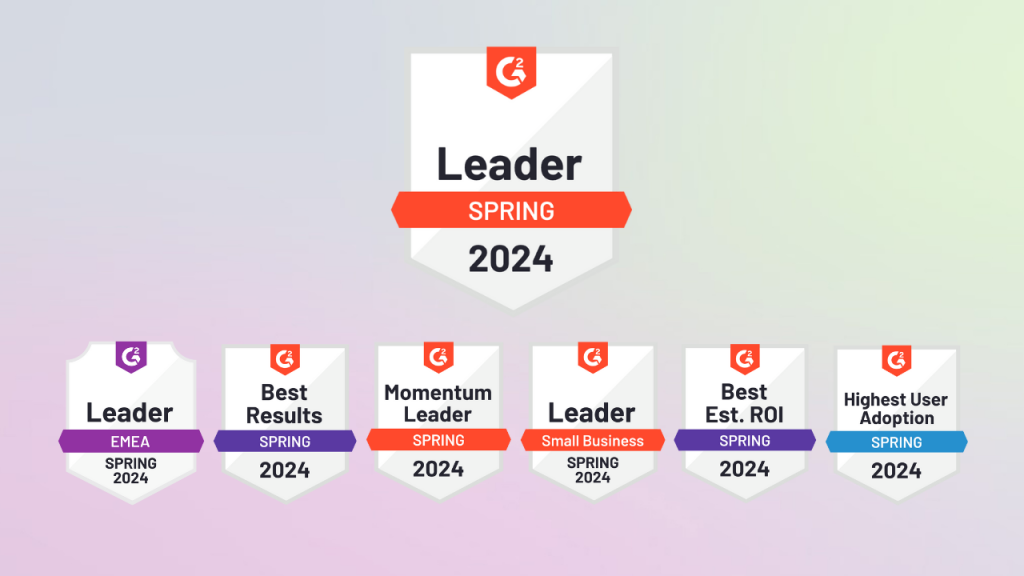
Fresh from G2 – The Spring 2024 Reports are finally in, and Zakeke shines for the 6th consecutive season as a Leader in Visual Commerce, racking up 10 badges across Product Customization, Visual Configuration, and AR Visualization. Big thanks to our incredible customers for being the backbone of our success! Your constant support and insightful feedback inspire us to keep improving. Dive into the G2 Spring 2024 Reports to see how Zakeke stands out. Reaffirmed Leadership: Exelling in Visual Customization, Visual Configuration and AR Visualization Once again, Zakeke shines as a leader in the G2 Grid® Report across categories like Visual Product Customization, Visual Configuration, and AR Visualization. Zakeke is at the forefront of e-commerce innovation, reshaping the online shopping experience with its cutting-edge Visual Commerce technology. By integrating 2D, 3D, Augmented Reality, and Virtual Try-On, Zakeke enhances Customer Experience, meets consumer demands, and achieves impressive results. Furthermore, Zakeke maintains its status as a leading force in Visual Customization for Small Businesses. With a commitment to helping startups and small businesses thrive, we emphasize innovation and automation to spur growth. Again at the Top: EMEA’s Leader and Momentum Leader For the 3rd season in a row, Zakeke has proudly earned the following distinctions: Highest User Adoption, Best Est. ROI, Best Results This season, Zakeke has won more top awards: Discover Zakeke’s quick and user-friendly platform, designed to easily fit with your eCommerce system. Ready to see significant improvements quickly? Try Zakeke’s 14-day free trial and for deeper understanding, schedule a free 10-minute demo!
Guide To 3D eCommerce: The Future of Shopping is Here
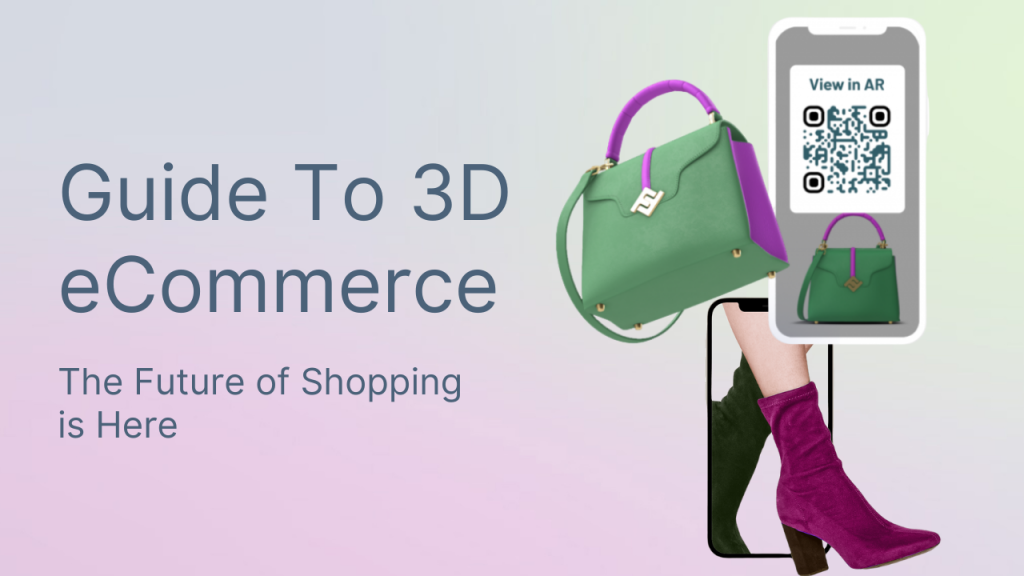
The way of shopping is changing. From in-store purchases, we moved on to online purchases. The rapid development of new technologies affects the way customers shop. Customers prefer to shop online, within a few seconds. However, the online experience must be high quality: customers are looking for immersive and innovative shopping experiences that are no less than the in-store experience. This is where a range of new technologies come into play, allowing merchants to enhance their store’s experience: just think about 3D visualization. Welcome to the world of 3D eCommerce, now an established trend that all merchants should embrace to keep up and stand out. Let’s dive deep into the topic. What is 3D Commerce? The Definition 3D eCommerce is the new way of shopping. Here 3D models integrate with augmented and virtual reality experiences to show the customer a graphic and interactive representation of the product. It is a pleasant consequence of visual commerce. Most online buyers base their choices on graphical representation. 3D technology allows customers to get in touch with the product, exactly as it happens in-store. It offers a new way to interact with products. Customers can view them from any angle, rotate them, zoom in and so on. They can do everything they would do in real life. It is a bridge between in-store experience and online shopping. Customer engagement and interactivity are not the only aspects positively influenced by 3D models. It has been shown it increases eCommerce conversion rates and sales. 3D is the (current) future of eCommerce. Before there was shopping. Then came the Internet and online shopping. Now is the time for 3D eCommerce. Moving from simple product photos to high-quality three-dimensional models is a trend retailers cannot ignore. This is especially true if market research reveals that consumers prefer to interact with 3D models, even through augmented reality technology. A study by Shopify reveals conversion rates increase by up to 250% on product pages with 3D models and AR technology. The Importance of 3D Models: Challenges & How-To The first step to embracing the world of 3D eCommerce? Naturally, having 3D models! And how does one create 3D models of their products? How to turn 2D images into photorealistic 3D models? There are three ways to create 3D images: According to Deloitte, many retailers have found a surprise benefit to investing in 3D models of their products: significant cost reductions for product catalogs and prototyping, compared to using physical models and photography. Accordingly, there is a raising demand in remote 3D artists positions. For making high-quality 3D models, you need to allocate financial and human resources if you want to manage the entire process internally. However, you may not have all the required skills and resources. That’s where a SaaS company comes into play. In this case, a tool like Zakeke can assist you. We offer a 3D Digital Asset Manager, a centralized platform for easy creation, storage, management, and collaboration on 3D assets. Businesses can transform 2D images into 3D, manage large 3D catalogs, and make bulk changes efficiently. It also supports creating 3D GIFs and videos for marketing, seamlessly integrating assets across channels, all with no need for IT expertise. Making 3D accessible for all, what more could you ask for? Why is 3D eCommerce Important? In a recent report, Deloitte wrote: “The pandemic rapidly changed our behavior toward online channels, and the shifts were evident. While many companies were challenged to survive in the short-term, the crisis also presented an opportunity; bold companies that invested ambitiously and timely in their online business were likely to emerge as market leaders. Companies that invested courageously and timely in pivoting their businesses toward the behavioral changes were able to capture market share and emerge as market leaders post-pandemic.” By 2026, multi-generational consumer groups will demand a 3D retail experience. The spread of the Internet and smartphones with Augmented Reality capabilities will lead customers to completely abandon traditional shopping in future. This is one of the reasons why you should choose 3D eCommerce today. What is the first thing you do when you walk into a store? Looking at a product. It is the same in online stores. Humans are oriented by sight. 90% of the information the brain processes is visual. The higher the quality of the image, the higher the conversion rate and customer satisfaction will be. Whatever business you’re carried out, the fixed point is always the customer with his wishes and needs. According to Marketing Land, internet users expect to find more and more images in the product sheet of an e-commerce. If until three years ago people were settled for an average of three product images, today the number is eight. This means that people are increasingly looking for eye contact with what they want to buy online. Eye contact is even more important online, as the senses of touch, taste and smell are absent. Visual content works best for remembering. People tend to remember 80% of what they see or do versus only 10% of what they hear and 20% of what they read. 67% of consumers say high-quality visual content is more important than product description or customer ratings. What Are The Benefits of 3D Models for eCommerce? What are the key benefits of 3D online shopping? 3D Shopping Experience: All The Applications What can you really do with 3D commerce? Here are some ideas: And these are just a few ideas, are you ready to embrace the 3D revolution? Best Product Categories for 3D eCommerce 3D and AR shopping is not just seeing an object in your room but being able to view every single detail. For example, the size can be the most important point for a piece of furniture, while the brightness of the color for a dress. Credit – Deloitte Although some products are perfect for 3D eCommerce, it can fit any product category: Home goods and furniture: 3D and AR are becoming a standard in the furniture industry and customers
Full Guide On Augmented Reality Jewelry For E-commerce
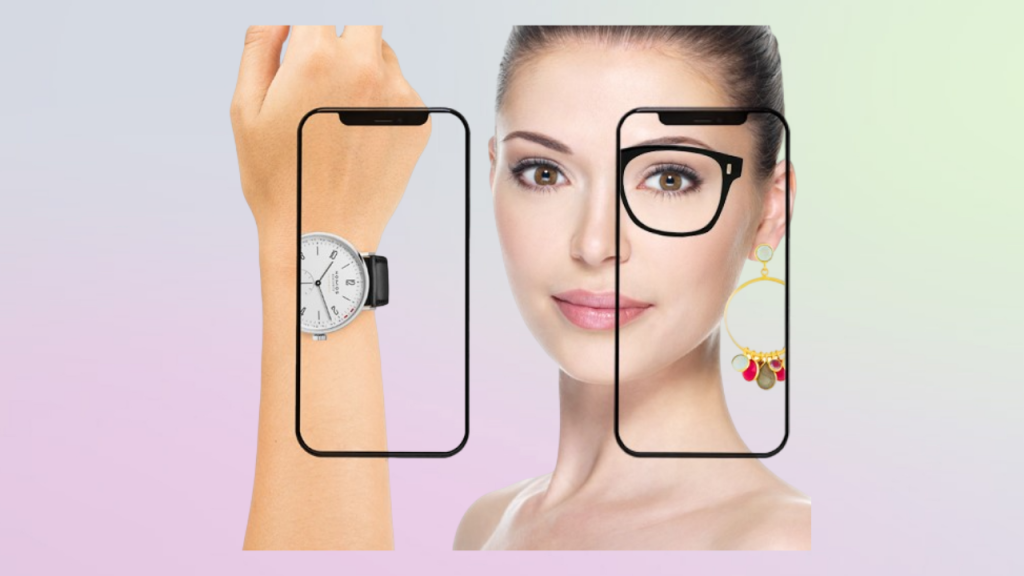
In the world of e-commerce, integrating Augmented Reality into your platform can provide numerous benefits, and this is especially true for businesses selling items that suggest the need for try-on, like jewelry. In this article, we will explore how augmented reality can make a drastic change in your e-commerce jewelry business and help you set your brand apart from the competition. The State Of Jewelry eCommerce In 2024 From the day the first online store opened, e-commerce has gone a long way to boost customer experience. While some product categories have a better time selling on the web, others require additional efforts to look as appealing to the customer’s eye. Jewelry is one of such categories: although the total share of online purchases keeps growing, studies predict that only 25% of jewelry shopping will be done online in 2024. Selling jewelry online comes with a number of challenges. The biggest turn-off for shoppers is not being able to try out items before buying them. This challenge is especially relevant for jewelry compared to other products: firstly, customers have a hard time visualizing how these items will look on them, secondly, they may worry about getting the size right. As a result, they might hesitate to make a purchase. If your business shares similar struggles, augmented reality jewelry may be just the solution for you. What Is Augmented Reality Jewelry Augmented reality offers a complex sales boosting solution for eCommerce entrepreneurs. The AR technology allows your customers to visualize products with the help of their smartphone camera. Depending on your needs and capabilities, users can try on jewelry directly on your website or e-commerce platform, as well as in your store’s app. Users start by giving your online store permission to access their camera. After their face, hand, or display surface gets in the frame, an augmented reality overlay is applied. Thanks to the phone’s proximity sensors and the software’s advanced mechanics, the AR jewelry appears to look identical to the real item, with its size matching the actual size no matter how far away from the camera. The colors, the weight, and the physics of a piece are transferred impeccably into the virtual realm – this is what makes augmented reality jewelry look so realistic. Today’s market offers a variety of software development solutions to cater to every eCommerce entrepreneur’s needs and capabilities. Virtual try-on can be implemented as an in-app feature, website widget, or even as a plugin for your store on global e-commerce platforms, e.g. Shopify or WooCommerce. While each of these options have their pros and cons, online store owners are sure to find the one that suits them most. Use Cases Of Augmented Reality Jewelry AR capabilities expand beyond just try-on features. With today’s technology, it is possible to showcase your products in the virtual realm, provide a 360-degree preview, or even create engaging user experiences for promotion. Let’s take a closer look at some ways to implement augmented reality into your jewelry business. Virtual try-on This is probably the most common use case. Virtual try-on is becoming a must-have for online stores that want to maintain a competitive edge. Adding a virtual try-on solution to your jewelry store can help you boost sales, decrease return rates, strengthen customer retention, and craft memorable user experiences. One of the biggest obstacles on the way of online shoppers is the inability to try items on – this leads to doubts regarding both the size and the general look of the products. Augmented reality jewelry try-on resolves the doubts of your customers by allowing them to try out exact digital copies of your products. The ready-made software solution for virtual try-on jewelry by Banuba and Zakeke is tailored for both apps and websites. 3D Virtual Try-On SDK enables you to give your users an immersive online experience with anatomically accurate jewelry placement, realistic gravity, and lighting adaptation. Banuba’s state-of-the-art face-tracking algorithms detect face as a whole, as well as separate facial features, ensuring a smooth overlay and precise positioning. Presentation Opportunities Unlike the traditional process where designers have a limited approach for promoting their hard work, now with the help of AR applications, they can access bigger audiences and receive more recognition. Jewelry designers can scan and upload their projects, and the whole world can try and praise the new jewelry pieces using the dedicated AR apps. This is when both AR try-on and 3D preview software will come in useful. Market leading companies like Banuba, Zakeke’s Partner, offer AR solutions that enable top-quality product and design demonstrations. This cutting-edge technology enhances product visibility, fostering greater engagement and appreciation from a diverse audience. Marketing Campaigns And Unique User Experiences Nothing helps a brand stick in the memory of its customers like a unique, emotional user experience. While augmented reality is still not quite common to day-to-day experiences, it serves as a perfect tool for user engagement and brand promotion. The exact applications are only limited by your imagination. For example, virtual jewelry can be combined with AR face filters and masks resulting in an entertaining webcam-based experience. Or an element of gamification can be introduced – this is a proven way to drive user engagement and increase time spent in your store. One of the memorable AR-enabled marketing campaigns of the last year was #InMyTabby by the US-based luxury fashion and handbag manufacturer Coach. The brand placed AR mirrors in front of its flagship store in SoHo so that passers-by and store visitors could try on the iconic Tabby bag as a 3D model and take creative selfies with it. The campaign did not go unnoticed – #InMyTabby received substantial media coverage and helped the brand increase in-store traffic by almost 50%. Can you outdo the luxury brand in this promotional success? Why Get Augmented Reality Jewelry Try On For Your Store The main benefit of AR jewelry solutions is that they offer a customer-centric approach, allowing your shop visitors to preview and try on your products in
Leveraging AI to Predict E-Commerce Trends

Even though AI is becoming increasingly popular, its application to online shopping goes beyond fad status. Improving product searches, creating personalized suggestions, and automating customer assistance are just a few of its many uses. Because AI has grown so rapidly in recent years, it is easy to lose sight of these advantages among all the buzz about the technology. Here is where we may be of help. The purpose of this guide is to deconstruct the functions, advantages, and uses of AI in online retail. We’ll also review key upcoming trends and top eCommerce AI solutions so you can make the most of AI and turn this tech achievement into measurable company success. The Importance of AI in Predictive Analytics Artificial intelligence (AI) is at the core of predictive analytics. AI is necessary to translate raw data into insights that can be put into action for marketing objectives. It is considerably easier for AI algorithms to handle and evaluate enormous data sets than it is for people to do so. This speed is necessary for marketing because it enables businesses to react quickly to shifting client preferences and trends in the market. In every marketing activity, hyper-personalization is made possible by predictive analytics driven by artificial intelligence. Artificial intelligence helps firms develop personalized marketing messages and promotions that are more likely to connect with particular customers by evaluating their behavior and preferences. In addition, robotic intelligence plays a part in predicting. To estimate future trends and consumer behavior, predictive analytics makes use of artificial intelligence. With this projection power, marketers can manage resources more effectively, successfully plan marketing campaigns, and quickly adjust to changing market conditions. Why using AI to predict customer trends is a good idea Businesses that want to stay competitive and improve the customer experience can get a lot out of using Artificial Intelligence (AI) to predict customer trends. These are some of the main benefits: Anticipating needs Artificial intelligence (AI) can find weak signs, pain points, and new patterns, which lets you guess what a customer needs before they even say it. This enables businesses to give current and custom solutions ahead of time, which sets them apart from the competition. Better personalization AI makes it possible to tailor products, suggestions, and messages more accurately to each customer by guessing their preferences. By learning about each customer’s tastes, businesses can give them more personalized experiences, which makes them more loyal and interested. AI can help businesses learn a lot about market trends and changes, which can help them improve their goods and services. This information helps change and improve current goods and services, responding to changing customer wants before they happen while also ensuring they remain useful. Making strategic decisions Predictions based on AI give us helpful information for making strategic decisions. Companies can plan, sell, and make new products that meet customer needs and take advantage of new possibilities if they know what trends are coming up. Competitive advantage Companies can become innovative in their field by using AI to predict customer trends, which gives them a competitive edge. This helps them stand out from competitors and stay ahead of them by giving customers unique experiences and anticipating their changing needs. How AI is reshaping the industry Artificial intelligence (AI) is providing companies with the ability to provide more customized experiences, simplify processes, and drive development, which is altering the e-commerce sector. It is anticipated that the effect of artificial intelligence on e-commerce will increase as it continues to develop, therefore influencing the future of online purchasing in a variety of interesting ways. The impact of AI on eCommerce A few things may come to mind when we mention artificial intelligence (AI), such as autonomous robots that are efficient, self-driving automobiles, or smart personal assistants like Siri and Alexa. Artificial intelligence, however, reduces to nothing more than computer programs that may deceive the human brain. Included in this are learning, also known as the process of collecting information and the rules for applying it, reasoning (the process of using these rules to arrive at precise or approximate conclusions), and self-correction. As a result of the present digital growth and the change in customer buying habits, an increasing number of companies are using AI to efficiently adapt to market changes and maintain a competitive advantage. E-commerce businesses may benefit from AI since it automates procedures, allows for more tailored consumer experiences, and helps with making choices based on data. E-commerce sites may now use AI to personalize product recommendations to shoppers according to their tastes and interests, as well as previous purchases and search terms. Additionally, companies may provide modern customer assistance with minimal human involvement due to AI chatbots that automate e-commerce and customer care. By stepping in when a consumer has a question or problem, these AI-based technologies may help save time and money, which might result in happy customers. How AI is used in E-commerce AI gives stores a lot of ways to improve their business and the customer experience by figuring out trends and making predictions based on data. Let’s look at some of the most important ways AI is used in e-commerce. Personalization and suggestions for products One important use of AI in online shopping is personalization. By making personalized product suggestions, AI-powered systems can make the customer experience a lot better. These systems can figure out what a customer might be interested in by looking at their past purchases and how they behave while shopping. The chance of the consumer making a purchase increases as a result. Better search options AI can make search functions on e-commerce sites much better. To make search results more accurate and valuable, AI processes actual words and recognizes photos. People can even look for goods visually and get results close to their posts. AI can help you even further by utilizing advanced image-generation techniques. With an AI image generator, you can create a multitude of images tailored to your specifications, enhancing the visual