

July 2024 Release Notes

Zakeke is proud to announce the new Virtual Try-On for Customizable Products, together with breakthrough new additions like Shareable Demo URL for Etsy and so much more..
A Complete Guide to Digital Marketing for eCommerce
There is no eCommerce without the digital medium. And there is no eCommerce marketing without a healthy helping of digital marketing. And that looks slightly different from if you implement the strategy for traditional businesses. At this point, you may be wondering how that is. Let us start this guide on digital marketing for eCommerce by answering that very question, before moving on to understand the whys and hows associated with the strategy. How is Digital Marketing for eCommerce Different? If you have dabbled in digital marketing campaigns at all, then implementing it for eCommerce companies may not look very different. But those small differences are absolutely critical, considering the nature of the industry and competition. Digital marketing for eCommerce entails activities that are tailored to bringing about growth, and boosting revenue of online stores. If you open an online store even today, know that you are competing with the many eCommerce stores, and marketplaces that have already established a strong online presence. To overcome this competition, eCommerce companies have to carry out a combination of digital marketing activities tailored to their business. Attracting to your website, retaining them, and getting business out of them is challenging for eCommerce websites considering the low switching costs, and high competition. For every product being sold out there by your online store, it is important to consider that there are several others that are doing the same. So there is little room for any kind of javascript errors or design mistakes to derail the performance of your eCommerce store. Why is it Important? Now that you know what digital marketing for eCommerce websites is, let us look at the many advantages that make this strategy so important for online stores: Primary Digital Marketing Channels for eCommerce Now that you understand the meaning of an eCommerce digital marketing strategy, and the benefits it can offer to your online store, it is time to get actionable. Here are some of the primary digital marketing channels you should consider when creating a digital marketing strategy for your eCommerce business: Search Engine Optimization or as we know it, SEO, has a lot to offer to businesses of all kinds and sizes. Regardless of whether your business is a small dropshipping store finding its roots, or a large retail brand selling online, you can leverage SEO for promoting it and getting more customers. Not only does SEO for ecommerce attract more visitors to your online store, it can also ensure that you maintain a good position on the SERPs, and elevate the shopping experience you deliver to your customers. By carrying out activities to improve your on-page SEO (actions on the website), and off-page SEO (actions external to the website), you can improve the technical performance along with the overall performance of your online store. Here are some of the best practices you should consider when implementing your digital marketing strategy: 2. Email Marketing The second digital marketing strategy that you need to seriously consider for your eCommerce business is your email marketing strategy. Email marketing can help eCommerce businesses navigate different situations such as cart abandonment, promotion of products, and even attracting customers. Not only can you leverage email marketing to reach and engage with your customers, but also to drive more sales and brand loyalty for your eCommerce businesses. You can tailor your email marketing campaigns to send promotional, transactional or even lifecycle-related messages, and ensure that your customers are engaged with your brand. Building a strong email marketing campaign begins with having a professional email address to establish credibility. Having such an address not only enhances your professional image but also makes it easier for customers to recognize and trust your emails. A few best practices that you can consider implementing within your email marketing campaigns include: 3. Social Media Marketing Considering the entire world today is on social media, brands have no option but to leverage this channel for marketing. When done properly, social media marketing can cost your brand virtually nothing, and yet reward you with a lot of benefits such as more visitors, revenue, and better performance. The biggest benefit of social media marketing, however, is that it lets you interact with your customers in real-time. The strategy also allows your customers to provide feedback, which can then help brands improve their products and shopping experience. You can also leverage social media to inform customers about any sales or discount offers, and even attract them to shop from your online store when you launch new products. In order to take full advantage of you social media marketing strategy, consider following these best practices: 4. PPC Advertising While the strategies that we have discussed so far are ones that can be implemented organically without the need for monetary resources, ecommerce advertising is one that requires you to set aside some budget. PPC advertising allows brands to advertise and promote their brand/product online while only paying when a potential customer actually clicks on the advertisement. As an eCommerce brand, your online store will benefit a lot by including transactional keywords with commercial intent for various digital marketing activities. When utilized well, PPC advertising can help you increase awareness, reach new customers, and drive traffic among achieving other goals for your brand. Most importantly, PPC advertising can help you level the playing field so that you can compete with competitors that are selling similar products and reach an audience that is difficult to engage with. Here are some of the best practices that you can follow while implementing PPC advertising campaigns: 5. Influencer Marketing You must have seen a lot of well-known eCommerce brands seeking out brand advocates in people who are well respected and have the same target audience as the brand. Generally, influencers are social media or internet personalities with a lot of followers and enough engagement to actively promote your brand and products. A good influencer marketing strategy will help you build more awareness and visibility for your brand, and even
Zakeke Tops G2 Summer 2024 Reports with 16 Badges
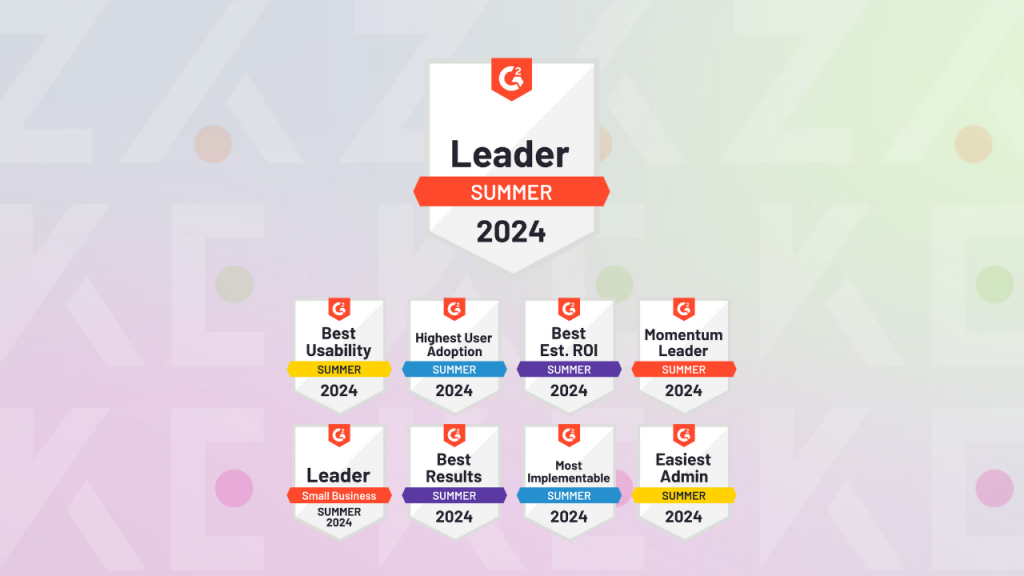
Hot Off the Press: G2 Summer 2024 Reports are finally here! Zakeke shines once again, marking its 7th consecutive season as a Leader in Visual Commerce. This summer, we’ve earned 16 badges across Product Customization, Visual Configuration, and AR Visualization. A heartfelt thank you to our amazing customers – your unwavering support and valuable feedback drive our continuous improvement. Explore the G2 Summer 2024 Reports to see why Zakeke stands out! Excelling Again in Visual Customization and AR Visualization The flowers are blooming and so is Zakeke! Once again, we shine as a Leader in the G2 Grid® Report for Visual Product Customization and AR Visualization. Zakeke leads the way in e-commerce innovation, redefining how customers engage with brands and transforming shopping journeys into extraordinary experiences, all while streamlining tasks and processes for merchants. We’re also proud to maintain our status as a top choice for Visual Customization for Small Businesses, with a commitment to driving growth through innovation and automation for startups and small businesses. Shining Again: EMEA’s Leader and Momentum Leader For the fourth consecutive season, Zakeke has proudly achieved the following awards: Celebrating More Achievements This season, Zakeke has earned more top awards: Explore the Zakeke platform, seamlessly compatible with your eCommerce system to enhance your results. Want to see quick improvements? Try Zakeke’s 14-day free trial or schedule a personalized demo for a deeper understanding!
Zakeke Named Winner of AI Breakthrough Awards for ‘Best Use of Virtual Reality for Retail’

The award highlights Zakeke’s creative and advanced implementation of AI in Visual Commerce and immersive technologies. It’s official! We’ve been named a winner in the 7th edition of the AI Breakthrough Awards, recognized as one of the world’s most innovative tech companies in Artificial Intelligence. The AI Breakthrough Awards, organized by Tech Breakthrough, a premier market intelligence and recognition platform, celebrates excellence in AI technology across the global market. This year, we are recognized alongside notable winners such as NVIDIA, Adobe, Lenovo, SAP, Dell, and OpenAI. This award is a testament to our dedication to empowering merchants and revolutionizing customer-brand interactions. By integrating new AI features, we aim to further enhance the customer experience and streamline processes for merchants, facilitating the effortless adoption of new technologies with minimal operational burden and cost. Key Zakeke’s AI-powered features include: “Recent innovation in AI has transformed how we approach visual commerce,” says Angelo Coletta, our CEO. “This award highlights our team’s efforts. We’re focused on using AI to enhance shopping experiences and streamline merchant processes, redefining the way customers interact with retailers.”
Why Virtual Try-On Fashion is The Future of Shopping
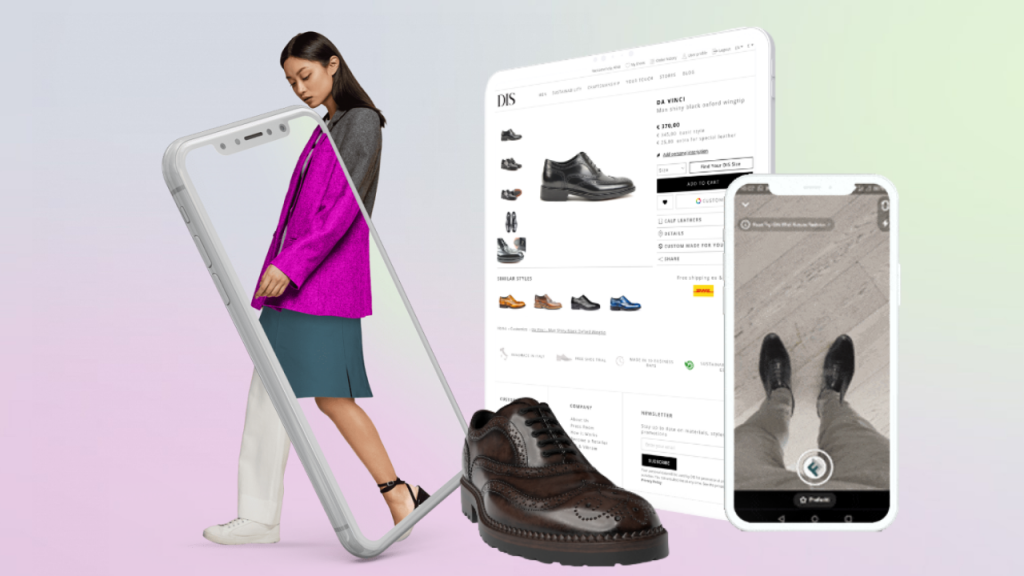
What’s the future of fashion? If you ask most people, they’ll say that it’s all about tailored experiences and trying on clothes virtually before you buy them. This way, customers can pick out the perfect top and match it with their favourite jeans without any risk of buying clothes that don’t look good on them. With more companies offering this service, there’s no reason not to take advantage of it! Virtual try-on technology is revolutionizing the fashion industry. Let’s explore the reasons behind its significant impact. What Is Virtual Try-On And How Does It Work? When you think of virtual reality, what comes to mind? Gaming? Movies? While those are certainly popular applications for VR, today it plays a crucial role also in the shopping world. That’s right – virtual try-on is a thing, and it’s changing the way we buy clothes, shoes, jewellery, and more. So, how can we define Virtual try-ons, especially fashion virtual try-ons? Simply put, it’s a way to try on items without having to actually put them on. You can do this either by using a special headset or by viewing an image of yourself in the clothes. This allows you to see how the clothes fit and look without having to leave your home. Why is virtual try-on a trend today? Research shows that most online shoppers are open to using VTO. A 2021 study found that 69% of respondents were interested in using VTO for apparel shopping. Virtual try-on fashion is becoming the new normal. Why not meet customer expectations? The Benefits Of Virtual Try-On for Fashion When it comes to virtual try-on, fashion retailers have a lot to gain. There are many benefits of virtual try-on that can drive traffic and sales for retailers. Overall, virtual try-on is a great way for fashion retailers to improve their customer experience and increase traffic and sales. With virtual try-on, customers can find the right clothes for them without having to leave their home, and retailers can reach new customers and increase sales. It’s a win-win for everyone involved! How Virtual Try-On Is Changing The Fashion Industry The virtual try-on is changing the fashion industry by giving customers a more realistic view of how clothes will look on them. This is done by allowing customers to try on virtual versions of clothes before they make a purchase. Virtual try-on for retail also help to increase sales, as customers are more likely to make a purchase if they can see how the clothes will look on them. In addition, virtual try-on technology is becoming more and more advanced, with new features being added all the time. For example, customers can now use virtual reality for fashion to try on clothes in a virtual setting, think about the well-known virtual fitting rooms. This technology is sure to revolutionize the fashion industry, and it will be interesting to see what new developments are made in the field of virtual try-on in the future. The Future of Virtual Try-On: AI-Powered Experiences The future of virtual try-on is incredibly exciting, especially with the integration of AI-powered experiences. AI can fine-tune virtual try-on technology to ensure perfect fit and precise measurements for each customer. Imagine shopping for clothes and being confident that what you see on the screen will look just as good in real life. Zakeke’s Virtual Try-On is leading the way with innovative features like AI-driven head measurements and pupillary distance calculations for eyewear. This level of precision ensures that customers not only find styles they love but also enjoy a perfect fit, enhancing their overall shopping experience. With AI at the helm, virtual try-on is set to revolutionize the way customers shop, making it more accurate, personalized, and enjoyable. WebAR Virtual Try-On VS App-based VTO When choosing the best technology for Virtual Try-on, WebAR VTO stands out over app-based options. Why? It’s all about ease and accessibility. With WebAR VTO, customers can try on clothes right in their web browsers without the hassle of downloading an app. This seamless experience makes it super convenient for customers, encouraging them to engage more with your products. Plus, it works smoothly across all devices, ensuring everyone can enjoy the same great experience. For you as a merchant, this means happier customers, fewer barriers to engagement, and more sales. So, if you want to offer the best VTO experience, WebAR is the way to go. How to Choose The Right Virtual Try-On for Your Store? There are several virtual try-on solutions available, and each has its own strengths and weaknesses. Some solutions use 3D models to show how the product looks on the customer, while others use virtual reality to create a virtual environment in which the customer can try on the product. The most important factor in choosing a virtual try-on solution is the realism of the virtual environment. The customer should feel as if they are trying on the product in real life. If the virtual environment is not realistic, the customer will not be able to make an informed purchase. Another important factor is the customization of the virtual environment. The customer should be able to change the color, size, and style of the product to match their own preferences. This level of customization allows the customer to create a unique shopping experience that meets their individual needs. Finally, the virtual try-on solution should be easy to use. The customer should be able to navigate the virtual environment easily and find the products they are looking for. The virtual storefront should also be easy to use, so the customer can make a purchase quickly and easily. Virtual Try-On Fashion + Real-Time Customization: The Perfect Mix Combining virtual try-on fashion with real-time customization creates the perfect mix for today’s demanding customers. They crave immersive experiences that allow them to see how products look on them while also personalizing those products to their liking. This combination is the key to staying competitive and achieving success in the modern market. With Zakeke, merchants
June 2024 Release Notes

Zakeke is proud to announce the new 3D Digital Asset Manager, together with breakthrough tech like AI-Generated 3D Configurations and so much more..
Creating Engaging Social Media Content for eCommerce: Full Guide

Social media has become an integral part of our everyday lives; moreover it serves as an essential part for eCommerce businesses aiming to increase their market coverage and sales volume. The attention of many customers is attracted by social networks with a number of millions of users that scroll their feeds on a daily basis. On the contrary, the problem is standing out and attaining attention of the target audience as well as making your content appeal and engage them. This guide is going to tackle the key tools and best strategies for crafting social media content for eCommerce websites that work. Understanding Your Audience Successful social media content for ecommerce starts with the inside knowledge of the target audience. Who are they? What is really their demographic’s interest, need, and pain point? Social media analytics can be a powerful tool for eCommerce businesses in order to collect data about their followers’ demographics, interests, and behavior. Such detail is instrumental in developing content that hits the mark directing your target audience as well as increasing engagement thus, eventually generating sales. Social Media Content for eCommerce: Strategy The engagement of your social media audience is enhanced with a well-thought-out content strategy. This strategy should outline: Objectives: Explain what you intend to achieve with your social media campaigns. That could be like generating brand awareness, boosting engagement or driving conversions. Content Calendar: A scheduled content calendar keeps your post regularity in check, which is very important because it allows your brand to stay in the audience’s consciousness every now and then. Content Mix: To ensure the right promotional mix, balance the promotional posts by creating valuable content that teaches, brings laughter, or inspires your audience. Such a combination of things makes your feed engaging and interesting. Types of Content That Drive Engagement Social media reputation and awareness could be raised with consumers while decision-making may be influenced similarly. Here are several types of content that have proven effective for eCommerce platforms: Visual Content: Obtaining high-resolution photos as well as videos for your product can prove to be quite promising. User-Generated Content: Display genuine customers who have used the products of your company. It is not only proof from other customers that what you say is right but also invites other people to post their reviews as well. Educational Content: The learner can be educated through how-to-guides, tips, and product demonstrations thus enabling the audience to make their choices by being well-informed. Behind-the-Scenes: Live the drape and show your audience, up close and personal, how your brand works on a daily basis. This will help to humanize your brand and develop a stronger bond between it and your consumers. Interactive Content: Utilize various interactive elements, such as polls, quizzes and contests to get the attention of your audience. Understanding the users and encouraging them at the same time remains the key to success through games’ feedback system. Storytelling: Using tales associated with your items, engage with your potential customers on a different level (their emotions and values). Leveraging Multimedia and Tools Adding professional videos to social media is effective in maximizing engagement. Use tools like video AI generators that can generate attractive videos for eCommerce businesses swiftly and effortlessly. These AI features enable the creation of video content that matches each social media platform, which results in the highest audience engagement. In concert with this, the captivating captions, which stimulate viewers to act and engage with the video, must be taken into account. Using Hootsuite and Buffer are extremely useful when it comes to schedule posts, and help the content remain available on various platforms. It means that their audience remains interested and can interact with one another, this is key for succeeding in the business. Optimizing Content for Each Social Media Platform Each social media platform has its unique features and audience preferences. Content that may be effective on Instagram may not be as successful on X because of audience behaviour and the platform dynamics are different. Customize your content delivery, presentation and outreach across individual social media platforms while at the same time staying true to the brand voice. Engaging with Your Community Community engagement is more than just posting articles. It means that you must actively listen and respond to comments, messages and reviews. This communication strengthens relationships but also enhances a feeling of community associated with your brand. Also, working with influencers and brand partners will increase your scope and credibility. Measuring Success and Optimizing Your Strategy In order to understand the success of your social media strategy, you should be tracking key performance indicators (KPIs) such as engagement rates, reach, follower growth, and conversion rates. Social media analytics tools do have the potential to supply all those metrics, which makes it possible for you to improve your strategy through actual performance data. Conclusion Social media acts as a dynamic place where eCommerce websites can display their products and connect with their customers in a personal and exciting way. Through analyzing your audience, having a content plan, using the latest technology, and interacting with your community, you will create the best social media content for ecommerce and get the most from these platforms for your e-store.
5 Advantages of Using AI Personalization for E-commerce

Brands and businesses in the consumer market face the difficulty of crafting tailored purchase experiences for their buyers amidst a sea of diverse preferences and behaviors. The task of understanding each customer’s unique needs and delivering personalized product recommendations in real-time can be daunting. This is where Artificial Intelligence (AI) personalization technologies come into play, which can dynamically adapt to consumer interactions, analyze vast datasets for behavior patterns, and automate customization in marketing at scale. AI-powered personalization enables businesses to create more meaningful, engaging shopping experiences, resulting in increased customer satisfaction and loyalty. In this article, let’s explore the five key advantages of leveraging AI-powered personalization for consumer brands and businesses, highlighting how it transforms challenges into opportunities for growth and customer engagement. 1. Improved Retention and Satisfaction Personalization allows brands to understand individual preferences, pain points, and expectations to deliver them a solution the way they want. For instance, tools like Customer Relationship Management (CRM) can help businesses configure their offerings for efficient resolution of their audience’s problems. Similarly configure, price, quote solutions or CPQ software leverage data-backed and dynamic pricing algorithms to generate customized quotes for new and existing buyers to ensure they access your offerings at attractive rates while maximizing your customer lifetime value (CLTV). However, implementing personalization requires the integration of tech systems and the analysis of large volumes of data to understand customer preferences accurately. Moreover, maintaining the balance between personalization and privacy is a concern. AI personalization can ease these challenges by automating data analysis and insights generation. For example, AI can predict customer preferences based on past behavior and current trends, making it easier to tailor offerings. Netflix’s content recommendation algorithm, for example, uses AI-driven personalization to suggest movies and TV shows based on the user’s viewing history and preferences. This level of personalization has contributed to Netflix’s high customer satisfaction and retention rates, demonstrating the potential of AI to transform the customer experience. 2. Accurate targeting and segmentation Accurate targeting and segmentation are essential for keeping the ROI of your marketing efforts high and delivering personalized messages across all customer touchpoints. It is done by extracting detailed insights into customer preferences, behaviors, and purchase histories and subsequently creating highly tailored marketing campaigns and product offerings. However, this requires the analysis of vast amounts of diverse data, a deep understanding of market dynamics, and the ability to adapt strategies based on evolving consumer trends. The difficulty and resource-intensive nature of this task can overwhelm even the most experienced marketing teams, leading to missed opportunities and suboptimal engagement strategies. AI-powered personalization tools help alleviate these challenges by automating the data analysis process and identifying patterns and segments within the data that might not be immediately apparent to human analysts. For instance, Starbucks collects mobile app data to group customers based on preferences (drinks, snacks, etc.) and purchase history (frequency, patterns, etc.) and analyzes this data with the help of AI algorithms to offer personalized discounts and recommendations. AI personalization ensures that marketing efforts are not just broad-strokes attempts at engagement but are carefully calibrated to appeal to the specific interests and needs of different consumer segments, thereby maximizing the impact of marketing initiatives. Additionally, AI can help creating engaging and unique marketing campaigns. For example, an AI song generator leverages advanced AI to create unique music compositions that can enhance personalized content for videos and marketing campaigns. This adds a new level of customization in marketing efforts and user engagement. 3. Higher average cart value Customization significantly influences consumer behavior and decision-making, leading to a direct increase in the average cart value for businesses and brands. By tailoring recommendations and offers to align with individual customer preferences, interests, and past purchasing behaviors, companies can effectively encourage customers to add more items to their cart. This strategy not only enhances the shopping experience but also subtly nudges customers towards higher-value purchases or complementary products they are likely to find useful or appealing. However, achieving this level of personalization requires analyzing the purchase patterns of customers across segments to predict which products they might be interested in which can be prone to errors if automated through behavioral triggers, potentially leading to irrelevant recommendations that can deter customers rather than engage them. AI-powered personalization algorithms can identify patterns and preferences among vast datasets, allowing for the generation of personalized product recommendations for each customer. Amazon, for example, uses customer data to cross-sell and upsell products, contributing to their sales increase. By employing similar AI technologies, businesses can enhance their capability to increase average cart values efficiently, offering personalized experiences that are both relevant and engaging, encouraging customers to make more substantial purchases. 4. Better inventory management Brands and businesses can optimize their inventory levels, ensuring they stock items that are in demand and reduce overstock of less popular products by closely tracking personal data such as customer purchase behavior and seasonal e-commerce trends. This strategic approach minimizes waste, improves cash flow, and ensures that customers find what they’re looking for more reliably. However, traditional methods of predicting demand and aligning inventory accordingly rely on historical sales data, which doesn’t always account for shifting consumer preferences or emerging trends. This reactive approach can lead to discrepancies between stocked items and actual customer demand, resulting in unsold inventory or stockouts of popular products during peak sales seasons. AI personalization offers a solution by analyzing current consumer behavior, preferences, and trends in real-time. By leveraging AI algorithms, Walmart, for example, analyzes purchasing patterns and predicts future demand, enabling more accurate stock levels across their stores and online platforms. This proactive strategy ensures products that customers desire are available, enhancing satisfaction while reducing inventory costs and improving operational efficiency through AI personalization. 5. Decreased operational costs Personalization directly contributes to decreased operational costs for businesses and brands by enhancing the efficiency of marketing efforts, reducing inventory waste, and optimizing customer service resources. For instance, companies can target specific customer segments with tailored messages and offers catered to their needs to
8 E-commerce Advertising Strategies to Turn Your Browsers into Buyers

You’ve invested time and effort into creating the perfect online store. Your products are top-notch, and your website is visually appealing. However, despite your best efforts, sales are lagging. The issue? Your target audience can’t find you, or they’re getting distracted before making a purchase. According to a study by Hootsuite, 87% of online shoppers say social media helps them discover new products, and 71% are more likely to purchase from a brand they follow on social media. It means that e-commerce advertising is crucial to placing your products in front of the right people at the right time. By leveraging effective advertising strategies, you can convert browsers into buyers and drive sales. Let’s dive into the 8 e-commerce advertising strategies that will help you achieve this goal. Understanding the Difference Between Browsers and Buyers Not everyone who visits your website is ready to whip out their credit card. Understanding the difference between casual browsers and those ready to buy is crucial for effective e-commerce advertising. Knowing the difference lets you tailor your approach. Browsers need to be convinced that you’re the best choice. Buyers need a clear path to “Add to Cart” with minimal distractions. E-commerce Advertising First Step: Target the Right Audience with Precision Advertising in e-commerce is an efficient tool that reads people’s minds. That’s the power of targeting the right audience. Instead of shouting into a crowd, you should focus on the people most likely to love what you offer. This will save you money and get your products in front of eager eyes. You might be wondering how it works, right? The best practices involve understanding your ideal customer. This involves multiple factors, such as age, location, what websites they visit, and even what they’ve searched for online. Advertising in e-commerce is complex. If you need help with how to do it and are feeling overwhelmed, don’t worry. Sometimes, it pays to get expert advertising agencies and consultants to know the ins and outs of these platforms. They can optimize your campaigns for maximum results. It can be a game-changer if you have a limited budget, want to reach a new market, or need advanced strategies. Additionally, there are multiple e-commerce advertising platforms, which are your superpower here. For instance, Google Ads lets you target specific search terms and shopping behaviors. At the same time, Facebook and Instagram ads let you pinpoint people based on interests and demographics. Strategy 2: Master the Art of Retargeting Ever leave a website only to see ads for those exact products pop up later? That’s retargeting in action! It’s a brilliant way to give your potential customers a gentle nudge. You’re not targeting strangers anymore – these people have already shown interest in your store. Why is this so powerful? Sometimes, people leave your site because of distractions or because they need more time to think. Retargeting keeps your brand fresh in their minds. It builds familiarity and reminds them of what caught their eye. The result? There’s a much higher chance they’ll come back and finish that purchase. The right platforms make all the difference in e-commerce retargeting. Tools like Google Ads and Facebook Ads let you show targeted ads across the web and on social media. There are also specialized retargeting platforms that offer even more features for online stores. Strategy 3: Craft Compelling Ad Copy and Visuals Your ad needs to grab attention and make people want to click – fast! This is where compelling copy and knockout visuals become your best friends. Start with your headline. Make it short, punchy, and benefit-driven. Don’t just say “Stylish Backpack” – instead, try “Upgrade Your Adventures with 20% Off.” Your call-to-action (CTA) needs to be crystal clear. Tell people exactly what to do: “Shop Now,” “Learn More,” and “Claim Your Discount.” Images matter just as much! Ditch blurry photos. Invest in high-quality product shots that show every detail. Lifestyle images that make people imagine using your product are even better. Videos in e-commerce can be super powerful, too, especially short ones that showcase the product in action. Don’t guess what works best – test it! Try different headlines, images, and CTAs to see what gets the most clicks. The data will tell you what your audience loves. Strategy 4: Build High-Quality Backlinks to Boost Your Authority Backlinks work as votes of confidence for your e-commerce store. When other websites link to yours, it signals to search engines that you’re a trusted, relevant source. This leads to better rankings, meaning more people will find you organically. Backlinks can also send direct traffic your way when people click them on other sites. So, how do you build these valuable links? There are a few key strategies: Here’s the thing: Link building takes time and effort. It also requires knowing which sites to target and how to approach them. If you feel overwhelmed or lack the time, this is a prime area to consider expert help. Agencies specializing in link building understand the ins and outs of link building. They can secure high-quality links that make a real difference in your rankings. Strategy 5: Leverage Social Proof and Urgency Tap into the power of persuasion with social proof and urgency! These tactics play a role in how our brains are wired. When we see other people loving a product, it makes us trust it more. And when we think something might be scarce or time-limited, we have a sudden fear of missing out. How do you use this to your advantage? Sprinkle social proof everywhere! Showcase glowing reviews and testimonials prominently. Highlight your number of satisfied customers. If you have any awards or certifications, display those too. Add a dose of urgency with limited-time offers (“Sale Ends Tonight!”) or by showing low stock levels (“Only 3 Left!”). Just be honest – fake urgency backfires and damages trust. People see through overly gimmicky tactics. When used ethically, these techniques can be the nudge a hesitant shopper needs. Strategy 6: Optimize Your
Augmented Reality E-commerce Examples: How Is Augmented Reality Used In Business?

Augmented reality (AR) has emerged as a new technology in visual commerce. It is currently revolutionizing how businesses engage with customers and showcase their products or services. At its core, AR overlays digital content onto the real world, blurring the lines between physical and virtual experiences. This technology’s ability to offer immersive and interactive experiences can be instrumental in capturing consumer interest and driving sales. In this article, we will discuss how AR is being used by businesses to boost sales, train teams, and improve customer service experience. Augmented Reality E-Commerce Examples in Visual Commerce As more companies adopt AR, businesses that fail to use AR are getting left behind. In 2023, the AR industry was valued at a market size of $56.3 billion, according to a report by Precedence Research. AR provides business owners with a competitive advantage by offering a comprehensive platform with diverse AR tools. Today, AR is used in many ways, such as virtual training and personalized customer service, acting as a cost-effective solution for businesses while adding value for users. Here are some ways that businesses are incorporating augmented reality into their strategies and operations: Customization Tools AR offers businesses a chance to create customized tools that tailor experiences to individual preferences. These AR-based customization options empower customers to take control of what they want to see. AR tools can also help customers make their vision close to reality, making it easier for vendors to meet specifications or requests. Since 71% of customers expect personalized service, making this a priority will boost engagement and sales conversion rates for any business. AR-driven customization options include: Try-On Experiences One of the more popular ways AR is being used in business is through try-on experiences. AR-powered virtual try-on solutions allow customers to digitally try on products such as virtual accessories, eyewear, makeup, and even clothing before making a purchase. For example, the global makeup brand Estée Lauder is known to have used AR as a sales and marketing initiative. When companies use AR-powered virtual try-on experiences, they will be able to do the following for the customer: Product Pitches and Bids Augmented Reality (AR) can be a game-changer in product pitches and bids, offering innovative ways to showcase products and services, enhance presentations, and win over clients. Here are several ways AR can be used effectively in product pitches and bids: Remote Assistance and Support: Your business can use AR to provide remote assistance and support services, particularly in technical or complex scenarios. For example, field service technicians can wear AR-enabled devices that allow them to receive real-time guidance and instructions from experts located elsewhere. This can streamline troubleshooting processes, reduce downtime, and improve overall service quality. Similarly, customer support representatives can use AR to guide customers through product setup or troubleshooting steps when they need some guidance remotely. Investing in AR technology in this way can enhance customer satisfaction and reduce support costs. Someday, you might even get to find out the shape of your foot. Nike is currently researching AR technology that will allow you to measure your foot’s morphology using your phone. The company aims to help customers understand which shoes will match their needs by storing this data in a personal profile of the customer. Interactive Training and Simulation AR can transform training and simulation processes by creating interactive and immersive learning experiences. For instance, employees in industries such as manufacturing, healthcare, or aviation can use AR to practice hands-on tasks in a virtual environment before performing them in real-world settings.This not only enhances training effectiveness but also improves safety and reduces the risk of costly errors. AR-based simulations can also be used for scenario-based training, crisis management drills, and team collaboration exercises, fostering a culture of continuous learning and skill development within organizations. Furthermore, the fashion and apparel sectors are witnessing a transformative use of augmented reality, especially in enhancing the way designs and patterns are presented to customers. This technological leap offers a unique opportunity for businesses to engage customers by allowing them to visualize products in a new light. A deeper understanding of how augmented reality can influence design choices, including the selection of fabric colors that appeal the most to customers, is crucial. Insights into the preferences surrounding t-shirt colors, for example, could significantly affect consumer interest and sales figures in an AR-enhanced retail setting. This approach not only elevates the shopping experience but also guides businesses in tailoring their offerings to meet customer expectations more precisely. Future Trends and Opportunities in AR Statista reports that there will be 1.73 billion active users of AR in 2024 compared to 0.44 billion in 2019. As more companies incorporate AR in their sales and marketing strategies, user adoption rates are likely to increase in the coming years. Here is what business owners can expect to see regarding new developments in the AR industry: Incorporate AR Solutions Into Your Business Strategy In conclusion, the rise of Augmented Reality (AR) in visual commerce is reshaping how businesses interact with customers and present their products or services. AR’s ability to seamlessly blend digital content into the real world drives engagement, sales, and innovation across diverse industries. With an expected growth in the number of AR users, companies need to adapt if they want to survive the growing use of technology. So, don’t get left behind. Use augmented reality in your business today.