

December 2023 Release Notes

Zakeke’s Virtual Try-On is now available for Eyeawear, Headwear and Jewelry! Stroke on Texts, Side Rotation in UI, Product-specific Welcome Messages and more updates are live to increase automation, support your daily order management and customization journey.
Customized Products and Brand Loyalty: Building Lasting Customer Relationships

In today’s dynamic market, where consumer choices are vast and ever-changing, businesses increasingly turn to customized products to foster brand loyalty. Customization is tailoring products to individual preferences. It is pivotal in building lasting customer relationships. Without question, consumers perceive product customization as a gift they are willing to pay for. Specifically, a study by Deloitte found that 40% of consumers are willing to pay more for a personalized or exclusive product or service. Another study, by McKinsey, found that companies can generate as much as 40% more revenue from personalization. The utilization of print-on-demand services further enhances the potential for customization, allowing businesses to offer unique, personalized products without the need for large inventory stocks. This article explores customized products’ significance and connection to brand loyalty, highlighting how this approach can benefit your brand and offer strategies to overcome challenges. What are Customized Products and Brand Loyalty? The essence of customized products, catering to individual customers’ distinct needs and preferences, has become increasingly vital in tandem with the growth of eCommerce. This encompasses anything from personalized engraving on a smartphone to tailored skincare formulations. It’s about offering your consumers a unique and tailored experience, departing from the traditional one-size-fits-all approach. Moreover, brand loyalty remains a pivotal factor in business success, especially within a saturated market with an influx of choices. Establishing a loyal customer base stands as a crucial strategy for long-term sustainability. These loyal customers make repeat purchases and evolve into brand advocates, influencing others through word-of-mouth recommendations. Benefits of Customized Products for Customers Customization serves as a powerful tool for cultivating your brand’s loyalty. When consumers feel a personal connection to a product, they are likelier to develop a strong affinity for the brand. Tailoring your products to individual preferences enhances the overall customer experience, fostering a sense of exclusivity and personalization. Enhanced User Experience Customized products elevate the user experience by giving consumers exactly what they desire. Whether it’s the color of a pair of sneakers or the features of a smartphone, customization ensures that the end product aligns perfectly with your customer’s preferences, leading to increased satisfaction. Sense of Ownership and Identity Customized products allow customers to take ownership of their purchases, fostering a sense of identity and uniqueness. When consumers have a hand in designing their products, they develop a stronger emotional connection, transforming the purchase into a reflection of their individuality. Increased Satisfaction and Engagement Tailored products contribute to higher levels of customer satisfaction and engagement. When customers are actively involved in the customization process, they are more likely to be invested in the final product, leading to increased loyalty and repeat business. According to a 2023 Statista survey, Gen Z consumers stood out as the generational group most keen on personalized product recommendations while making online purchases, with 47% of respondents indicating this preference. Following closely behind were Millennial shoppers, comprising 46% who sought personalized recommendations. Source: Statista Building Lasting Customer Relationships through Customization In today’s competitive market, building lasting customer relationships is vital. Customization, tailoring products or services to individual preferences, is a powerful strategy for achieving this. Your business can effectively integrate customization into customer engagement strategies through targeted email campaigns, social media personalization, loyalty programs, and exceptional customer service. This comprehensive approach highlights the importance of fostering enduring customer connections through personalized experiences. Targeted Email Campaigns Implementing targeted inbound and outbound email campaigns is an effective strategy for promoting customized products and strengthening brand loyalty. By analyzing customer data and preferences, you can send personalized recommendations and exclusive offers, creating a sense of value for the customer. Social Media Personalization The best social media management tools provide an ideal space for personalization. Brands can use targeted ads and content to showcase customized products to specific demographics. Social media engagement, such as polls and quizzes, can further involve your customers in customization, enhancing their connection with your brand. Loyalty Programs and Rewards for Customization Integrating customization into loyalty programs can be a winning combination. Offering rewards, discounts, or exclusive access to customized options for loyal customers encourages repeat business and strengthens the bond between your brand and its patrons. The Role of Customer Service in Customized Product Offerings Exceptional customer service is crucial in the customization landscape. Providing knowledgeable and responsive support throughout the customization process ensures a positive customer experience. Addressing concerns promptly and offering guidance can turn a one-time buyer into a loyal customer. Product Customization and Unique Experiences What better way to offer customization than to allow customers to create their own dream products? Live product customization improves the customer experience by involving the customer and making them an integral part of creating the personalized product. Challenges and Considerations in Customization Embarking on the path of customization in your eCommerce endeavors poses several challenges. Striking a balance between mass production and personalized offerings is crucial for operational efficiency while meeting diverse customer needs and ensuring a seamless eCommerce journey for your customers. However, navigating data privacy concerns demands transparent communication and robust security measures. Managing customer expectations by clearly communicating customization limitations and production timelines is vital to prevent dissatisfaction and uphold a smooth eCommerce experience for your customers. Balancing Mass Production and Customization One challenge in customization is finding the right balance between mass production and personalized offerings. Striking this balance is essential to maintain production efficiency while meeting customers’ diverse needs. Data Privacy and Security Concerns Collecting and utilizing customer data for customization purposes raises privacy and security concerns. Businesses must prioritize transparent communication about data usage and implement robust security measures to protect customer information. Managing Customer Expectations Effectively managing customer expectations is crucial in the customization process. Clear communication about customization limitations, production timelines, and potential variations in the final product helps prevent disappointment and dissatisfaction. Forging Lasting Brand Loyalty through Customized Customer Experiences Customized products are pivotal in building lasting customer relationships and fostering brand loyalty. The benefits, strategies, and challenges associated with customization highlight its significance in today’s market. Embracing
Zakeke Excels Yet Again: 17 Badges Earned in G2 Winter 2024, Leading the Pack

Fresh from G2 – 2024 is just around the corner, but the G2 Winter Reports are already here, and Zakeke shines again as a Leader in Visual Product Customization, Visual Configuration, and newly in AR Visualization, earning a record 17 badges. Thanks to our loyal customers for their constant support and feedback, helping Zakeke grow every day. Check out the G2 Winter 2024 Reports for Zakeke’s highlights. Overall Leader in Visual Customization, Visual Configuration and AR Visualization Zakeke has yet again been acknowledged as a Leader in the G2 Grid® Report for Visual Product Customization, Visual Configuration, and, excitingly, AR Visualization this time. Innovative software solutions like Zakeke are revolutionizing e-commerce. Leveraging the power of Visual Commerce through 2D, 3D, and Augmented Reality, they are transforming Customer Experience, aligning with consumer expectations, and driving remarkable outcomes. Moreover, Zakeke continues to be a recognized Leader in Visual Customization for Small Businesses, becoming now a Leader for startups also in AR Visualization. Committed to supporting startups and small enterprises, we focus on fostering growth through innovation and automation. New Exceptional Milestones: Leader in Visual Commerce, Globally Zakeke has gained several new Leader badges, solidifying our leadership worldwide: Most Implementable, Best Usability, Best Results This season, Zakeke has confirmed 3 additional prestigious badges: Experience Zakeke’s lightning-fast and intuitive Visual Commerce Platform that seamlessly integrates with any eCommerce setup. Want to see impactful results in no time? Dive into Zakeke’s 14-day free trial, and for a richer insight, book a complimentary expert Demo!
How to Craft an Effective eCommerce Content Strategy

One of the primary reasons behind eCommerce content is to educate customers. Brands that put extra effort into guiding current and prospective customers can expect more conversions. More often than not, online merchants focus on in-depth articles they publish to a dedicated blog. However, content strategy for eCommerce should not begin and end with just plain articles. It should also include: After all, variety helps modernize and differentiate your brand from the rest. Every little bit helps in a competitive environment. Having said all that, building an effective eCommerce content strategy is not that straightforward. Once the foundation is established, it’s also imperative to go back and ensure that the content is up to date. How to build an effective content marketing strategy for eCommerce Here are the key steps to build a successful eCommerce content strategy: 1. Periodically revise content strategy Let’s start with content revision. Over time, there are bound to be outdated content pieces that become irrelevant. Some eCommerce businesses archive or delete the content to avoid potentially misleading customers. Others, meanwhile, dedicate time and other resources to update old articles, videos, etc. Sometimes, changing statistics or adding a new bit of information is enough to revitalize a piece. And once such a piece of content is updated, you can republish it and treat it as a new article, encouraging customers to check it. Revising an entire content strategy for ecommerce varies depending on different factors. In some cases, a brand might move to an entirely different manufacturing process, changing its materials. Such a brand would have to change product descriptions with updated details. The way new information is presented shouldn’t change. Yet, for example, if an opportunity to take higher-quality videos and product photos presents itself, why not take it? 2. Use user-generated content User-generated content plays a prominent role in eCommerce content marketing strategy. According to a study by EveryoneSocial, UGC encourages conversions by almost 30%. Consumer-generated content appears more genuine and trustworthy than ads pushed by brands directly to customer feeds. Shopping online comes with the risk of not knowing what to expect. Reviews by other shoppers, arguably the most effective UGC, guide new customers, whether they come with visuals or not. Modern shoppers also have an easier time identifying authentic information and branded advertising. An emphasis on UGC humanizes a brand in a customer’s eyes and makes the shopping experience more authentic and relatable. Finally, user-generated content can fill the void in a brand’s eCommerce content strategy. Customers have different perspectives. Collaborating and encouraging them to submit not just reviews but blog posts is a worthwhile approach. 3. Focus on SEO optimization A well-crafted eCommerce content strategy widens SEO possibilities. Focusing on learning about relevant keywords results in a better understanding of customer behavior. There’s intent behind each keyword, and tailor-made content revolving around these keywords attracts more conversions. The benefits of SEO for eCommerce don’t stop there. You can also expect: 4. Keep an eye on the Analytics A content strategy for an eCommerce website should never be static. As mentioned before, don’t ignore content revision. Reimagine and update the content depending on how the brand and the industry change. But don’t stop there. Track and analyze the content’s performance to determine what’s working and what isn’t. Most marketing channels use revenue as a measure of success. In content marketing, revenue isn’t the be-all and end-all metric. It’s better to focus on page views, bounce rates, click-through rates, subscriber growth (for newsletters), social media engagement, and so on. Poor metrics indicate that you need to change your eCommerce content strategy. On the other hand, if you are happy with the results, don’t stop there. Remember that there’s potential to go even higher, so don’t be afraid to try new things. Can small businesses also implement an effective eCommerce content strategy with limited resources? Small businesses have fewer resources to dispose of, which puts them at a disadvantage against bigger brands. Nevertheless, a small business shouldn’t give up on eCommerce content. If anything, they should prioritize developing a strategy and reaping the benefits. At the end of the day, infinite resources mean nothing if the content quality is poor. Small businesses have opportunities to develop a brand from scratch and connect with customers via social media, newsletter campaigns, or valuable blog posts. A unique selling point should be at the heart of the eCommerce content marketing strategy. Large businesses have enough generic content to show off, so it makes no sense to compete with them on that front. Collaborate with micro-influencers instead of A-listers and appeal to their smaller yet engaging audiences. Focus on keywords that have lower search volume but are easier to rank. Lastly, revise the content and update where necessary, so you continue moving forward and growing your brand. Laura Alexander E-Commerce Content Manager Laura Alexander is a freelance digital content manager and copywriter. Specializing in tech, ecommerce, and educational content, she had her work appear in publications like Omnikick, Pomodoneapp, Sortlist, and Price2Spy.
7 Ecommerce SEO Tips to Boost Conversions

There are over 27 million ecommerce stores globally and this number continues to rise. It goes to prove how competitive the ecommerce space is, and ranking on search engines requires extra effort. You need to apply the right SEO tips to outrank your competitors and draw organic traffic that increases your site’s conversion rates. With this in mind, we’ll provide you with 7 of the best SEO practices you can use to achieve both high SERP rankings and boost conversions. 7 Effective Ecommerce SEO Tips for Higher Conversions SEO is an important part of ecommerce marketing as it can help bring more traffic and prospective buyers to your store. Here are some of the best ecommerce SEO tips to get you started. 1. Optimize Your Site Navigation One of the most important ecommerce SEO tips to boost conversions is to simplify your site navigation. A website with too much clutter or confusing navigation, can cause visitors to leave, thus increasing bounce rates. A high bounce rate is a signal to search engines that your site provides a negative user experience or doesn’t meet the users’ needs. This can affect your SERP rankings. Here are a few ecommerce SEO tips to improve your site navigation: 2. Pay Extra Attention to Visuals There’s a strong relationship between visual content and customer engagement. High-quality product images and videos of your products make it possible to show your products from various angles and zoom in on the intricate details. A 3D & AR viewer, like Zakeke’s one, can help you show the products in a 3-dimensional space. It gives shoppers confidence that the product has the features necessary to solve their needs. This could lead to fewer returns and more repeat purchases. You can also share product demo videos to give customers a more solid understanding of how they can use a product to meet their needs. Here are some ecommerce SEO tips that you can apply to make your visual content SEO-friendly: See how GoPro, for instance, uses high-quality visuals in its product pages. You can see every button in the camera and all other features. There are solo shots of the camera as well as shots of the product in use. The product page also has a video that highlights all the critical features. It helps create excitement about the product without boring the shopper with long blocks of text. 3. Optimize Your Copy Use the content on your product pages to convince shoppers to buy your products. It’s also one of the best ecommerce SEO tips weI can give you to help drive more organic traffic to your pages and efficiently drive the growth of your ecommerce business. How does it work? Well, the key is to use relevant keywords and provide extensive product information to help buyers make quick purchase decisions. To succeed in this, use e-commerce keyword research tools like Semrush to find phrases that your target audience is using to find products similar to yours. You only need to provide Semrush with a broad keyword and it’ll generate numerous keywords that you can use in your copy. Here’s an illustration. You can also use the keyword tool to find keywords that are helping your competitors drive organic traffic to their pages. Here are a few tips to optimize your copy: 4. Make Your Store Mobile-Responsive Next on our list of ecommerce SEO tips is to create a mobile-responsive website. Mobile responsiveness is an important Google ranking factor, which makes this one of the most important ecommerce SEO tips you can implement. Did you know that the share of online mobile traffic worldwide has been over 50% since 2020? This means that a good proportion of your prospective customers use mobile devices to browse your ecommerce store. Having a mobile-responsive website ensures that they get a great browsing experience on your site. Here are some tips to get you started: See how Etsy has made its website easy to navigate for mobile users. A search feature and product categories are the first features on the site. It makes it easier for users to find what they’re looking for without endless scrolling. The font is also legible and there’s no clutter. You can use Google’s Mobile-Friendly Test to test the responsiveness of your website regularly. 5. Increase Your Website Speed A fast website delivers a better user experience, which increases conversions. When users don’t have to wait for the content of a page to load, they are more likely to explore your website and engage with your content. There are several ways you can increase the speed of your website, such as: Use PageSpeed Insights by Google to regular monitor the speed of your website and make improvements. 6. Invest Heavily in Content Creation Creating high-quality content for your website proves your authority in your niche, which builds consumers’ trust in your brand. Developing a digital content plan further ensures consistency and strategic alignment, maximizing the impact of your efforts in reaching and engaging your target audience. It also attracts high-quality backlinks to your page, which Google sees as a vote of confidence from other experts in your niche. This makes search engines rank your content higher. Here are some ways you can create great content that boosts your SEO and encourages conversions: 7. Optimize for Voice Search Research data from HubSpot shows that 56% of consumers use their mobile phone when looking for information on the web. Many mobile users, use voice assistants to perform these searches. With the rise of voice-activated devices, it’s important to optimize your website for voice search. Here are some tips to optimize your ecommerce store for voice search: Wrapping Up The good thing about these 7 ecommerce SEO tips is that they’re easy to implement but effective in boosting conversions. Here’s a quick recap: Use marketing tools to continuously measure the effectiveness of these strategies on your website traffic and conversions. And make continuous improvements as necessary. Reena Aggarwal Director of Operations
Unlocking the Secrets of Engraving Printing: A Detailed Guide
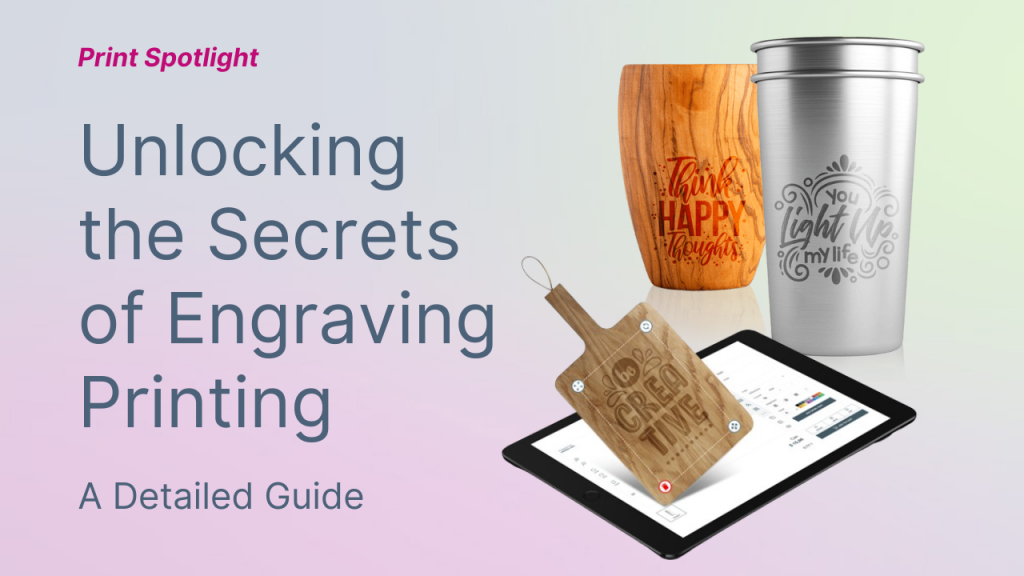
In this comprehensive guide, we uncover the age-old technique of engraving printing, exploring its applications, the intricate process behind it and how it seamlessly integrates into the ever-evolving world of print customization. Whether you’re a print provider looking to diversify or a retailer wanting to broaden your online customized print portfolio, this blog will help you understand the nuances of engraving printing and how it can enhance your offering. A technique that brings an air of sophistication, engraving printing has found a real niche in the growing world of customization. This meticulous art form involves carving detailed designs into various surfaces using specialized equipment and skilled craftsmanship. Its allure lies in the ability to create detailed designs that exude a timeless quality, making it the go-to choice for those seeking a touch of elegance in personalized printed products. Let’s delve into the reading! How does engraving printing work? The process Invented in the 15th century, numerous engraving methods have evolved over time but put simply, engraving printing is an intaglio printing technique in which a design is cut into the surface of a metal sheet or plate, usually copper but sometimes also steel. The engraved plate is then covered in ink which fills the carved recesses, the excess ink is wiped away using kraft paper and the plate is pressed onto the substrate leaving an embossed image and/or text. The method produces beautifully intricate prints with a raised, tactile surface and was traditionally the realm of highly skilled craftsmen painstakingly crafting the designs manually. But with modernization, it is increasingly done using specialized machinery and laser engraving technology that can carve minute details onto the plate in seconds, with intricate precision. While automation may take away some of the charm of traditional craftsmanship, conversely it has made this art form more accessible at a fraction of the cost and time. All the different engraving techniques There are numerous methods that can be used for engraving depending on the desired design and style. The two key methods are mezzotint and drypoint engraving. Another engraving printing technique is called etching, which uses chemicals rather than tools to take away layers of the copper to reveal the desired design. Manual artists may choose to use a combination of etching and engraving. Clean lines and bold contrast designs are particularly suited to this technique, as are shaded and fine typefaces, with their intricate details, while white inks on coloured paper give particularly impressive results. It’s not suitable for two-sided printing due to the ‘bruising’ at the back of the pressed paper. Substrates such as classic, heavyweight papers and luxurious cards shine here, with the choice of surface adding its own character to the engraved items. The delicate balance between old-world craftsmanship and cutting-edge technology is what makes engraving printing both timeless and adaptable to the demands of the modern age, with mechanical and laser engraving achieving similar results in a fraction of the time. Which method comes down to personal choice, budget and time constraints. Engraving & customization: a recipe for success Customization is where engraving really comes into its own, lending itself perfectly to this booming market, whether it’s to be used as a transfer printing process for stylish, personalized stationery or as a direct engraving process to customize your gifts and jewellery, for example. Surfaces including metals, plastics, glass, wood and leather all lend themselves perfectly to the method, making possibilities for the consumer almost endless for adding a personal touch to transform regular items into sentimental treasures. Companies that successfully offer personalized engraving services while efficiently managing their design team’s workload through the use of effective software can achieve a significant competitive edge. This approach is becoming increasingly important as customers highly value unique and high-quality experiences. Consider custom engraved products like jewellery such as necklaces or bracelets, home accessories such as cutting boards or glasses, or even gifts like picture frames or keychains, all engraved. Offering these types of products with ease could really make a significant difference. Mastering the art of custom engraving with Zakeke To offer custom engraved products without running into production or order issues, the first step is picking the right software. Zakeke is a game-changer in this area. It’s a super flexible Visual Customizer tool that fits different printing needs, such as engraving, making it easy to offer personalized products. Zakeke quickly connects smoothly with major online shopping platforms and fits right into your usual business process and workflow. You simply set up your own printing methods in the back-office and all the customization rules, and then your customers can design what they want based on those rules. Your customers can personalize their products and see what their engraving will look like on the product directly on your website, thanks to Zakeke’s live personalization and advanced 3D views. This makes shopping more confident and gets rid of questions like, “What will my custom necklace or keyring look like?” Customers get to see their engraved product in 3D in real-time, zoom in, and turn it around, almost like they’re in a store. Since you usually can’t return custom engraved items, Zakeke helps by showing customers exactly what they’re getting before they make a purchase. The best part is that Zakeke not only improves the Customer Experience, it also generates specific print-ready files for engraving print in SVG, PNG, PDF, DXF, BMP, AI formats, so all you have to do is download the right format for your equipment. No more problems with production, order management and file generation. In short, Zakeke makes engraving personalization easy and error-free, perfect for fast-paced custom work. Want to try out easy engraving printing? Start with Zakeke for a smooth experience.
The Future of Shopping: eCommerce Growth Trends in 2024

The world is more connected and digitally equipped, thanks to the rapid digital transformation. In the growing digital age, eCommerce continues to grow with some exciting eCommerce growth trends. According to Statista, the online shopping market will see significant growth in yearly revenue, and that’s forecast to be worth $4.18 trillion in 2024 in various categories. The eCommerce market and industry are constantly evolving, and the best part is that it has positive growth, increased revenue, and higher per-user spending. Source: Statista With each passing year, the new-age shoppers are setting expectations and demand higher, as well as increasing the average revenue per user. In fact, the average revenue per user will also experience a spike in the coming year, 2024, as forecasted in a study by Statista. eCommerce brands know that today, customers have the liberty to shop anywhere, at any time, right from their smartphones. If done right, businesses know that the future of eCommerce is here with the exponential demand for online shopping sites and applications. eCommerce businesses must exceed customer expectations to get ahead in the competitive space and stand any chance of demanding customers’ attention. But how? What are the upcoming eCommerce trends? eCommerce trends help global businesses to stay ahead in an eCommerce growth curve and find room to boom. Let’s understand eCommerce trends in 2024 as we head into 2024 after this festival season. 1. Augmented Reality (AR) for eCommerce The rapid growth of eCommerce showcases a significant change in how people shop. Unlike the traditional in-store shopping experiences, eCommerce shopping faces a common challenge while decision making (or preciously informed decision making) for usual hiccups in gaining traction to digital products into the real world. Augmented Reality (AR), an advanced technology that blurs the line between digital and real, enables shoppers to see the real aspect of digital products by placing digital images of products to give an illusion of real-life experience in a more immersive and interactive way possible. Customers can virtually try on outfits or visualize furniture in their home interiors and make informed decisions. Technologies like Augmented Reality (AR) are shortening the consumer decision-making process and enabling faster conversion rates. The trend is surely going to mature with time and help people with better shopping experiences. 2. Voice Commerce for online shopping 2024 will bring one of the most exciting upcoming e-commerce trends when customers do shopping using voice commands from their smart devices that are interpreted by Natural Language Processing (NLP) technology to carry out instructions or appropriate actions. Though it is still in the very early stage of becoming a sophisticated way of shopping, many eCommerce brands have started investing in it. It could be similar to voice search or via virtual assistants like Amazon’s Alexa, Google Home, or Apple’s Siri. It could be a convenient way of online shopping without using your hands. 3. Personalized experience in eCommerce Brand loyalty, better connection, and greater retention are the by-products when eCommerce brands go deeper with customer connections. Customers are predominantly looking for personalized experiences, and for this experience, they are prepared to share their demographics and data to dig deeper. Personalized experiences will dominate the eCommerce growth trends. A personalized experience can elevate the customer experience (CX) multifold, unlike a “one-size-fits-all’ strategy. eCommerce applications require a flexible technology with minimal total cost of ownership (TCO) to accommodate personalized offerings. Thanks to customer insights and advanced eCommerce technologies like GraphQL Readability, there are multiple tools in the market that help with personalization at every stage and channel. The advanced tools designed to support eCommerce personalization through the online store are many. They bring the capability to add or elevate extensive features into an eStore without changing the entire application with zero or minimal downtime. An accurate example is Zakeke’s Product Customizer: the easiest tool to start offering product customization in seconds, without any IT or design skills. Another example for the Magento store owners is the MageDelight Magento 2 – Price per Customer extension. It allows personalized discounts and lucrative pricing for customers and enables eCommerce stores to gain loyalty and strategically increase customer spending. Through tools and extensions like these ones, you can take your personalization game to the next level. 4. Pricing pressure model for eCommerce Open eCommerce is a challenge for brands when customers can check prices, compare them, and then switch to the best pricing, even for a slight margin in the pricing model. The pressure toward competitive pricing is even greater when pricing changes faster than ever. To outperform the competition, an eCommerce platform needs to offer individual experiences, special offers, and dynamic bundle products in no time before customers switch to another site. eCommerce brands need flexible, scalable, and highly customizable solutions to handle the dynamic pricing model for customer profiling and interest. The fast-food chain brand McDonald’s uses customer psychology and decoy pricing to influence customer decision-making. It offers them a lucrative price just below the highest priced product for comparison for quick buying in bundle offers. eCommerce brands can use this strategy in their stores and offer such dynamic pricing for individual customers. Via customer segmentation and buyer persona analysis, hyper-personalization is possible with tools that allow custom pricing for different customer groups. 5. Predictive Analytics for eCommerce The idea of preparing well in advance is something an eCommerce business needs no introduction. The festival season always brings a surge in new visitors, higher average customer value (ACV), and increased sales. Are you ready for eCommerce holiday shopping? Yes, this question always haunts eCommerce brands and, of course, puts doubt over their readiness. Predictive analysis with the help of customer data, industry insights, and technology experts can only save your eCommerce. Predictive analysis uses machine learning to forecast future demands, trends, and customer buying behavior to sell more without disruption. eCommerce businesses must recognize this trend in 2024. 6. Customer data privacy for eCommerce It is true that, on one hand, customers are actively looking for a hyper-personalized shopping experience from their
What Is Sublimation Printing? Your Comprehensive Guide Explained
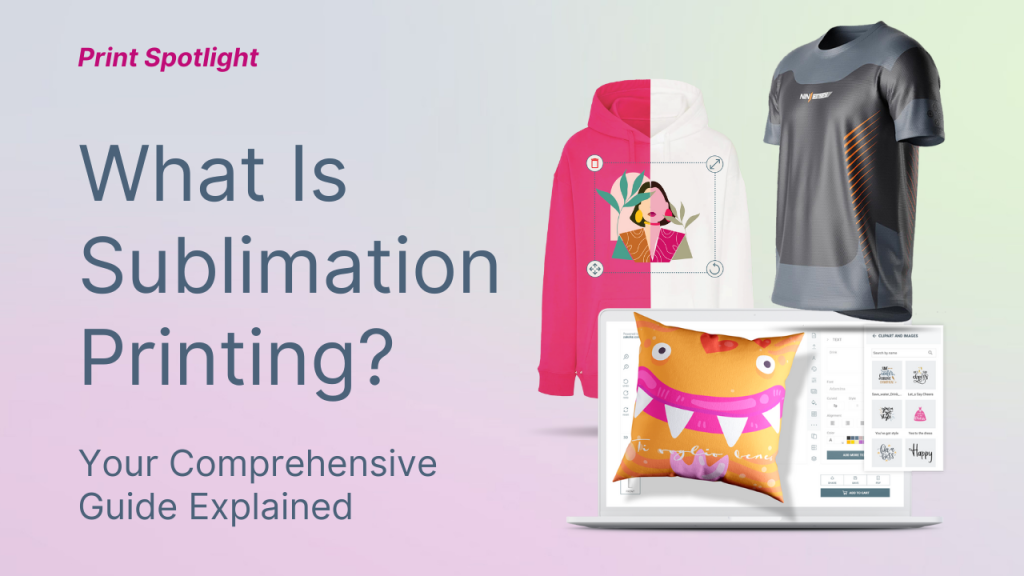
Sublimation printing is a versatile printing method for adding vivid, full-color designs to a wide range of products. From clothing and accessories to woods and ceramics, sublimation printing has revolutionized the art of customizing everyday items with eye-catching graphics. In this article, we’ll delve into the nitty-gritty. We’ll explore how it works, what products it can transform, pros and cons and how it compares to other printing methods. Ready to dive deep into the world of sublimation? What is sublimation printing, and how does it work? The process of sublimation printing allows the transfer of full-color, high-resolution images onto a variety of man-made surfaces using a combination of heat and pressure. The technique involves the transformation of special sublimation inks, known as disperse dye sublimation, into a gaseous state at high temperature. How to print sublimation images? A CMYK ink-mix is first printed onto a special transfer paper which is then placed onto the surface of the item to be printed. Pressure and heat of around 180-200 Celsius are then applied transforming the ink into a gas making it penetrate the surface of the substrate before cooling. The method produces stunning, full-color and long-lasting images that are embedded within the product. Sublimated products: from shirts to paper, what kind of products can be sublimated? Also known as all-over-printing, sublimation printing can be applied to a wide array of products . Designs can be applied seamlessly across the entire surface of a garment. This makes this method highly popular in the apparel industry for items like t-shirts, hoodies, swimsuits, and sports uniforms. It is also popular for accessories such as hats and socks.It is especially popular for product customization, including sports and work uniforms or unique promotional items for gifts or businesses. This method delivers high-resolution, vibrant prints of names, numbers, logos, and even full-color photographs that remain durable through washing without compromising fabric breathability. Furthermore, in the home decor industry sublimation printing can be used to add a personal touch to cushions, pillowcases and even banners and wall art. While in merchandise, gifts and homewares, it is effective with products like ceramic mugs, coasters, flags, phone cases and mousepads affording rich and durable colors. In terms of choice of materials, it works best on 100% polyester fabrics, polyester blends and polymer-coated materials such as woods, metals, glass, plastics and ceramics. Pros and cons of sublimation prints Like any traditional printing method, sublimation printing has advantages and limitations: Sublimation technique Pros Limitations of sublimation Sublimation Printing vs Screen Printing What are the main differences between sublimation and screen printing? Sublimation vs DTG and DTF Printing Here are the key differences between Sublimation printing and DTG: And what about DTF? Mastering design preparation: step-by-step guide to ready your file for sublimation printing To get the best from your sublimated prints, ensuring correct file preparation is vital . Here are the key steps: The sublimation printing process: guide step-by-step Understanding the sublimation printing process is crucial for achieving high-quality results. Let’s break it down into manageable steps: Troubleshooting common sublimation printing issues Even experienced sublimation printers encounter issues from time to time. Here are some common problems and their solutions: Sublimation printing and customization: streamlining your processes with Zakeke As we’ve already said, sublimation printing shines in product personalization , from clothing and uniforms to accessories. But how can an ecommerce business start selling custom sublimated products without burdening its design team? Here’s where Zakeke comes into play: a software solution that unlocks smooth product personalization while offering advanced 3D visualization and immersive Augmented Reality and Virtual Try-On experiences. The best part? Zakeke not only enhances the shopping experience, but it streamlines and improves merchant workflows thanks to unparalleled adaptability and nifty automation capabilities. In the web-to-print and customization realm, the right software is crucial for maximizing potential and ensuring high-quality, precise custom prints. Zakeke meets diverse printing needs , easing design and friendly printing processes and reducing manual design work. It automates the creation of custom sublimation-ready files , optimizing artwork and ensuring accurate color reproduction. It adapts to your printing techniques, integrates with your workflows, and automates the production of print-ready files also for sublimation or engraving. In particular, it includes advanced files like nested and stacked ones with all the different print areas positioned in a pattern compatible with your printing process. Whether you’re trying to elevate your catalog or the one coming from a print on demand platform, Zakeke will seamlessly integrate into your current tech ecosystem. It will provide you the fulfillment options you need to increase volumes, revenues and automation. In other words, Zakeke enables effortless print personalization . A simple plugin installation on your e-commerce website allows customers to design their dream products. They will design their sublimation shirts or sports uniforms without needing any design skills. Curious about enhancing your printing workflow with Zakeke? Kick off your no-cost trial or set up a quick demo today! Frequently Asked Questions
The Ultimate Guide to Minimizing Ecommerce Product Returns

In the ever-expanding realm of e-commerce, the dreaded wave of product returns is an inevitable challenge for online retailers. High return rates can significantly impact profitability and customer satisfaction. In this comprehensive guide, we’ll delve into the root causes of high return rates, explore interactive experiences to reduce e-commerce product returns, and uncover the game-changer: Augmented Reality (AR) experiences. Additionally, we’ll discuss the benefits of embracing live product customization and address common concerns. Let’s embark on the journey to minimize ecommerce product returns and enhance the overall shopping experience. The Root Causes of High Ecommerce Product Return Rates 1. Misleading Product Descriptions and Visuals One of the primary reasons for high return rates is the disparity between what customers expect based on product descriptions and visuals and what they receive. To tackle this issue, e-commerce businesses must invest time and resources in creating accurate and detailed product descriptions. High-quality images and detailed specifications can bridge the gap between expectation and reality, reducing the likelihood of ecommerce product returns. 2. The Disconnect Between Expectation and Reality The virtual nature of online shopping poses a unique challenge – customers cannot physically touch or feel the products they are interested in. This lack of tangible experience often leads to a disconnect between what customers envision and what the product delivers. Addressing this challenge involves leveraging technology to create more immersive and realistic online shopping experiences. 3. The Challenge of Online Shopping: Can’t Touch, Can’t Feel The inability to physically interact with products is a fundamental drawback of online shopping. Customers may hesitate to make a purchase when they cannot assess the texture, size, or quality of an item. To overcome this challenge, e-commerce businesses must focus on providing alternative ways for customers to engage with products before making a purchase decision. Interactive Experiences to Reduce Returns Providing a captivating and informative online shopping experience is key to minimizing returns. Interactive elements, including videos, 3D previews and models, and other engaging features, play a pivotal role in achieving this goal. Here’s a closer look at how these interactive experiences contribute to reducing returns and enhancing the overall customer journey: 1. Dynamic Product Videos Videos offer a dynamic way to showcase products, providing customers with a closer look at their features, functionality, and real-world applications. By incorporating product videos, e-commerce businesses can offer a more comprehensive understanding of their offerings, reducing the likelihood of returns due to misunderstandings about product capabilities or appearances. 2. 3D Models 3D models bring products to life in a way that static images cannot. Customers can interact with 3D representations, rotating and zooming in to examine details from various angles. This immersive experience helps bridge the gap between online and in-store shopping, allowing customers to virtually explore products. The deeper understanding gained through 3D models contributes to more confident purchasing decisions and, consequently, a decrease in ecommerce product returns. 3. Virtual Try-Ons Virtual try-on features allow customers to visualize how products will look on them or fit into their spaces. This is particularly valuable in industries like fashion and home decor. By enabling customers to virtually “try” products, businesses reduce returns associated with size, style, or compatibility issues, as customers gain a better sense of how the product aligns with their preferences. 4. Real-Time Product Demos Real-time product demonstrations, whether through live streaming or interactive sessions, offer customers an authentic look at the product in action. This transparency helps manage expectations, ensuring that customers have a clear understanding of the product’s features and functionality. The Game-Changer: Augmented Reality Experiences Augmented Reality (AR) is revolutionizing the e-commerce landscape, emerging as a game-changer that not only enhances customer engagement but also serves as a powerful tool in reducing ecommerce product returns. So, how does AR transform the online shopping experience, offering a win-win solution for both consumers and e-commerce businesses? 1. Visualizing Products in Real Environments AR allows customers to virtually place products in their own living spaces through the lens of their smartphones or tablets. This capability goes beyond traditional images, providing a realistic and immersive preview of how a product fits into their daily lives. AR minimizes uncertainties and reduces the likelihood of returns stemming from discrepancies between customer expectations and the delivered product. 2. Virtual Try-Ons for Fashion and Accessories AR-driven virtual try-ons enable customers to virtually “try on” clothing, accessories, and even cosmetics before making a purchase. This feature revolutionizes the online fashion shopping experience, addressing common return issues related to sizing and style preferences. With AR, customers gain confidence in their choices, resulting in a more accurate representation of the product and, consequently, fewer returns. 3. Enhancing Interactivity and Engagement AR transforms the passive act of online shopping into an interactive and engaging experience. Customers can interact with 3D models, explore product features, and visualize details up close. This heightened interactivity captures and sustains the customer’s attention, leading to increased engagement. The more engaged customers are, the more informed their purchasing decisions become, subsequently reducing the likelihood of returns driven by dissatisfaction or unmet expectations. 4. Overcoming the Limitations of Online Shopping The challenge of online shopping lies in the inability to physically touch or feel a product. AR effectively overcomes this limitation by providing a more sensory-rich experience. Customers can virtually inspect textures, colors, and dimensions, making the online shopping journey more akin to an in-store experience. This tangible preview diminishes uncertainties, empowering customers to make confident purchase decisions and, in turn, decreasing return rates. 5. Confidence-Boosting Pre-Purchase Experience AR transforms the pre-purchase experience by instilling confidence in customers before they commit to a purchase. By virtually experiencing a product in their own environment or trying it on virtually, customers can make more informed decisions. This proactive approach reduces the need for returns, as customers have a clearer understanding of what to expect when their chosen product arrives. Embracing Live Product Customization Live product customization experiences represent a transformative approach in e-commerce, providing customers with a personalized and engaging shopping journey. By allowing customers to
Google SERP Features that Supercharge Your E-commerce Visibility

Any e-commerce business strives to excel at SEO, as organic search offers one of the best investment-to-reward ratios. But simply optimizing your website to rank in the top ten of SERP might not be enough to get the full benefit of organic traffic. You can supplement your e-commerce SEO strategy by trying to score e-commerce SERP features. Appearing on those can potentially grant you more traffic and more conversion opportunities. In this article, we’ll cover what are Google SERP features, why your SEO strategy needs them, and how to get them. What are SERP Features? SERP or search engine result pages are what we see on Google or another search engine when we search for anything. Traditionally, SERP looked pretty simple – ten blue links and a navigation bar at the bottom that lets you browse through the pages. Today, SERP has changed dramatically from what it used to be. The ten blue links are now hidden behind half a dozen SERP features on many if not most, search queries. Apart from up to four sponsored links appearing before anything else on many highly competitive e-commerce keywords, you’re likely to see the following: Here’s what SERP looks like for an e-commerce search – ads and e-commerce SERP features take most of SERP real estate. While this doesn’t make traditional SEO goals of ranking among the top ten organic search results obsolete, you must also pursue Google SERP features. Benefits of SERP Features for E-commerce Do you need to aim for SERP features? For many businesses, the answer would be a yes. Here are 3 major reasons why you want to have e-commerce SERP features for your website: Make SERP features work for your e-commerce Now, how do you get SERP features in the organic results of Google? The approach will depend on the type of SERP feature you’re going after, but here’s a template you can follow to get any feature. With this approach, you can get any type of e-commerce SERP feature. Now, let’s look at the most prominent SERP features you’re likely to want to focus on. Type of SERP Features that Matter the Most for E-commerce There are multiple SERP feature types that you can get, but not all of them are equally important for e-commerce. For instance, the featured snippet might get the best CTR, but it mostly appears for informational organic results and won’t lead to higher conversions. Below, we’ll look at four e-commerce SERP features that can directly or indirectly lead to a conversion or another benefit for an e-commerce business. Shopping Results Since we’re going for the most profitable e-commerce SERP feature, our high priority would be making it to the Shopping Results for product keywords. Organic Google Shopping results are displayed below Shopping Ads and search ads but typically above the first or the second organic search result. Typically, they’re presented as eight product tiles, each with the price, store name, reviews, and the ability to scroll through several images in a product tile. If you click on one of the tiles, you’ll get more details about the product and the store. This SERP feature is the ultimate goal for any e-commerce store as it captures users who want to buy your product, not those looking for information. Google will likely add the option to make a purchase right from the SERP, so this feature should have most of your attention. To get on this SERP feature, you’ll need to create a Google Merchant Center account and upload all of your products there. It was introduced not long ago, so there isn’t a tried and tested way to rank here all the time. However, you can follow the best practices set by Google and confirmed to work by many e-commerce businesses that are already participating in Google Shopping. Here’s what you should focus on: That’s a lot of work for an e-commerce store, even with a few hundred products, but most of it can be automated to prevent human error. What’s harder to manage is reviews. Many Shopping SERP results have hundreds of Google reviews, so it may play a role in ranking. Try incentivizing your customers to leave reviews on Google to have more chances of appearing in this SERP feature. At the time, Google didn’t indicate that backlinks influence Google Shopping results. However, if you’ve done all you could to optimize your site and products on GMC and still can’t rank well, look into e-commerce link building. Image Carousels While Google Shopping is the most convenient way to shop on SERP, it’s not the only one. This feature often appears on top in organic results for keywords like “buy black pants.” But if you type in “black pants” without the word “buy,” you’ll likely see an image carousel take the first place instead. Some visual content here will be from blogs, others from e-commerce stores. When you click on the images from stores marked as “product” in the image carousel, you can see information about pricing and availability and visit the store. This SERP feature can help you be ahead of organic search results and have more chances of attracting users as you show your product’s picture, not just with a text link. Here’s how you can rank your image on SERP: Follow these steps, and your images will likely appear on Google image search and as an image carousel on regular SERP. Local Pack For local search queries, when the user is trying to find the physical location of a business, Google will display the local pack results above organic results. Typically, it would include a sponsored entry, three organic results, and a map you can click on to see more local results. Google takes these results from Google Business Profile (formerly Google My Business). To get this SERP feature, you don’t have to SERP features by keywords and optimize your pages for any specific keywords. All you have to do is ensure your GBP looks pristine and