

Updated September 2026
The best WooCommerce product customizer depends on what customers need to personalize and what your business needs after the order.
For businesses that need visual customization, automated print-ready files, 3D product configuration and AR in one platform, Zakeke is our top all-in-one choice. Fancy Product Designer and Lumise are more traditional WooCommerce product designer plugins, Kickflip focuses on interactive visual configuration, Customily and Teeinblue are strong options for personalized-product workflows, while Expivi is particularly relevant for complex 3D configuration and CPQ.
We compared 7 WooCommerce product customizers based on live preview, personalization options, 3D support, dynamic pricing, print-ready output, WooCommerce integration, scalability and price.
Best WooCommerce Product Customizers: Quick Comparison
| Product customizer | Best for | Starting price | Live personalization | 3D | Print-ready output | WooCommerce |
|---|---|---|---|---|---|---|
| Zakeke | All-in-one customization & visual commerce | €59/mo billed annually | Yes | Yes | Yes | Native integration |
| Fancy Product Designer | Flexible 2D design canvas | License-based | Yes | No | Yes | Native integration |
| Lumise | Self-hosted 2D product design | $69 one-time license | Yes | No | Yes | Native plugin |
| Kickflip | Interactive visual customization | $59/mo | Yes | No real-time 3D | Production data available | Integration available |
| Expivi | Complex 3D configuration & CPQ | Custom | Yes | Yes | Yes | Native plugin |
| Customily | Personalized products & print workflows | $49/mo | Yes | Available for supported experiences | Yes | Supported |
| Teeinblue | High-volume print personalization | $396/mo or $297/mo annually | Yes | Limited | Yes | Via Boundless |
Pricing and product capabilities checked in September 2026. Prices, features and limits can change, so always verify current vendor information before purchasing.
Best WooCommerce product customizers at a glance
Best overall for WooCommerce: Zakeke
Best for visual product customization: Zakeke
Best for customization + 3D configuration: Zakeke
Best traditional design canvas: Fancy Product Designer
Best self-hosted designer: Lumise
Best for interactive 2D configuration: Kickflip
Best for complex 3D configuration and CPQ: Expivi
Best for template-driven personalization: Customily
Best for high-volume print personalization: Teeinblue
How We Compared These WooCommerce Product Customizers
We evaluated the seven platforms based on the capabilities that matter beyond simply adding a text field to a WooCommerce product.
Our comparison considers:
- real-time visual personalization;
- text and image customization;
- product configuration capabilities;
- 2D and 3D visualization;
- Augmented Reality;
- dynamic pricing;
- print-ready and production-ready output;
- WooCommerce integration;
- implementation requirements;
- ability to support larger catalogues and workflows;
- publicly available pricing.
Pricing and product information were reviewed in September 2026 using vendor websites, documentation and official marketplace listings where available.
The right product customizer should not only create a good customer experience. It should also fit the workflow that begins after the customer clicks Add to Cart.
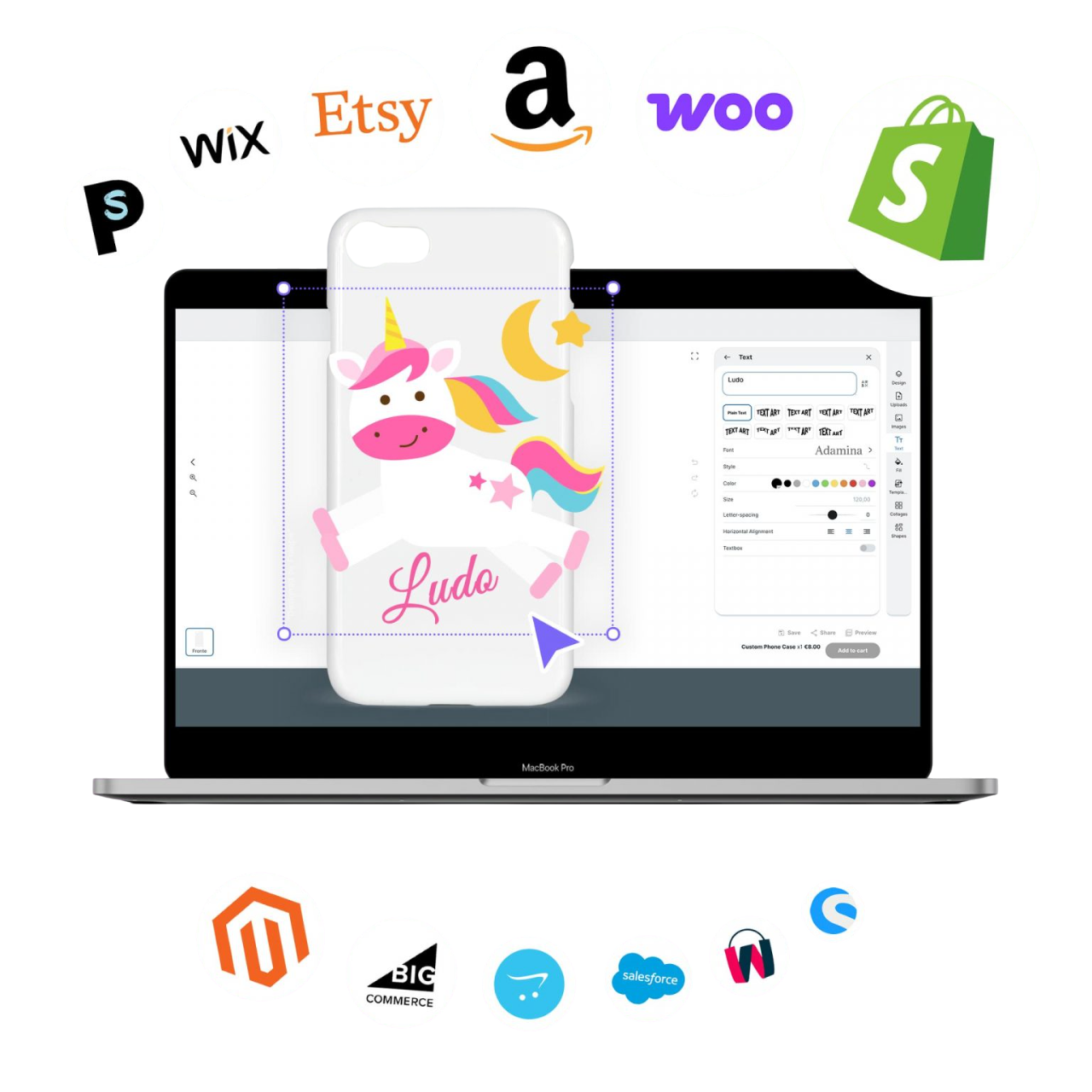
Turn your WooCommerce store into an extraordinary experience with real-time 2D, 3D, AR & Virtual Try-On customization. Install Zakeke on WooCommerce in less than 10 minutes!

What Is a WooCommerce Product Customizer?
A WooCommerce product customizer is software that lets customers visually personalize a product before purchasing it, usually by adding or changing text, images, logos, colors, artwork and other design elements.
Instead of selecting only standard WooCommerce variations such as size or color, shoppers can see their personalized product update in real time.
For example, customers might:
- add a name to a bottle;
- upload a logo to promotional merchandise;
- design a personalized T-shirt;
- add engraving to jewelry;
- customize product packaging;
- create artwork for signs or labels;
- personalize gifts with photos and text.
More advanced WooCommerce product customization software can also automatically calculate prices, generate print-ready files, display products in 3D or AR and send order data into production workflows.
WooCommerce Product Customizer vs Product Options Plugin
A product customizer is not the same as a product options plugin.
A standard WooCommerce product options plugin collects selections or information from customers.
For example:
Name: Alessia
Color: Black
Logo: uploaded-file.png
A visual product customizer goes further by showing those selections directly on the product preview.
| Tool type | Main purpose | Live visual preview | Production output |
|---|---|---|---|
| Product options plugin | Collect product choices | Usually no | Usually no |
| Product customizer | Visually personalize a product | Yes | Often |
| Product configurator | Combine components according to rules | Yes | Depends |
| 3D configurator | Configure components in interactive 3D | Yes, in 3D | Depends |
If you only need customers to choose predefined options, a basic WooCommerce add-ons plugin may be enough.
If the customer needs to see the final personalized product before ordering, a visual product customizer is usually the better fit.
1. Zakeke: Best Overall WooCommerce Product Customizer
Best for: businesses that need visual personalization, automated production output, 3D configuration and immersive product experiences in one platform.
Zakeke is more than a WooCommerce product customizer. It is a visual commerce platform combining a Visual Product Customizer, 3D Product Configurator, 3D & AR Viewer and Virtual Try-On.
For WooCommerce businesses, this means customers can personalize products with text, images, logos and other design elements while seeing the result in real time.
Zakeke can then connect that customer-facing experience to the order workflow by automatically generating production-ready files.
Zakeke key features
- real-time visual product customization;
- text personalization;
- image and logo upload;
- pre-designed templates;
- dynamic pricing;
- print-ready files;
- engraving and embroidery workflows;
- 3D product configuration;
- Augmented Reality;
- Virtual Try-On;
- save and share designs;
- quote workflows;
- APIs and webhooks;
- multi-channel commerce support.
Where Zakeke is strongest
Zakeke is particularly strong when product customization needs to become part of a complete commerce and production workflow.
A customer can personalize a product visually, approve the design and place the order while the business receives the files and data required to continue processing it.
This can be especially useful for:
- promotional products;
- apparel;
- customized gifts;
- packaging;
- jewelry and accessories;
- sporting goods;
- engraving;
- embroidery;
- furniture and configurable products.
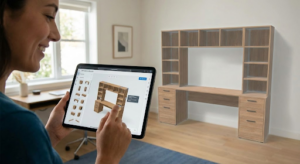
Zakeke also goes beyond traditional 2D product designers by supporting 3D configuration and AR within the same platform.
That matters for businesses selling both personalized and configurable products, because they do not necessarily need separate systems for each experience.
Zakeke limitations
Zakeke may be more than you need if customers only need to enter a few simple text fields or choose standard product options without a visual preview.
Its 3D capabilities also require suitable 3D assets. Businesses without existing models need to create or source those assets before launching 3D experiences.
Companies looking exclusively for a locally hosted, one-time-purchase WordPress plugin may prefer a traditional plugin such as Lumise.
Zakeke pricing
Zakeke offers both self-service plans and custom Enterprise solutions.
Self-service plans currently include:
- Starter: €59/month — up to 10 published products;
- Grow: €110/month — up to 50 published products, with additional capabilities such as dynamic pricing rules, additional sales channels and removal of Zakeke branding;
- Scale: €255/month — up to 100 published products, with additional capabilities for advanced configuration and higher-volume businesses.
These prices are billed annually.
A 14-day free trial is available with no credit card required.
For larger companies, Zakeke Enterprise is available with custom pricing, designed for businesses requiring larger or more complex catalogues, advanced integrations, dedicated support and implementation requirements beyond standard self-service plans.
Choose Zakeke if: you want to connect visual product customization with 3D configuration, immersive visualization and production workflows rather than simply adding personalization fields to WooCommerce.
2. Fancy Product Designer: Best for a Flexible 2D Design Canvas
Best for: WooCommerce stores that want customers to freely design products on a traditional 2D canvas.
Fancy Product Designer is a long-established WooCommerce product designer focused on canvas-based product personalization.
Customers can add and manipulate text, images and design elements while merchants control the available design tools and interface.
It supports WooCommerce product types including simple, variable and downloadable products.
Fancy Product Designer key features
- visual 2D design canvas;
- text customization;
- image upload;
- multiple product views;
- dynamic pricing options;
- responsive designer;
- WooCommerce cart integration;
- print-oriented output;
- configurable designer interface.
Where Fancy Product Designer is strongest
Fancy Product Designer works well when the shopper needs significant freedom to build a design manually on a canvas.
Typical use cases include apparel, merchandise, paper products, phone cases, signage and other print-oriented products.
Fancy Product Designer limitations
Its primary focus is 2D customization rather than real-time 3D product configuration or AR.
It also follows a more traditional WordPress/plugin model, which can mean more responsibility for the merchant when it comes to setup, hosting environment, maintenance and extending the workflow.
An additional consideration is that the vendor announced in 2025 that direct support for Fancy Product Designer was being discontinued as its team shifted focus toward its newer Chamevo platform.
Businesses considering it for a new long-term implementation should take that product direction into account.
Fancy Product Designer pricing
Fancy Product Designer uses a license-based pricing model, with additional capabilities or services potentially requiring separate extensions or services.
Check current pricing before purchasing, as the product and support model has changed over time.
Choose Fancy Product Designer if: you primarily want a flexible WooCommerce 2D design canvas and prefer a traditional plugin-oriented approach.
3. Lumise: Best Self-Hosted WooCommerce Product Designer
Best for: businesses looking for a one-time-license WooCommerce product designer focused on 2D personalization.
Lumise is a WordPress and WooCommerce product designer built around an HTML5/JavaScript customization interface.
Customers can create designs from scratch or work from templates using text, images, clipart and other visual elements.
Lumise key features
- live 2D product designer;
- text personalization;
- customer image upload;
- clipart;
- design templates;
- multiple product views;
- print-oriented workflows;
- WooCommerce integration.
Where Lumise is strongest
The biggest difference between Lumise and many SaaS customizers is its one-time licensing model.
That can appeal to businesses that prefer a more self-hosted approach and are comfortable managing WordPress infrastructure and plugin maintenance themselves.
Lumise limitations
Lumise focuses primarily on 2D product design.
It is therefore less appropriate when 3D configuration, AR or a broader visual commerce platform is central to the project.
A self-hosted plugin can also require more technical ownership from the merchant compared with a managed SaaS platform.
Lumise pricing
The current WooCommerce/WordPress version of Lumise is available with a $69 regular license.
An extended license and optional add-ons are priced separately.
Choose Lumise if: you want a traditional WooCommerce product designer with a one-time license and do not require advanced 3D or AR capabilities.
4. Kickflip: Best for Interactive 2D Product Configuration
Best for: brands that want a polished visual customization experience with component-based product options and pricing logic.
Kickflip is a product customizer designed around interactive visual configuration.
Customers can personalize products with text, images, colors and configurable components while seeing their choices update on the product.
Kickflip key features
- real-time visual customization;
- text and image personalization;
- configurable components;
- conditional logic;
- dynamic pricing;
- multi-view products;
- responsive interface;
- API capabilities;
- optional CPQ capabilities.
Where Kickflip is strongest
Kickflip is particularly relevant for products that combine visual personalization with selectable components and option logic.
It can therefore cover use cases that go beyond a basic print designer while maintaining a highly visual customer experience.
Kickflip limitations
Kickflip’s product preview is primarily based on high-quality 2D rendering rather than true interactive real-time 3D.
Businesses where customers need to rotate the configured object freely, inspect it from every angle or place it in their environment through AR should compare dedicated 3D-capable platforms.
Kickflip pricing
Kickflip’s Scale plan currently starts at $59/month.
Its pricing also includes transaction fees based on custom product sales, with the percentage decreasing as sales volume increases.
Optional capabilities such as white-labeling and CPQ are available as paid add-ons.
Choose Kickflip if: you need polished visual customization and product option logic but real-time 3D is not a core requirement.
5. Expivi: Best for Complex 3D Configuration and CPQ
Best for: WooCommerce businesses selling complex configurable products where 3D visualization, product rules and pricing logic are central.
Expivi approaches WooCommerce customization from the configuration side.
Its native WooCommerce integration can bring real-time 3D configuration and Visual CPQ directly into WooCommerce product pages.
Customers can configure complex products visually while the system manages product rules, pricing and configuration data.
Expivi key features
- native WooCommerce plugin;
- real-time 3D configuration;
- Augmented Reality;
- complex product rules;
- dynamic pricing;
- Visual CPQ;
- PDF quote generation;
- save and share configurations;
- print-ready output;
- production data;
- API-first architecture.
Where Expivi is strongest
Expivi is particularly strong when the product itself is structurally configurable.
Think furniture, equipment, modular products or other products where one selection affects which components and prices are available next.
It can also connect configuration with sales and production data, making it relevant for more complex B2B and manufacturing workflows.
Expivi limitations
For a merchant that only needs customers to add a name or upload an image to a simple product, Expivi may introduce unnecessary complexity.
Its strength is complex configuration rather than lightweight personalization.
Expivi pricing
Expivi uses custom pricing based on the project and implementation requirements.
Choose Expivi if: complex 3D configuration, CPQ and product rules are more important than a traditional 2D personalization canvas.
6. Customily: Best for Template-Driven Product Personalization
Best for: sellers of personalized gifts, apparel and print products that rely heavily on templates and automated print files.
Customily is a product personalization platform supporting WooCommerce alongside Shopify, Etsy, Amazon and Shoplazza.
It lets merchants build personalized designs and generate production files from customer selections.
Customily key features
- live personalization;
- text and image customization;
- personalization templates;
- print-ready file generation;
- mockup generation;
- clipart and design libraries;
- AI tools;
- POD and API connections;
- support for multiple stores.
Where Customily is strongest
Customily is particularly useful for businesses built around template-driven personalized products.
This can include gifts, jewelry, apparel, wall art and products where customer data is automatically inserted into a predefined design.
Its automated print-ready output also makes it relevant for businesses processing a significant number of personalized orders.
Customily limitations
Businesses whose main requirement is complex component-based product configuration should compare Customily with dedicated configuration platforms.
Likewise, companies looking for a broader combination of 2D customization, advanced 3D configuration, AR and Virtual Try-On may need a wider visual commerce stack.
Customily pricing
Customily currently starts at $49/month per platform for WooCommerce and other supported standard ecommerce platforms.
The plan includes unlimited stores on the same platform, unlimited published products, mockups and print-ready file exports.
Additional per-item charges apply when personalized products are sold.
Custom Enterprise pricing is also available for high-volume or specialized requirements.
Choose Customily if: your catalogue is heavily based on template-driven personalized products and automated print-file generation.
7. Teeinblue: Best for High-Volume Print Personalization
Best for: growing personalization businesses that need extensive customization options and print-ready files.
Teeinblue provides product personalization for WooCommerce through its Boundless offering.
Customers can personalize products using text, images, clipart and more specialized personalization types while seeing the result before purchasing.
Teeinblue key features
- live product personalization;
- text and image customization;
- clipart;
- specialized personalization options;
- unlimited uploads;
- print-ready file generation;
- multiple export formats;
- WooCommerce support through Boundless.
Where Teeinblue is strongest
Teeinblue is particularly oriented toward businesses selling personalized print products at scale.
Its range of personalization types can be useful for merchants selling gifts, apparel, wall art, jewelry and similar products where customer data or imagery is transformed into a finished design.
Teeinblue limitations
For WooCommerce, Teeinblue uses its Boundless offering rather than the lower-cost Shopify plan.
Its WooCommerce pricing is therefore substantially higher than several tools in this comparison.
Some fulfillment automation available in its Shopify and Etsy workflows is also more limited on WooCommerce, where Boundless users may need to download generated files and handle the production handoff separately.
Its core strength is personalization rather than complex component-level 3D configuration.
Teeinblue pricing
Teeinblue Boundless currently costs $396/month when billed monthly, or $297/month when billed annually.
The plan includes unlimited uploads, live preview and ready-to-print files.
A 14-day free trial is available.
Choose Teeinblue if: you run a high-volume personalization business and print-file generation is more important than advanced 3D product configuration.
Which WooCommerce Product Customizer Is Best for Your Business?
There is no single product customizer that is best for every WooCommerce store.
The right choice depends on what the customer needs to create and what your team needs to receive after checkout.
| If your priority is… | Consider |
|---|---|
| Customization + production automation + 3D/AR | Zakeke |
| Advanced visual customization | Zakeke |
| Traditional 2D design canvas | Fancy Product Designer |
| Self-hosted customization with one-time licensing | Lumise |
| Interactive 2D configuration and option logic | Kickflip |
| Complex 3D configuration and CPQ | Expivi |
| Template-driven personalized products | Customily |
| High-volume print personalization | Teeinblue |
For simple products, you may not need a complete visual product customizer at all.
For more complex workflows, however, comparing only the frontend editor is a mistake.
The complete workflow is:
Customer personalization ? live preview ? pricing ? cart ? order ? production file/data ? fulfillment
The right software should solve the parts of that workflow that currently require the most manual work.
What Features Should a WooCommerce Product Customizer Have?
1. Real-Time Live Preview
Customers should be able to see personalization as they make it.
If a shopper changes a name, color, logo or image, the product preview should update immediately.
This reduces the gap between what the customer imagines and what the business eventually produces.
2. Text and Image Personalization
For most personalized-product businesses, the core requirements include:
- custom text;
- fonts;
- colors;
- image upload;
- logo upload;
- artwork positioning;
- design templates.
More advanced use cases may also require engraving effects, embroidery visualization or image processing.
3. Print-Ready File Generation
This is one of the most important features to check.
A live preview solves the customer-facing problem.
It does not automatically solve production.
If employees still have to open every order and manually recreate the customer’s artwork, the customization workflow is not fully automated.
For print, promotional products, engraving and similar industries, check exactly which production files the software generates and at what resolution.
4. Dynamic Pricing
Customization can change the final product price.
Adding a logo, engraving, premium material or additional print area may all need to affect the price.
Your customizer should therefore support the pricing logic required by your products rather than forcing you to create hundreds of WooCommerce variants.
5. 2D vs 3D Customization
Not every product needs 3D.
A business card or poster can usually be customized effectively in 2D.
A shoe, piece of furniture, bottle, bicycle or configurable piece of equipment may benefit significantly from 3D.
Choose based on the product, not simply on which technology sounds more advanced.
6. Augmented Reality
AR can be particularly useful when scale, space or fit matter.
Furniture customers may want to visualize a configured item in their room, while shoppers buying accessories may benefit from Virtual Try-On.
But AR is not essential for every customization workflow.
7. WooCommerce Integration
A WooCommerce product customizer should connect the customer’s design to the actual order.
Check whether:
- the customized product can be added directly to cart;
- the design is saved with the order;
- pricing updates correctly;
- production files are associated with the order;
- customers can edit saved designs;
- configuration data can be sent to other systems.
8. Scalability and Integrations
A plugin that works for ten personalized products may not necessarily be the right architecture for thousands of SKUs or multiple sales channels.
Larger businesses should also consider:
- APIs;
- webhooks;
- ERP connections;
- PIM integration;
- multiple storefronts;
- production systems;
- permissions and user management;
- dedicated support;
- enterprise infrastructure.
How Much Does a WooCommerce Product Customizer Cost?
WooCommerce product customizer pricing ranges from one-time plugins under $100 to SaaS platforms costing hundreds of dollars per month and custom Enterprise implementations.
For example, Lumise currently costs $69 for a regular license, while Customily starts at $49/month, Kickflip at $59/month, Zakeke at €59/month billed annually, and Teeinblue Boundless at $396/month or $297/month billed annually.
Expivi uses custom pricing.
But the subscription or license price is only one part of the cost.
Businesses should also consider:
- transaction fees;
- add-ons;
- hosting;
- maintenance;
- implementation;
- 3D asset creation;
- integrations;
- production automation;
- manual work per order.
A cheap plugin that requires an employee to prepare every production file manually may cost more operationally than a platform that automates the process.
For that reason, compare total cost of ownership, not just the starting price.
Do You Need a Product Customizer or Just WooCommerce Product Options?
You probably do not need a visual product customizer if customers only need to:
- choose a size;
- select a standard color;
- select a predefined material;
- enter simple information that does not need visual confirmation;
- upload a file without previewing it on the product.
A WooCommerce product options or add-ons plugin may be sufficient.
A visual product customizer becomes more valuable when the customer needs to see and approve what they are creating before checkout.
And if the product itself changes structurally — for example components, materials or modules are combined according to rules — you may need a product configurator rather than only a customizer.
WooCommerce Product Customizer Pricing Comparison
| Product customizer | Starting price | Pricing model |
|---|---|---|
| Lumise | $69 | One-time regular license |
| Customily | $49/mo | Subscription + per-item charges |
| Kickflip | $59/mo | Subscription + usage-based fees |
| Zakeke | €59/mo billed annually | Subscription |
| Fancy Product Designer | License-based | Plugin/license model |
| Teeinblue Boundless | $396/mo or $297/mo annually | Subscription |
| Expivi | Custom | Quote-based |
The cheapest option is not necessarily the cheapest workflow.
When comparing these products, consider what happens to the customer design after checkout, especially if your team processes hundreds or thousands of personalized orders.
Final Verdict: What Is the Best WooCommerce Product Customizer in 2026?
For businesses that need more than basic personalization, Zakeke is our pick for the best all-in-one WooCommerce product customizer in 2026, particularly when visual customization needs to work alongside automated production output, 3D product configuration and immersive visualization.
But different tools make sense for different workflows.
Choose Fancy Product Designer if a traditional, flexible 2D design canvas is the priority.
Choose Lumise if you prefer a self-hosted WooCommerce designer with a one-time license.
Choose Kickflip for interactive 2D customization and product option logic.
Choose Expivi when complex 3D product configuration and CPQ are central to the project.
Choose Customily for template-driven personalized products and print workflows.
Choose Teeinblue for high-volume print personalization where its broader Boundless pricing makes economic sense.
And choose Zakeke when you want to connect multiple parts of the visual commerce journey — personalization, configuration, visualization and production — within the same platform.
The key question is not simply:
“Which WooCommerce product customizer has the most features?”
It is:
“Which tool can turn the customer’s design into an order our business can efficiently produce?”
Frequently Asked Questions About WooCommerce Product Customizers
What is the best WooCommerce product customizer in 2026?
Zakeke is a strong all-in-one WooCommerce product customizer for businesses that need visual personalization, production-ready output and advanced capabilities such as 3D configuration and AR.
Fancy Product Designer and Lumise focus more heavily on traditional 2D design, while Expivi specializes in complex 3D configuration and CPQ.
The best choice depends on your products, production process and required integrations.
What is a WooCommerce product customizer?
A WooCommerce product customizer lets shoppers visually personalize a product before adding it to their cart.
Customers can typically add text, images, logos, colors or artwork and see a live preview of the customized product.
Does WooCommerce have a built-in product customizer?
WooCommerce supports product variations and can be extended with product options, but advanced visual customization generally requires a plugin or external product customization platform.
A dedicated customizer is particularly useful when customers need a live visual preview or when the business needs production files from the customer’s design.
What is the difference between a WooCommerce product customizer and a product configurator?
A product customizer focuses on personalization such as text, images and artwork, while a product configurator lets customers combine components, materials and options according to product rules.
Some platforms, including Zakeke, support both workflows.
Can customers upload images in a WooCommerce product customizer?
Yes. Many WooCommerce product customizers allow customers to upload photos, logos or artwork and position them directly on a product preview.
The exact image editing and validation capabilities vary between platforms.
Can a WooCommerce product customizer generate print-ready files?
Yes, some WooCommerce product customizers automatically generate production-ready files from the customer’s final design.
This capability is especially important for print, promotional products, packaging, engraving and other businesses where the customized design must move directly into production.
Can WooCommerce products be customized in 3D?
Yes. Platforms such as Zakeke and Expivi can add interactive 3D product configuration to WooCommerce.
3D experiences generally require optimized 3D models of the products or configurable components.
How much does a WooCommerce product customizer cost?
WooCommerce product customizers range from one-time licenses under $100 to subscription platforms and custom Enterprise solutions.
The real cost should include not only the software price but also implementation, add-ons, transaction or usage charges, integrations and the manual work required to prepare each order.
Is a WooCommerce product customizer worth it?
A visual product customizer is most useful when customers need to see and approve their personalization before ordering or when the business needs to automate customized-order production.
For simple products with only standard options, WooCommerce variations or a basic product options plugin may be enough.
What is the best WooCommerce product customizer for print-on-demand?
For print-on-demand and print-oriented products, prioritize live personalization, high-resolution print-ready output and fulfillment integration.
Zakeke, Customily and Teeinblue all address print-oriented personalization workflows in different ways. The best fit depends on your production process, ecommerce architecture, order volume and fulfillment providers.
What should an enterprise WooCommerce product customizer support?
For larger WooCommerce implementations, look beyond the frontend editor.
An enterprise-ready customization platform should be evaluated for API and webhook support, catalogue scalability, integrations, production automation, multiple sales channels, security, implementation support and the ability to connect customization data with existing business systems.
Turn your WooCommerce store into an extraordinary experience with real-time 2D, 3D, AR & Virtual Try-On customization. Install Zakeke on WooCommerce in less than 10 minutes!