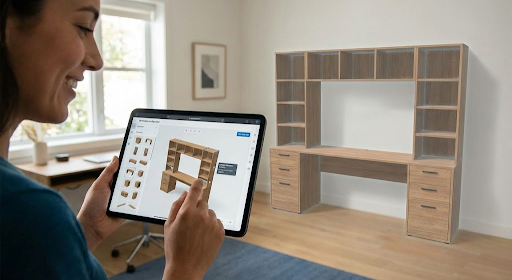
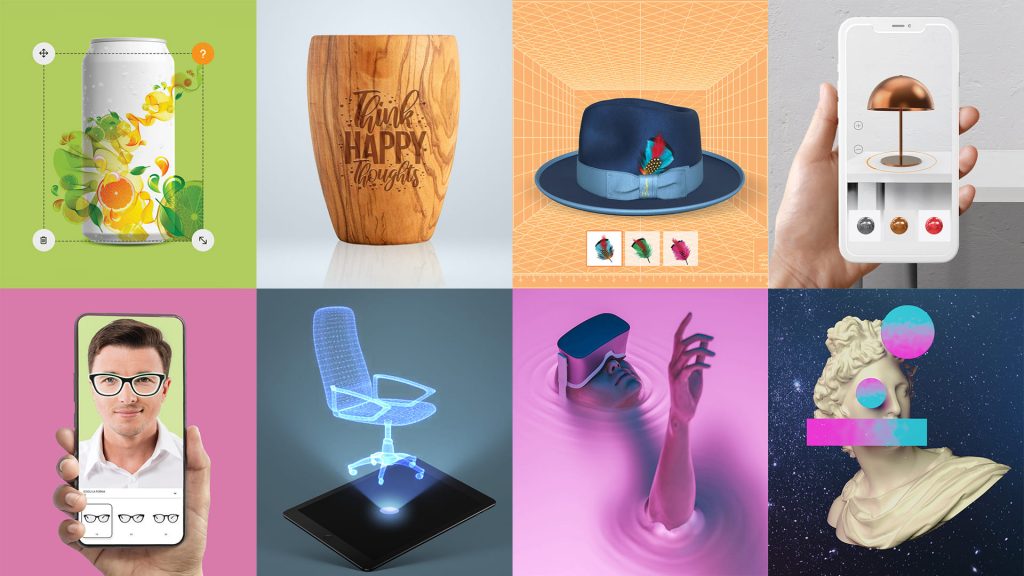
Statistics show that 67% of consumers claim that high-resolution visuals drive more views and conversions than text-based descriptions. 56% of marketers use visuals in 100% of their published work. Moreover, shoppers who watch videos are 1.8x more likely to buy than those who only read text-based descriptions. What do these stats tell us about e-commerce? We are in an age of visual commerce, and businesses need to embrace this trend in order to achieve a competitive edge. Up until recently, a good shopping experience was typically reserved for brick-and-mortar stores. Today, things are changing. With the evolution of mobile technology and a tsunami of visual applications that allow for shopping right within the app, the retail apocalypse is here. Forward-thinking retailers are embracing visual commerce to remain competitive and relevant in an industry that’s rapidly changing. But what exactly is visual commerce, and why should you care? In this guide, we’ll delve into the crux of visual commerce and explain why you should use it for your e-commerce business. We’ll also explore the various types of visual commerce and the trends that are making waves in the visual commerce space. Let’s dive in! What Is Visual Commerce? Visual commerce is the concept of leveraging visual content and augmented reality to attract, engage, and influence customers. In its most basic form, visual commerce is the concept of enriching customer experience with powerful visual content that empowers shoppers to engage, convert, and become loyal to a brand. Visual commerce is an umbrella term that includes, but not limited to: Essentially, visual commerce aims to drive conversions and engagement using compelling photos and videos. It aims to take the “normal” visuals that people use on social media and other sites to the next level. Instead of just having a plain 2D photo, you have a high-resolution product image, plus a super-engaging video, and maybe even a virtual try-on feature. This is often achieved through the use of specialized tools, such as 3D product configurators and augmented reality applications. The beauty of visual commerce is that it compels customers to interact with the product and be brand loyal. Types of Visual Commerce Visual commerce helps to improve product discoverability. This has a positive impact on conversions and sales. There are different types of visual commerce you could use to achieve this goal, which we’ll discuss in this section. 1. Visual Configurators Customers love the flexibility to choose between various product designs and parameters. Every customer has unique needs, and with options, they get to find exactly what they want. When customers are allowed to customize their products, they become more interested in your business. And this is where visual configurators come in! These online tools allow shoppers to customize and visualize products to their specifications. With a visual configurator, customers can create their desired product—change the design, shape, material, characteristics, etc., and have a 360-degree view of the product. This allows the customer to get involved in the design process. In other words, a visual configurator is a tool that allows users to customize the features and components of a product so that the final product meets the expectations as much as possible. As products become more complex and the need for personalization increases, product customizations have become a handy tool for shoppers and manufacturers. 2. Configurable Augmented Reality for E-Commerce Augmented reality (AR) is the next big thing in e-commerce. This technology allows shoppers to preview products or experience services in their own environment and on their own time before committing to buy. In other words, AR allows customers to see and experience the product as if they were in a physical store. It allows users to see virtual 3D versions in the real world. Using AR, shoppers can virtually try on and test products through an electronic device. This helps them understand what they are buying and how those items will work for them. 3. Virtual Photography Virtual photography is the practice of producing photorealistic, computer-generated images. A virtual photograph is a highly-realistic 2D computer-generated image. If done properly, and with the right tools, the final result is indistinguishable from a photo taken with a traditional camera in a studio. Creating virtual photographs requires utilizing product sketches, photos, and even existing CAD files. Depending on how many files there are and their size, creators will likely need to clean up the device storage regularly. The creator can add texture, colors, and shadow with these components to create a photorealistic image. Creators can then create a 3D experience, allowing customers to view the product in all styles, colors, and angles without leaving their homes. The goal isn’t just to save on costs but to show the product features in a way that evokes emotions. Virtual photography helps to showcase the product in all its glory. Hence, the produced photos also work great when used in marketing videos. 4. Visual Search Visual search leverages AI to help users search your website through the use of real-world imagery rather than text. AI-powered image recognition technology interprets the image’s content and returns relevant results. There are many things you can do to optimize your images for search, including making descriptive filenames and adding alternative texts. 5. Digital Lookbooks Lookbooks and digital catalogs are mainly used for lifestyle items. A lookbook is a collection of photos compiled to show off a model, style, or clothing line. Usually, marketers take fashionable photos of models for a particular look or season. This gives viewers ideas of how to style outfits or insights into the trending styles for a given month. The focus of digital lookbooks isn’t on the product but on the results—like a final look after donning certain attire or applying make-up. How e-Commerce Stores Use Visual Commerce Jeff Bullas, a renowned digital entrepreneur and blogger, says that content with visuals drives 94% more views than content without them. With that in mind, an increasing number of marketers are using visuals to spice up their content and