

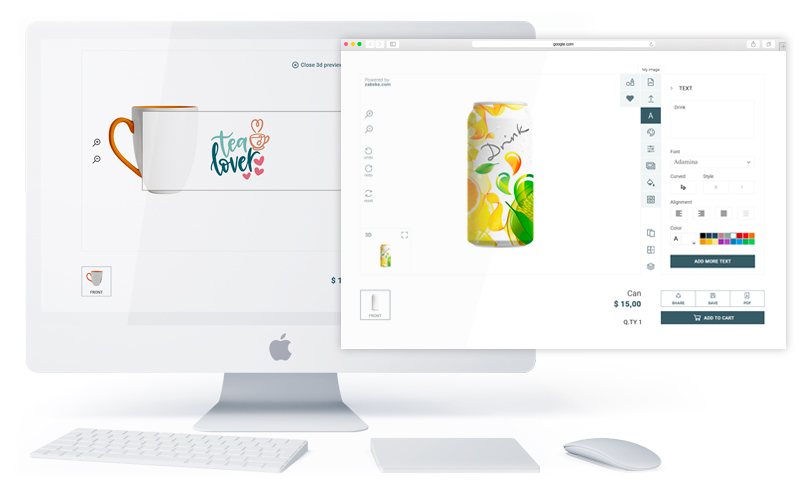
Many shoppers want to add a name, upload a logo or pick a finish that does not exist on the shelf. Product customization turns those requests into a repeatable, sellable process instead of an email thread with a designer.
This guide covers what e-commerce product customization is, how it differs from personalization and configuration, which products customers most want to customize, its benefits and limits, and how to choose a product customization tool that works at scale.
Product customization in e-commerce is the process that lets online shoppers modify an existing product before purchase, for example by choosing colors, adding text or photos, selecting a design or changing materials. The shopper sees a live preview of the result, orders the customized product, and the merchant produces it on demand.
Put simply, the product customization meaning is that the customer becomes a co-designer. British English spells it product customisation, and the same idea appears online as customizing products, custom product design or customized e-commerce.
What changed in recent years is the software. The merchant installs e-commerce product customization software on the store, defines which areas of each product can change and which options are allowed, and customers personalize products online within those rules.
Interactive product customization means shoppers customize product text, images and colors directly on the product page, with the preview updating in real time. A typical online product customizer follows four steps:

Mass customization looks different in every industry. In food and beverage, it can mean a custom label on a wine bottle or a printed seed packet for a wedding. In jewelry, it means engravings on metal or wood accessories. In fashion, it can mean a sneaker with a different leather and color for each part.
In every case, customers get a product that matches their taste or occasion, and the merchant offers variety without holding stock for every combination.
Personalization and customization in e-commerce both tailor the shopping experience, but they differ in who acts. Customization is user-driven: the shopper actively changes the product. Personalization is brand-driven: the store uses customer data to adapt recommendations, content and offers. Strong e-commerce customization and personalization strategies usually combine both.
The distinction matters when you plan tools. Personalization software for e-commerce works on data and recommendations. A product customizer works on the product itself: print areas, materials, pricing and production files.
| Aspect | Personalization | Customization |
|---|---|---|
| Who drives it | The brand, using customer data | The shopper, making choices |
| What changes | Content, recommendations, offers | The product itself |
| Typical examples | Recommended products, tailored emails, quizzes | Engraved jewelry, printed packaging, custom sneakers |
| Main tools | Ecommerce personalization software, recommendation engines | Product customizer, 3D configurator, web-to-print editor |
| Data needed | Browsing and purchase history | Only the choices made in the customizer |
| Operational impact | Mostly marketing and merchandising | Pricing, production and fulfillment |
A customized e-commerce journey can use both at once. A quiz recommends a gift, which is personalization, and then the shopper engraves a name on it, which is customization.
Staying on top of industry trends is crucial for gaining a competitive edge and potentially becoming a trendsetter. Speaking of trends, it’s easy to understand that today product personalization is a trend. Let’s discover why with some data:
That gap is the opportunity. Demand for product personalization is high, but most shopping still feels generic. Product customization is personalization the shopper can hold: the product carries their name, logo or materials.
Academic research points in the same direction. The “I designed it myself” effect, documented by Franke, Schreier and Kaiser in Management Science, shows that customers are willing to pay more for products they designed themselves, and that part of this value comes from the act of designing, not only from a better fit with their preferences.
The practical next step is choosing a product customization strategy that fits your catalog, margins and production. Start with the products customers most want to customize.
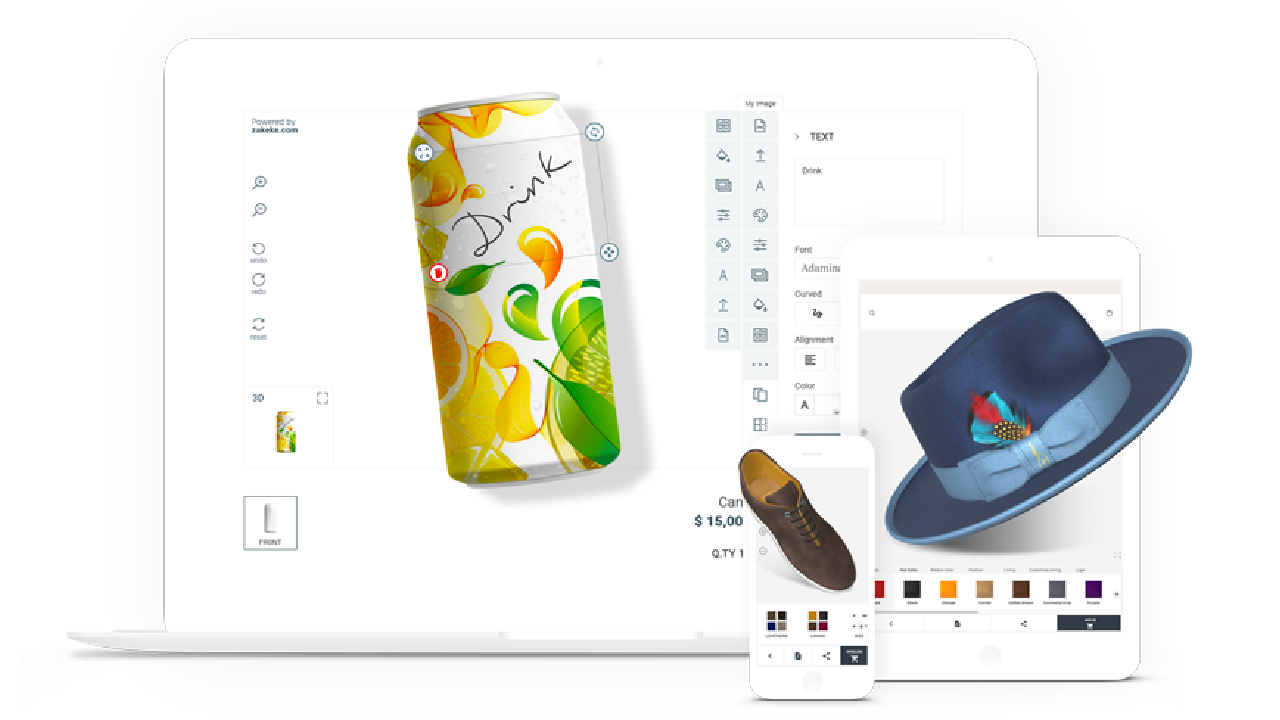
The most popular customizable products in 2026 are custom printed products and packaging, product labels, fashion items, furniture, jewelry and accessories, and personalized gifts. These categories share two traits: customers attach personal or brand meaning to them, and each item can be produced on demand without large inventory.
If you are deciding which custom products to sell online first, these six categories are where e-commerce custom products already have proven demand.
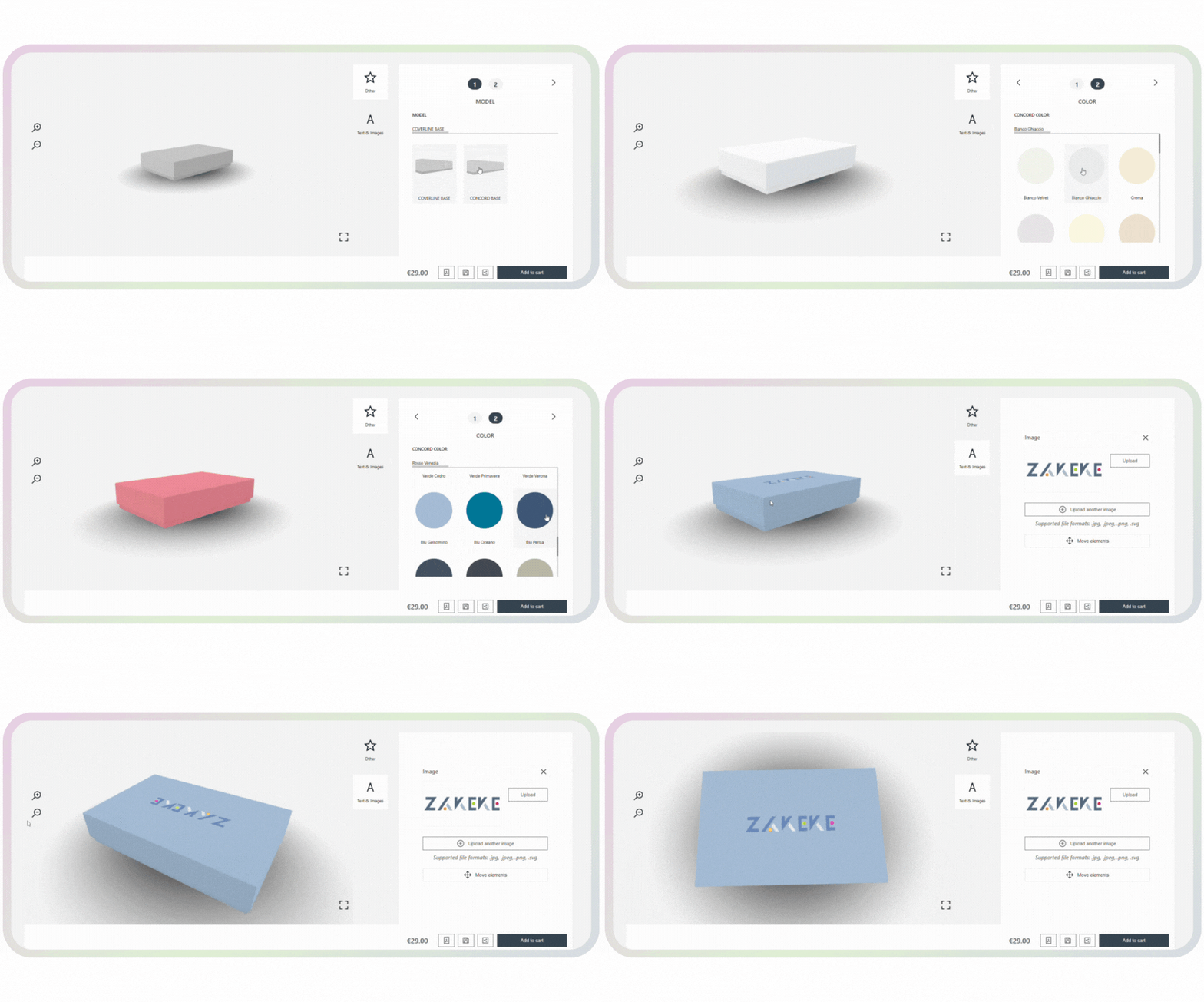
Custom packaging, cards, and boxes are some of the most widespread customizable products. They’re a hit in the B2B world, where companies use them to create unique gadgets and merchandising for employees and customers, using customization in marketing to boost performance.
The food and beverage industry is seeing a surge in personalized wine labels, bottles, and can labels. This trend allows brands to stand out, creating a premium and unique image for their products with labels customizers and configurators.
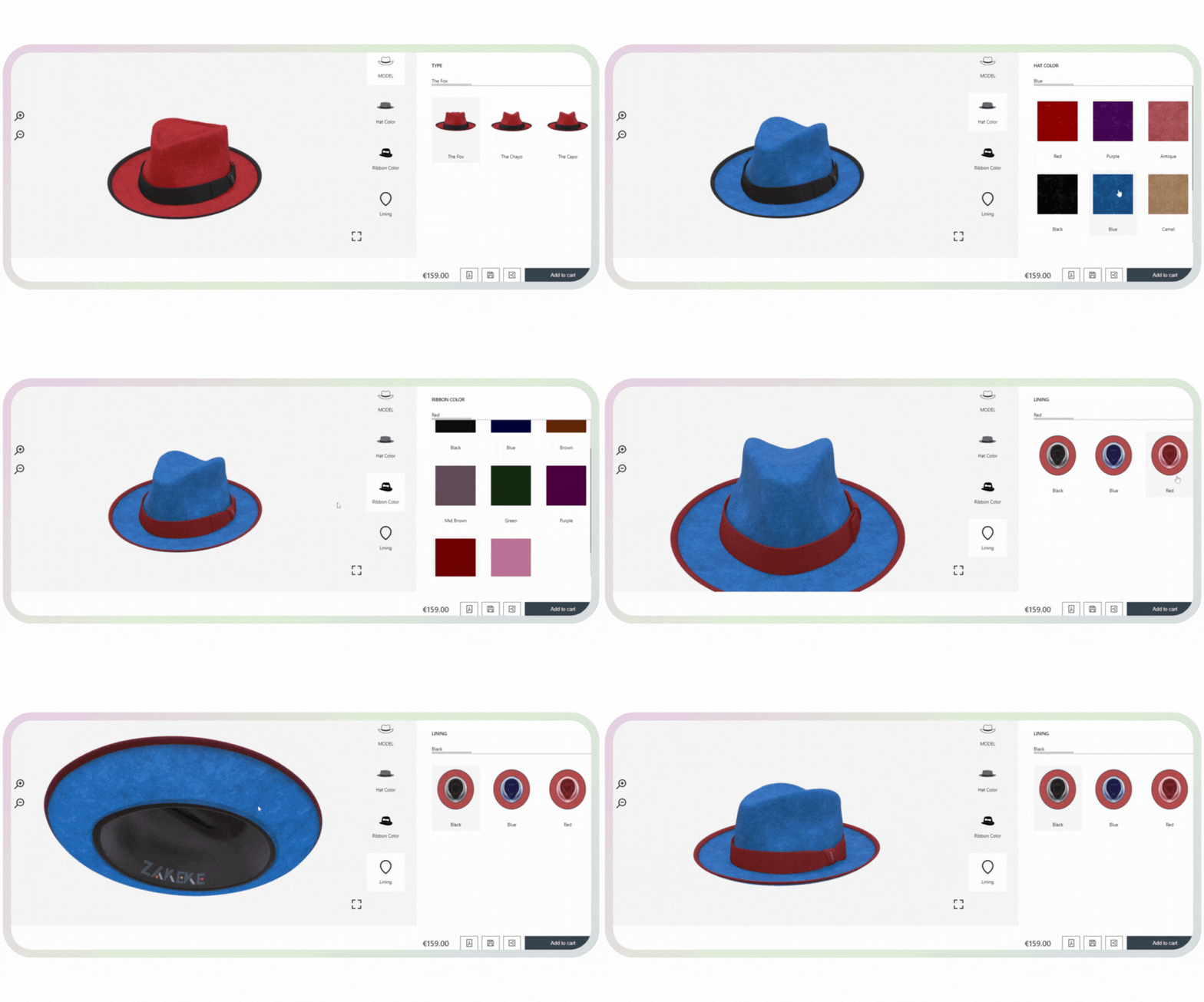
Customization is big in fashion too. From printed t-shirts to made-to-order luxury bags and shoes where customers pick materials and finishes. In the world of luxury, customization is synonymous with quality, and consumers adore products tailored to their tastes.
Imagine offering customers the chance to design a unique piece of furniture, like a sofa, table, or armchair. It’s easy today with a furniture customizer! This approach adds a novel dimension to big-ticket items like furniture, enhancing the appeal of stylish home decor.
Custom bracelets, rings, and even sunglasses are highly popular. They make for wonderful gifts, like an engraved necklace or bracelet, offering a personal touch for special occasions. This is why you should think about adding a jewelry customizer for your store.
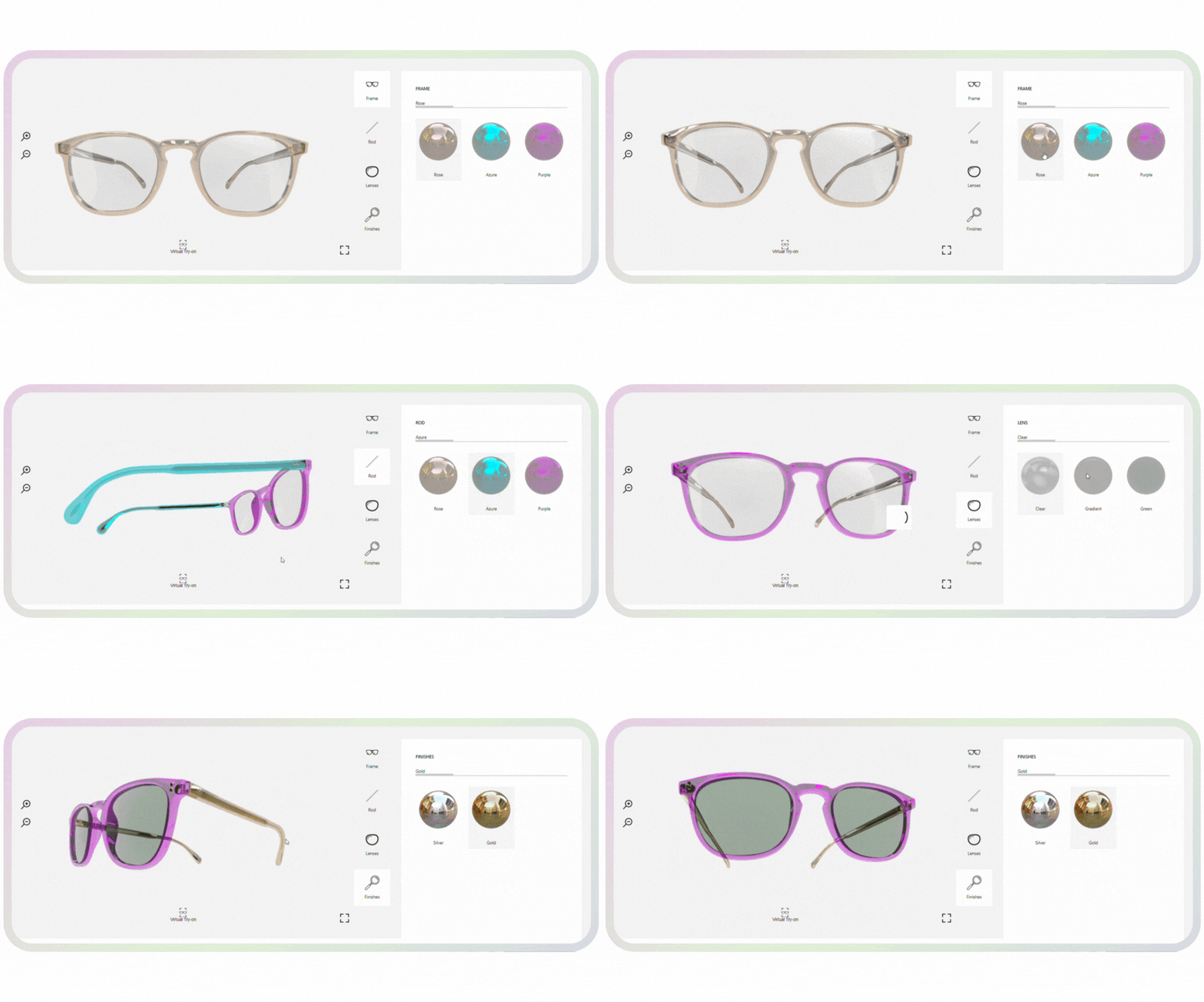
The gift market thrives on customization. Personalized gifts like custom mugs, canvases, pens, or phone cases are more popular than ever. Personalization is now a key element in gift-giving, presenting a great opportunity for businesses in this sector.
Product customization and product configuration both let shoppers adapt a product online, but they work at different depths. A visual product customizer changes the surface of a product with text, images, colors and designs. A product configurator changes how the product is built, combining materials, components and options under technical rules.
The two terms are often used interchangeably, and many tools now do both. The distinction still helps when you choose software, because it tells you how complex your rules, pricing and production data will be. For a deeper look at configurators, read our complete guide to e-commerce product configuration.
| Aspect | Visual product customizer | Product configurator |
|---|---|---|
| What the shopper changes | Text, images, logos, colors, templates | Materials, finishes, components, dimensions |
| Typical products | Apparel, packaging, labels, gifts, promotional items | Furniture, footwear, bikes, eyewear, equipment |
| Preview | 2D or 3D, with the design placed on the product | Usually 3D, often with AR |
| Rules and pricing | Print areas, fonts, extra charge per option | Compatibility rules, option-based pricing, quotes |
| Output for production | Print-ready files (PDF, PNG, SVG) | Specifications of the chosen components |
| Zakeke tool | Visual Product Customizer | 3D Product Configurator |
If the value lies in the graphics, start with a customizer. If it lies in the combination of parts, choose a configurator. If you sell both, pick a platform that handles both.
The main benefits of personalization in e-commerce are higher sales and repeat purchases, a better customer experience, higher conversion rates, a premium brand image and customers who accept a higher price. Each benefit comes from the same mechanism: shoppers who design a product are more invested in buying it.
The strongest recent evidence comes from a 2025 Journal of Marketing study by Kim, Hamilton, Kim and Lewis. Using nine years of transaction data from a retailer, the authors found that customers who customize at least one product are more likely to customize again, spend more, visit more often and buy more items.
The same study notes that many customers do not opt into customization at first. That is a practical lesson for merchants: make the first customization easy, because the value builds over the purchases that follow.
When shoppers take part in the design, they feel closer to the result, and a live preview removes doubt about what will arrive, so fewer customers are disappointed at delivery.
If you’re wondering how to increase your e-commerce conversion rate, product customization is the key! Another of the product customization benefits is the potential for significantly increased conversion rates. Imagine customers playing on your website, creating their dream products in real-time, isn’t that the ultimate Shopping Experience?
Real-time design on your own website sets a brand apart from competitors that sell only standard catalogs, and custom brand products are harder to compare on price alone.
The Deloitte Digital and Medallia surveys cited above show that consumers spend more with brands that tailor the experience. A product the customer created justifies a higher price than its standard version.
Yes, the customization of products has real disadvantages: it takes setup work, adds cost, raises customer expectations and complicates production. Most of these disadvantages come from how customization is implemented, such as manual proofing or inaccurate previews, rather than from the decision to offer custom products.
Returns show why accuracy matters. The National Retail Federation and Happy Returns estimated that 19.3% of online sales would be returned in 2025. A personalized product that disappoints cannot go back on the shelf, so a faithful preview and clear rules are part of the business case, not a detail.
If none of these apply, the advantages usually outweigh the drawbacks, provided you implement it without turning your team into a design studio.
To implement e-commerce product customization, choose a product customizer that integrates with your e-commerce platform, set up customizable products with clear options and rules, connect the output to your production workflow and test the full order flow. With a plug-and-play app, a first product can go live without custom development.
Worried about external technical work? Modern ecommerce product customization software installs as an app or plugin and uses your existing catalog, cart and checkout. Developers are needed mainly for custom API integrations with ERP, PIM or production systems.
Whether you add a 2D customizer or a 3D product visualization layer, integration with your workflows decides whether customization scales.
To choose the best product customization tool, compare how easily it integrates with your platform, how flexible its options and pricing rules are, which production files it generates, how it performs on mobile and what it costs as you grow. The best product customization software serves both the shopper experience and your back office.
The market for online product customization tools is crowded: plugins, product customization platforms, print-on-demand apps and enterprise configurators. Use the checklist below to build a shortlist, then test your real products during a free trial.
| Criterion | What to check |
|---|---|
| Integration | Native app for your platform, synced orders and variants, API for ERP or PIM |
| Ease of use | No-code setup for your team, clear editor for shoppers on mobile |
| Flexible options | Text, images, templates, colors, materials, conditional rules |
| Pricing rules | Extra charge per option, quantity discounts, live price |
| Production output | Print-ready files per order (PDF, PNG, SVG) at the right size |
| Visual quality | 2D, 3D and AR previews that match the finished product |
| Performance | No slowdown on product pages, stable on any device |
| Cost and trial | Plans that scale with orders, free trial on real products |
| Updates and support | Regular releases, knowledge base, responsive support team |
Also weigh build vs buy. Developing an in-house customizer gives full control, but you pay for development, maintenance and every new feature. A dedicated product customization platform spreads those costs across many merchants and ships updates automatically.
Compare plans on the Zakeke pricing page, or see how tools stack up in our product customizer comparisons.
E-commerce site personalization covers every touchpoint a customer has with your store, from the homepage to post-purchase emails. Four ways to personalize the experience alongside product customization:
Personalized promotions
Personalized promotions use data about past purchases and preferences to show offers that fit each customer rather than a broad segment. A club that bought custom team jerseys, for example, can receive an offer for matching caps before the next season.
Recommended purchases and quizzes
Interactive quizzes are a popular format: the shopper answers a few questions, the store suggests the products that fit, and those products can then be customized.
Personalized newsfeeds and content
A personalized feed shows products and content based on how each customer has interacted with your website, so returning visitors see relevant items first instead of the same homepage as everyone else.
AI shopping assistants
Conversational AI assistants answer product questions, guide shoppers to the right options and can walk them through a customization in natural language.
All of these tactics adapt what the customer sees. Product customization goes one step further and adapts what the customer receives, which is why it remains the most tangible form of personalization in e-commerce.
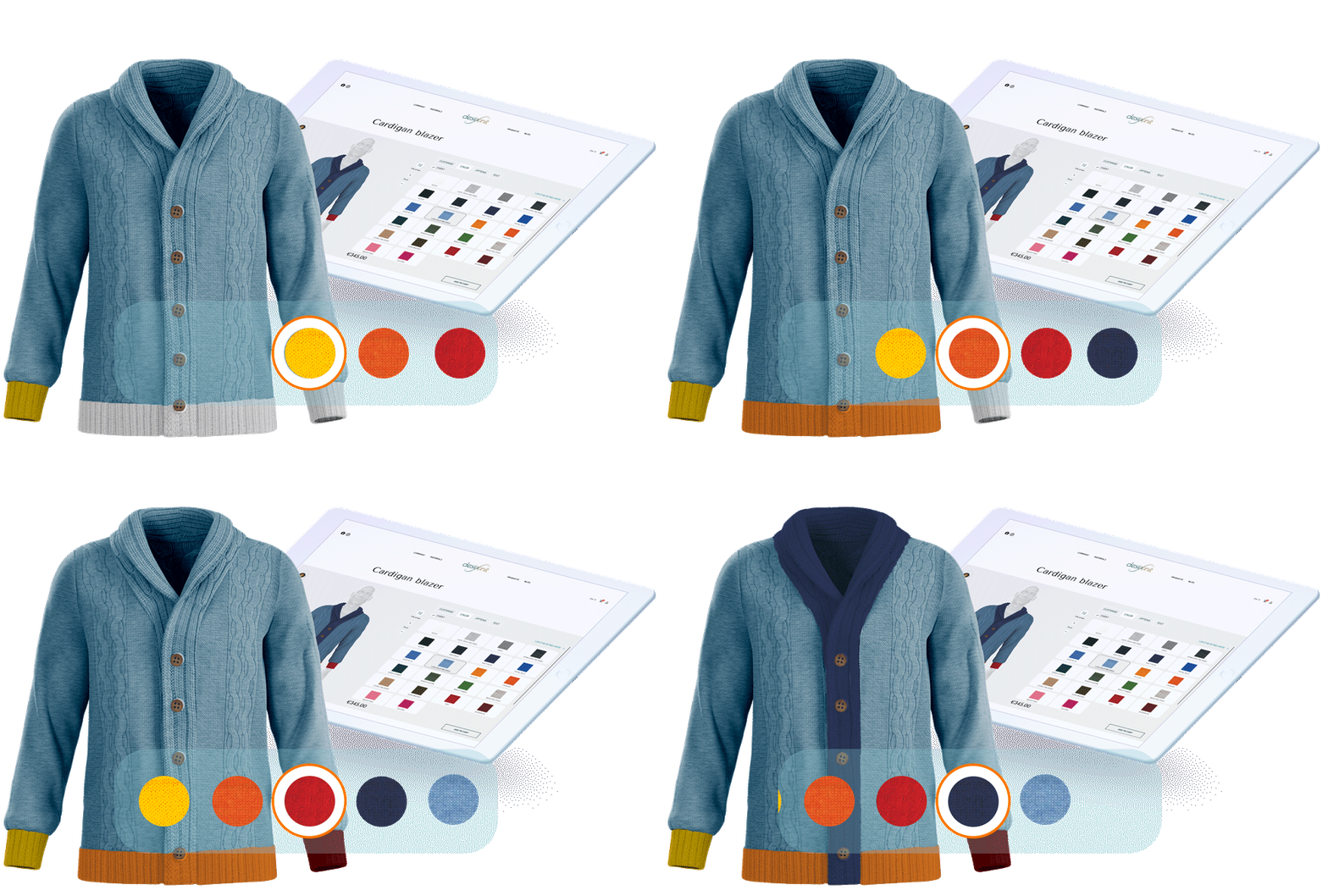
Zakeke is a visual commerce platform whose Visual Product Customizer lets shoppers design products in real time and sends the merchant a print-ready file for every order. It is built for stores and manufacturers that need customization to run at production scale.
Merchants rate Zakeke 4.7 out of 5 on G2 (78 reviews) and 4.7 on the Shopify App Store (99 reviews). A knowledge base and a responsive support team back the software.
A common example of product customization is an engraved bracelet: the shopper types a name on the product page, picks a font, checks the live preview and orders. Other examples include printed boxes with a company logo, wine bottles with custom labels, t-shirts with uploaded artwork and sneakers with chosen leathers and colors.
An online product customizer is software that adds a design editor to a product page. Shoppers use it to add text, images or colors to a product and see a real-time 2D or 3D preview. The merchant receives the order with the design details, often as a print-ready file, so production can start without manual rework.
Yes. An online store can combine personalization and customization in the same shopping journey. Personalization tools recommend products or offers based on customer data, while a product customizer lets the shopper modify the chosen item. A gift shop, for instance, can suggest a mug through a quiz and then let the buyer print a photo on it.
Product customization software ranges from monthly app subscriptions to custom enterprise projects. Zakeke self-serve plans start at EUR 59 per month with a 14-day free trial, while Enterprise plans are quoted by the sales team. Building a customizer in-house means paying for development, maintenance and every future update yourself.
Customized orders reach production through files generated by the customizer. With Zakeke, every personalized order produces a print-ready file in PDF, PNG or SVG format containing the customer's design. Printers and workshops use that file directly, which removes manual design preparation and reduces production errors.