

Visual Commerce: What It Is and Why It’s Vital for E-Commerce
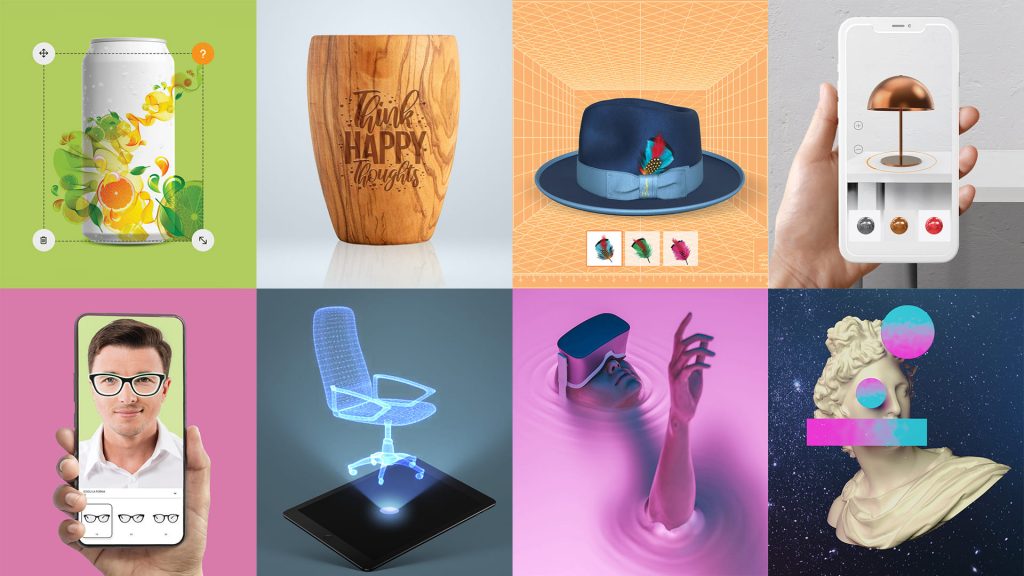
Statistics show that 67% of consumers claim that high-resolution visuals drive more views and conversions than text-based descriptions. 56% of marketers use visuals in 100% of their published work. Moreover, shoppers who watch videos are 1.8x more likely to buy than those who only read text-based descriptions. What do these stats tell us about e-commerce? We are in an age of visual commerce, and businesses need to embrace this trend in order to achieve a competitive edge. Up until recently, a good shopping experience was typically reserved for brick-and-mortar stores. Today, things are changing. With the evolution of mobile technology and a tsunami of visual applications that allow for shopping right within the app, the retail apocalypse is here. Forward-thinking retailers are embracing visual commerce to remain competitive and relevant in an industry that’s rapidly changing. But what exactly is visual commerce, and why should you care? In this guide, we’ll delve into the crux of visual commerce and explain why you should use it for your e-commerce business. We’ll also explore the various types of visual commerce and the trends that are making waves in the visual commerce space. Let’s dive in! What Is Visual Commerce? Visual commerce is the concept of leveraging visual content and augmented reality to attract, engage, and influence customers. In its most basic form, visual commerce is the concept of enriching customer experience with powerful visual content that empowers shoppers to engage, convert, and become loyal to a brand. Visual commerce is an umbrella term that includes, but not limited to: Essentially, visual commerce aims to drive conversions and engagement using compelling photos and videos. It aims to take the “normal” visuals that people use on social media and other sites to the next level. Instead of just having a plain 2D photo, you have a high-resolution product image, plus a super-engaging video, and maybe even a virtual try-on feature. This is often achieved through the use of specialized tools, such as 3D product configurators and augmented reality applications. The beauty of visual commerce is that it compels customers to interact with the product and be brand loyal. Types of Visual Commerce Visual commerce helps to improve product discoverability. This has a positive impact on conversions and sales. There are different types of visual commerce you could use to achieve this goal, which we’ll discuss in this section. 1. Visual Configurators Customers love the flexibility to choose between various product designs and parameters. Every customer has unique needs, and with options, they get to find exactly what they want. When customers are allowed to customize their products, they become more interested in your business. And this is where visual configurators come in! These online tools allow shoppers to customize and visualize products to their specifications. With a visual configurator, customers can create their desired product—change the design, shape, material, characteristics, etc., and have a 360-degree view of the product. This allows the customer to get involved in the design process. In other words, a visual configurator is a tool that allows users to customize the features and components of a product so that the final product meets the expectations as much as possible. As products become more complex and the need for personalization increases, product customizations have become a handy tool for shoppers and manufacturers. 2. Configurable Augmented Reality for E-Commerce Augmented reality (AR) is the next big thing in e-commerce. This technology allows shoppers to preview products or experience services in their own environment and on their own time before committing to buy. In other words, AR allows customers to see and experience the product as if they were in a physical store. It allows users to see virtual 3D versions in the real world. Using AR, shoppers can virtually try on and test products through an electronic device. This helps them understand what they are buying and how those items will work for them. 3. Virtual Photography Virtual photography is the practice of producing photorealistic, computer-generated images. A virtual photograph is a highly-realistic 2D computer-generated image. If done properly, and with the right tools, the final result is indistinguishable from a photo taken with a traditional camera in a studio. Creating virtual photographs requires utilizing product sketches, photos, and even existing CAD files. Depending on how many files there are and their size, creators will likely need to clean up the device storage regularly. The creator can add texture, colors, and shadow with these components to create a photorealistic image. Creators can then create a 3D experience, allowing customers to view the product in all styles, colors, and angles without leaving their homes. The goal isn’t just to save on costs but to show the product features in a way that evokes emotions. Virtual photography helps to showcase the product in all its glory. Hence, the produced photos also work great when used in marketing videos. 4. Visual Search Visual search leverages AI to help users search your website through the use of real-world imagery rather than text. AI-powered image recognition technology interprets the image’s content and returns relevant results. There are many things you can do to optimize your images for search, including making descriptive filenames and adding alternative texts. 5. Digital Lookbooks Lookbooks and digital catalogs are mainly used for lifestyle items. A lookbook is a collection of photos compiled to show off a model, style, or clothing line. Usually, marketers take fashionable photos of models for a particular look or season. This gives viewers ideas of how to style outfits or insights into the trending styles for a given month. The focus of digital lookbooks isn’t on the product but on the results—like a final look after donning certain attire or applying make-up. How e-Commerce Stores Use Visual Commerce Jeff Bullas, a renowned digital entrepreneur and blogger, says that content with visuals drives 94% more views than content without them. With that in mind, an increasing number of marketers are using visuals to spice up their content and
Zakeke welcomes a new partner: W4
We are delighted to announce our partnership with W-4! Founded in Switzerland in 1994, W4 has evolved into an international company with employers based in twelve different countries. This model is made possible by their remote-first structure as well as agile work methods. W4’s workflows are organised with SCRUM, which means that all teams work in synchronised, seven-day sprints. This way, all teams are able to realise projects in a flexible manner to guarantee fast results and individual solutions. True to the motto “Marketing meets IT”, W4 fuses marketing and IT services, ranging from web development to marketing automation as well as content creation. The company also specialises in Gamification, providing bet games for football cups and an online advent calendar, and marketing for the Chinese market. “We are looking forward to many projects with Zakeke’s software. Their 3D-AR configuration services are a highly valued addition to our solutions. With Zakeke’s products, we can provide even more engaging customer experiences for B2B and B2C online shops.” W4’s Managing Director Sarah Wilhelm W4 also regularly publishes articles on their blog. For more information, please visit their website or schedule an appointment. To get more details about our Partner Program check this link https://www.zakeke.com/agency-partner
Sell customizable products on Shopware with Zakeke
Today we are pleased to announce the release of the integration of Zakeke with Shopware, one of the most important player in the eCommerce industry. Shopware is a leading digital commerce system and used by some of the largest brands, retailers and manufacturers across B2C, D2C and B2B industries, including Philips, Jägermeister and Aston Martin. Shopware’s open commerce platform gives its customers the freedom to quickly and easily realise their growth potential – with greater flexibility to deal with complex challenges. Today, merchants all around the world rely on Shopware solutions – from start-ups to enterprises – generating a Gross Merchandise Value (GMV) of close to USD 20 billion in 2021. From its headquarters in Schöppingen, Germany, and its US office in New York City, Shopware employs 400 people and relies on a global network of 1,200 sales, technology and solution partners. A community with hundreds of thousands of members gives customers access to over 5,000 extensions and certified professional support. Through continuously high investments in research and development, Shopware is a leading driver of innovation in digital commerce. Now, you can personalize your products in a simpler and more effective way on Shopware, thanks to Zakeke. You can increase your sales, reduce product returns and automate your internal processes with our cutting-edge visual personalization tools. Shopware merchants will join the many satisfied sellers who already use Zakeke to sell personalized products around the world. Buyers will be able to view and edit customizable products using Zakeke’s AR and 3D technology. Product customization has huge advantages for your business: What you can do with Zakeke? Zakeke is a cutting-edge tool for Visual Product Customization. However, it is not just that. Zakeke is more than just visual customization. It is a business partner that enhances your brand offer and simplifies your internal processes. Possibilities are endless. Visit our demo to learn more or Start a free trial now! Need more info? Our friendly team is here for you, book a demo with our experts here and see the installation process in this guide
Zakeke Recognized As Top CPQ Software by Software Advice in 2022
Software Advice, a leading company that helps businesses navigate their software-buying journey has recently recognized Zakeke as a Top CPQ Software in its latest Frontrunners report. This report evaluates verified end-user reviews, positioning the top-scoring products based on their usability and customer satisfaction ratings for small businesses. (Know more about the methodology here) Zakeke has earned an incredible overall rating of 4.8 (out of 5). Big thanks to all our users who love us so much! It would not have been possible without your constant support. Here’s what our CEO has to say about these incredible achievements: “We’re very excited that Zakeke has been named as one of the Best CPQ for 2022. Customization & Configuration is so much more than just offering personalized products. An intuitive, easy-to-use, and powerful multifunctional solution helps manage work processes, reduce and control the number of repetitive tasks, and concentrate on communication with team members and customers. In addition, using a powerful CPQ also increases workflow efficiency and quality by eliminating small human errors,” said Zakeke’s CEO Angelo Coletta. Check out what our happy users have to say about us: “It has been very easy for me to implement and it has covered practically all the expectations that I could have for a tool of this type. It is an ideal tool to give “life” to your customizable products. Fun for the user to use and practical for the seller.” – Victoria “I love customer service. very fast responses and very helpful. The software gets updated frequently with new features. so far compatible with my products so I didn’t have to update anything unless you want to use the new features of course then you need to update.” – Mariam “With the ability to upload 100s of business card designs, being able to offer customers integrated clipart and photo stock within the package meant that we could deploy the online designer without any coding. Also, the software integration with WooCommerce was a massive step forward for our site.” – Mark Automation is one of the main benefits of CPQ. Zakeke workflow enables businesses to reduce admin work, easily set up and unify all configuration tools, including supporting apps and integrations, and customize the offer specifically for the needs of the clients & teams involved. Want to share a review? Click here About Software Advice Software Advice is the leading online service for businesses of all sizes navigating the software selection process, providing free, personalized software recommendations that meet their business needs. Software Advice features objective research by industry experts and reviews from validated users, saving buyers time and resources. Software Advice is a Gartner company. For more information, visit https://www.softwareadvice.com/ Disclaimer: The FrontRunners badge is a trademark and service mark of Gartner, Inc. and/or its affiliates and is used herein with permission. All rights reserved. FrontRunners constitute the subjective opinions of individual end-user reviews, ratings, and data applied against a documented methodology; they neither represent the views of nor constitute an endorsement by, Software Advice or its affiliates.
Zakeke welcomes a new partner: Elogic Commerce
We are delighted to announce our partnership with Elogic Commerce! Elogic was founded in 2009 as an ecommerce development company with a specific focus on Magento. After years of helping businesses develop online stores, they became the Bronze Partner with Adobe, a global leader in customer experience management. Their Magento certified experts help companies in both B2B and B2C segments build technology that empowers ecommerce growth. Now Elogic Commerce is a certified ecommerce development company to build, transform and optimize your online store. They help code your ecommerce stores into perfection, build successful ecommerce strategies, and deliver tech solutions that become an essential part of your business success. “We’re thrilled to announce the partnership with Zakeke seeing their commitment to outstanding customer experience,” says Oksana Yakovlieva, the Head of Delivery at Elogic Commerce. “Coupled with our expertise in multiple ecommerce platforms, we can now offer easy integration with the visual commerce tool and bring more value to their end users.” Contact them here at https://elogic.co/ To get more details about our Partner Program check this link https://www.zakeke.com/agency-partner
October 2022 Release Notes

We just added the Names and Numbers tool to add multiple variations of a product to their cart and customize some fields while using the same design. Also you can now set a price for images inside your Zakeke dashboard
Zakeke welcomes a new partner: Inspir3D
We are delighted to announce our partnership with Inspir3D! Inspir3D was born from the idea of offering a complete solution to clients on the lookout for cutting edge technologies. After working for a couple of years with a 3D service, to offer customizable sneakers to his customers, Jean-Moïse, its founder, saw the potential of 3D for e-commerce and decided to team up with a skilled team of developers and graphic designers to create a unique 3D specialize web design agency. From 3D creation to integration, they cover all the fields to provide you with a tailor made 3D experience for your business. Take a look at the video to discover more about them: Contact them here at https://www.inspir3d.fr/ To get more details about our Partner Program check this link https://www.zakeke.com/agency-partner
August 2022 Release Notes

You can now share a design with a link, save for later a configuration, check all the printing methods associated with a product in the list of customizable products..
Product Customization: The Secret to Retaining your Customers for Life
In this guide, we’ll discuss product customization in detail and explain the benefits it can bring to your business. But first, let’s get down to the basics. Who won’t love a personal touch in the products they order? In today’s competitive world, consumers expect brands to tailor their products to meet the customers’ needs. The demand for customized products has reached sky-high in recent times. A decade ago, this was primarily limited to mugs and mobile cases, where people used to have their photos printed on their mobile cases. Today, product customization has become the buzzword of the 21st century. In the online world, e-commerce websites will adapt their pages based on the customer’s buyer behavior. Even the shows you watch on streaming services, like Netflix, are personalized based on your search and watch history. Brick-and-mortar stores aren’t left behind, either. More and more retailers are increasingly offering the same experience, where consumers can buy products specifically customized for them. The reason? Product customization leads to more sales and stronger brand-employee relationships. In a recent study by Deloitte, 36% of shoppers said they covet customized products. Interestingly, 1 in 5 of these shoppers are willing to pay 20% more to have products customized for them. What Is Product Customization? Product customization is the process of delivering goods that have their key features and elements altered specifically to meet the buyer’s needs. For example, a shoe company can allow a mountaineer to order a one-of-a-kind shoe ideal for their mountain climbing needs. Customers can approach the shoe retailer via their website, design the shoe they want, and make the order online. A perfect example of product customization in real life can be seen in how the Fender company handles online guitar sales. Fender, a California-based musical instruments company, provides many different options for each part of their guitars for customers to choose from. Customers can choose the color, body material, tuners, neck shape, fingerboard options, and more depending on their preferences. Customizing designs to user preferences leads to a better user experience and increased sales. Product customization opens a world of endless possibilities for many industries, especially the apparel industry, allowing customers to experiment with various fabrics, designs, colors, and more before any product is made. How Does It Differ from Personalization? The terms “customization” and “personalization” are often used interchangeably. And it makes sense because both practices aim to empower shoppers to create the exact product they desire, with confidence. However, the terms aren’t the same. Product customization involves delivering goods that have their design, color, and other elements altered to meet customer preferences. In customization, the company provides a selection of options for customers to choose from. Product personalization, on the other hand, takes things up a notch by inviting customers to embellish products with their own content. This can take the form of a personalized text or image, but there’s no limit to how you can personalize your products. Personalization is about the seller tailoring the product to meet consumer needs but in a way that doesn’t require sophisticated manufacturing facilities. It’s all about making the shopper feel special by offering a few tweaks to the products in a way that differentiates the product from the mass-produced items. Examples of personalization include printing a photograph on a standard manufactured product, sewing a patch, or embroidering a user-specific text on the product. Personalization provides a unique shopping experience that drives sales and repeat business. Deloitte found that offering personalized products increases sales by as much as 30%. A product can be personalized, customized, or both. Either way, the customer uses what’s called a product customizer or configurator. A product customizer is basically software integrated within a website that allows customers to visualize and select their options. What about Product Configuration? Product configuration is simply the act of selecting your options, which is offered at a basic level by most e-commerce platforms. You can improve customer experience by integrating a product customizer that offers advanced features like augmented reality (AR) and 3D visualization. Benefits of Product Customization There are many reasons that make product customization a must-have tool for retailers. Here, we’ll look at the benefits e-commerce brands can enjoy from product customization. 1. Appeal to a Growing Audience As mentioned, 36% of shoppers covet customized products. With almost half of your customers yearning for customized experiences, providing a product customizer on your site can do wonders for your business. Customizing a product adds a personal touch to it. When customers design products to their liking, the end product isn’t just the same as the mass-produced items. Customization adds a sentimental value to the product, whether they’re designing it for themselves or someone else. 2. Generate More Sales and Profits One of the obvious benefits you get from product customization is an increase in sales. First, customers love differentiated products. Giving them the option to choose their desired designs, colors, and other elements builds trust, which ultimately leads to brand advocacy. Secondly, customers are willing to pay extra for customized products. As Deloitte found, 1 in 5 customers wouldn’t mind paying an extra 20% to have the products customized to their preferences. This leads to increased revenue and profits. 3. You Gain a Competitive Advantage The global e-commerce market is huge, with 1.8 million retailers operating in the US and contributing a staggering $861 billion to the US economy. How can you stand out in such a competitive marketplace? One way is to adopt product customization. With a product customizer that provides unique customer experiences that shoppers won’t elsewhere, you’ll definitely set yourself apart from the competition. Your store will stand out from others, and shoppers will recommend your brand for the unique experience. Additionally, you can charge an additional mark-up for offering a customized experience. Users are more likely to pay more since they’re emotionally invested in the designs that match their tastes and preferences. 4. Better Customer Insights Another benefit you get from implementing product customization for
Zakeke welcomes a new partner: Inode
We are delighted to announce our partnership with Inode! Inode offer specific 3D-related services focused on 3D animations for illustrating the functioning of products in depth. To accomplish that task, they make extensive use of professional 3D software such as Autodesk Maya, with the built-in 3D render engine called Arnold by Solid Angle.Also, they’ve got experience in texturing entire 3D models by using and creating PBR materials from scratch with the use of the latest version of Adobe Substance 3D Suite. From a programming point of view, they developed several 3D configurators based on Javascript scripting language, and in particular we integrated a library named ThreeJS in our workflow, which provides a series of functionalities oriented towards realtime configurators.Furthermore we have experience in developing UI/UX with the latest technologies such as VueJS.In a nutshell, they are open to customizing your specific project or ideas as best we can! Inode: 3D and web solutions – from the idea to execution. Contact them here at www.inode.it To get more details about our Partner Program check this link https://www.zakeke.com/agency-partner