
FREE LOOKBOOK

How 10 E‑Commerce Brands Use Personalization to Stand Out

Augmented Reality

ecommerce product videos
Augmented Reality

Ecommerce Product Videos Mastery: Strategies, Trends, and Success Stories

In the digital age, ecommerce has revolutionized the way we shop. The convenience of online shopping has attracted a massive customer base, and as a result, the competition among ecommerce businesses has intensified. In this fierce landscape, standing out is essential, and one tool that has emerged as a game-changer is ecommerce product videos. In this article, we will delve into the world of ecommerce product videos, exploring their significance, strategic importance, types, and how to craft the perfect video. The Strategic Importance of Product Videos In an era where consumers increasingly rely on online shopping, the demand for effective methods to showcase products has grown exponentially. To meet this need, ecommerce video marketing strategies have emerged as a powerful tool to bridge the gap between physical shopping experiences and the world of online purchasing. These videos offer a dynamic means to provide customers with an up-close and personal look at products. In the realm of e-commerce, where customers can’t physically touch or try products, videos have become an indispensable resource to bridge that gap and create a more immersive shopping experience. Product videos offer several advantages over other forms of content. They engage customers more effectively, provide a deeper understanding of the product, and increase conversion rates. All the Benefits of Using E-commerce Product Videos Here are some key benefits of using product videos in marketing and sales strategies: Types of E-commerce Product Videos There are many types of videos e-commerce can use to boost their performance: Demo Videos Demonstrative videos are designed to showcase how a product works or is used. These videos are especially effective for products that may have unique features or require some level of demonstration to fully grasp their value. Through these types of videos, viewers gain a clear understanding of its functionality, making them more likely to make an informed purchasing decision. User-Generated Content (UGC) User-generated content videos leverage content created by customers themselves. This can include reviews or testimonials. UGC videos are powerful because they offer an authentic perspective on the product, coming directly from real customers. They build trust and credibility, as potential buyers see others like themselves sharing their experiences with the product. Unboxing Videos Unboxing videos provide a firsthand look at the process of unpacking a product. These videos are particularly popular among consumers who enjoy the anticipation and excitement of receiving a new item. It can create a sense of excitement, adding to the overall buying experience. How-To Videos How-to videos offer step-by-step instructions on how to use a product. These instructional videos are valuable for products that may have complex features or functionalities. They serve as a helpful resource for customers, guiding them through the setup, operation, and maintenance of the product, ensuring a positive user experience. Testimonial Videos Testimonial videos feature satisfied customers sharing their experiences with a product. These videos provide social proof and demonstrate how the product has solved specific problems or met certain needs for real users. Testimonials can be emotionally compelling, as they often highlight the positive impact of the product on customers’ lives. 360-Degree View Videos 360-degree view videos allow viewers to interactively explore a product from all angles. These videos provide an immersive and detailed look at the product’s design, features, and aesthetics. They give potential buyers a comprehensive understanding of the product’s physical attributes, which can be particularly useful for products with intricate details. Lifestyle Videos Lifestyle videos go beyond showcasing the product in isolation. They depict the product in real-life scenarios. These videos appeal to the emotions and aspirations of potential buyers, making the product more relatable and desirable. How to Craft the Perfect Product Video Creating an effective product video is a strategic process that involves several key steps. Here’s a step-by-step guide to help you craft the perfect product video: Begin by defining your target audience. Who are your ideal customers? What are their preferences, needs, and pain points? Understanding your audience is crucial because it will shape the content, style, and tone of your video. Tailor your message to resonate with your specific audience, addressing their interests and concerns. Identify and emphasize the unique selling points (USPs) of your product. What makes it stand out from competitors? Is it innovative, eco-friendly, or exceptionally durable? Your product’s USPs are the key features or benefits that set it apart. Showcase these prominently in your video to grab the viewer’s attention and communicate the value of your product. Aim to create a concise video that delivers your message effectively. Ideally, your video should range from 30 seconds to 2 minutes, depending on the complexity of the product and the depth of information you need to convey. Focus on the most compelling aspects of your product and avoid unnecessary details. Invest in the quality of your video production. Good lighting, clear audio, and high-quality video footage are essential for creating a professional-looking video. Ensure that your product is well-lit and visually appealing. Use a tripod or stabilizer to capture steady shots. High-quality production values reflect positively on your brand and instil confidence in viewers. Your product video should guide viewers on what action to take next. Whether it’s making a purchase, signing up for updates, or exploring more product details, a clear and compelling call to action is crucial. Use persuasive language to encourage viewers to take the desired action. Ensure that the CTA is prominently displayed at the end of the video and, if possible, reiterated verbally. Consider incorporating storytelling elements into your video. Narratives engage viewers on an emotional level, making your product more relatable. Share the story behind your product’s creation, highlight customer success stories, or create a scenario that showcases the product’s real-world application. Storytelling adds depth and resonance to your video. Best Ecommerce Product Video Campaigns Apple’s iPhone Launch Videos Apple’s product launch videos are legendary for a reason. They are meticulously crafted to create a sense of anticipation and desire among viewers. Their videos showcase sleek design, cutting-edge features, and the promise
Read More >
Virtual Tryon integration eCommerce
Augmented Reality

Integrating Virtual Try-On in eCommerce: A Step-by-Step Guide

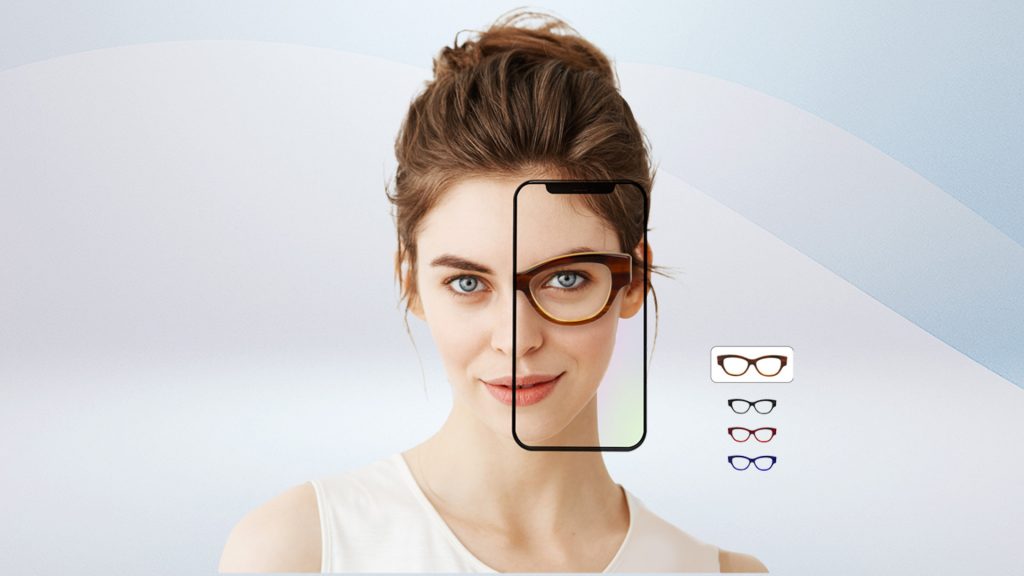
Try before you buy! Virtual try-on in eCommerce empowers customers to test products online before making a purchase, simply by utilizing their smartphone or desktop camera.Ā  In this article, we will explore how you can seamlessly integrate this technology into your webshop for an enhanced shopping experience.Ā  1. Trying on Glasses Virtually: A Seamless Experience With Virtual Try-On, customers can effortlessly try on glasses virtually, evaluating how well they fit and suit their preferences. This technology enables users to explore an extensive selection, experimenting with various models and colors to make informed comparisons.  The real-time testing feature provides a unique shopping experience, allowing potential clients to visualize themselves wearing the glasses, enabling quicker and more confident purchasing decisions. How does it work? The process is simple – customers can take a picture of themselves using their webcam or smartphone. By merely looking into their device’s camera, the glasses are virtually placed on their face, enabling them to explore all the details of the eyewear.  2. The Technology Behind Virtual Try-On for glasses Virtual glass fitting utilizes cutting-edge technology to deliver realistic results. Using artificial intelligence and 3D scanning, the customer’s face and head are accurately captured and analyzed, allowing for precise adjustments to the glasses’ shape.  Augmented Reality (AR) technology plays a crucial role, providing customers with real-time visuals of how the glasses would look on them. 3. Companies Offering Virtual Try-On for Glasses Several prominent retailers, including Apollo, Fielmann, Ray-Ban, Lenskartl, and GlassUSA, already offer virtual fitting for glasses. This technology’s potential is continually being recognized by more companies, making it an increasingly popular feature in the market. 4. 5 Steps to Integrate Virtual Try-On in Your eCommerce Store 1. Choose the Right AR Technology for Your Shop Opt for a SaaS platform, which allows easy integration of virtual try-on without the need for programming knowledge or significant investments. With Zakeke’s user-friendly platform, you can upload product photos, create 3D models, and integrate them via plugins effortlessly. 2. Create High-Quality 3D Models of Your Products Invest in high-quality 3D models of your products, enabling customers to view items from all angles, grasping a comprehensive understanding of their size, shape, and attributes.  You can hire professional 3D modelling services or use different software to create your own models. Optimize the models for AR by reducing polygons and texture sizes to enhance performance on mobile devices. 3. Implement AR Into Your Website Implementing AR in your website or app can be achieved through AR plugins or SDKs designed specifically for eCommerce. Zakeke offers an easy-to-implement Plug-in for popular shop platforms like Shopify, WooCommerce, and BigCommerce, allowing easy installation without any developer skills. 4. Test and Optimize Your AR eCommerce Integration After integrating AR eCommerce, thoroughly test and optimize the user experience. Identify and address any technical issues, such as slow loading times or glitches in the virtual try-on.  Gather feedback from customers to understand how they interact with the AR features and make necessary adjustments to enhance the experience. 5. Promote Your AR Integration Promote your new AR capabilities through your website, social media channels, and email marketing campaigns. Highlight the benefits of AR, such as the ability to view products in 3D or try on virtual glasses. Encourage customers to share their AR experiences on social media and offer incentives like discounts or free shipping. Effective promotion will attract new customers and foster loyalty among existing ones. Summary In conclusion, integrating virtual try-on in eCommerce is a game-changer for the online shopping experience, particularly in the eyewear industry. It has revolutionized the way customers shop online by allowing them to virtually try on products before making a purchase.  This innovative approach not only provides convenience but also boosts customer confidence and reduces returns.  By following these steps, businesses can leverage the power of virtual try-on to attract new customers, foster brand loyalty, and elevate their position in the competitive market. Manuel Messner CEO – Mazing GmbH Manuel Messner, CEO & Co-Founder of Mazing, specializes in immersive technologies like Augmented and Virtual reality. A seasoned entrepreneur, he leverages his e-commerce experience to provide innovative web AR solutions, positioning Mazing among leading AR companies in Europe and the USA.  

Read More >
Ecommerce video marketing ads
Augmented Reality

E-commerce Video Marketing Strategy: 10 Tips-Guide for Success

Video has become an essential tool for businesses to effectively promote their products and services online. With the rising popularity of social media platforms and the increasing demand for visual content, incorporating videos into your eCommerce marketing strategy can significantly boost your sales and brand engagement. By harnessing the power of engaging visual content, eCommerce companies can effectively communicate their brand’s message, showcase products, and build meaningful connections with their audience.  Embracing video marketing opens the door to a new realm of opportunities, enabling businesses to thrive and flourish in the fast-paced world of online commerce. However, in order to achieve success in this competitive landscape, it is crucial to master the art of eCommerce video marketing. In this guide, we will provide you with 10 valuable tips that will help you maximize the potential of video marketing for your eCommerce business.  From creating captivating content to optimizing your videos for search engines, this guide will equip you with the essential knowledge and skills to succeed in the world of eCommerce video marketing. Introduction to eCommerce Video Marketing In recent years, the landscape of eCommerce has evolved significantly, and businesses are constantly seeking innovative ways to stand out in the competitive online market. One strategy that has gained immense popularity and effectiveness is eCommerce Video Marketing. As consumers increasingly turn to digital platforms for shopping, video content has emerged as a powerful tool for businesses to engage, captivate, and convert their audience. Let’s find out how to create a video marketing strategy that makes a difference! The Importance of Video Marketing for eCommerce Businesses Enhanced Engagement Video content has a unique ability to captivate and hold the attention of viewers. It allows businesses to convey complex information in a visually appealing and easily digestible format. Engaging videos can evoke emotions, trigger responses, and leave a lasting impact on potential customers. Improved Product Understanding For eCommerce businesses, showcasing products effectively is crucial. Videos provide an opportunity to demonstrate products in action, highlight features, and offer in-depth explanations. This can lead to better customer understanding, resulting in more confident purchasing decisions. Increased Conversion Rates Studies have consistently shown that including videos on product pages can significantly increase conversion rates. When potential customers can see the product in action and understand its benefits, they are more likely to make a purchase. Builds Trust and Credibility Building trust is essential in any eCommerce relationship. Videos, especially customer testimonials and product reviews in video format, can create an authentic connection with the audience. Real people sharing their experiences instil confidence in the brand and its offerings. Boosts Brand Awareness Engaging and shareable videos have the potential to go viral, expanding your brand’s reach far beyond your immediate audience. Social media platforms, in particular, provide an excellent opportunity to spread your message and increase brand awareness through videos. Personalization and Storytelling Videos allow businesses to personalize their marketing messages. Through storytelling, they can connect with customers on a deeper level, humanizing the brand and creating a sense of belonging. Mobile-Friendly Experience With the increasing use of mobile devices for online shopping, video content is easily accessible and convenient for on-the-go consumers. Mobile-optimized videos cater to this growing segment of the market. SEO Benefits Search engines favor websites with video content, making it easier for potential customers to discover your products through organic search. Video descriptions, titles, and tags can be optimized to improve your eCommerce site’s visibility. User-Generated Content (UGC) Opportunities eCommerce businesses can leverage user-generated video content, where customers showcase products or share their experiences. UGC adds social proof and authenticity, making it a powerful marketing asset. Real-Time Engagement Live streaming and interactive video formats enable real-time engagement with customers. Q&A sessions, product launches, and behind-the-scenes glimpses provide opportunities to foster relationships and answer customer queries. Why Product Videos for eCommerce Marketing? Product videos have become a crucial element of eCommerce marketing due to their ability to provide more in-depth and engaging information about products, resulting in higher conversion rates and increased customer satisfaction. Here are some data-driven reasons that highlight the importance of using videos instead of images in eCommerce marketing: Increased Conversion Rates According to studies, product videos can increase conversion rates by up to 80% when compared to static images alone. When customers can see products in action and understand their benefits, they are more likely to make a purchase. Higher Retention and Engagement On average, viewers retain 95% of a message when they watch it in a video compared to 10% when reading it in text. Videos capture attention better and keep viewers engaged, leading to a better understanding of the product and its features. Reduces Product Returns Clear product videos that demonstrate how a product works and its size, appearance, or functionalities help manage customer expectations. Incorporating 3D visualization can be a game-changer in reducing product returns.Ā  It allows customers to interact with products virtually, examining them from all angles and getting a more immersive experience. It provides a realistic representation of the product which in turn, reduces the likelihood of returns due to mismatched expectations. Mobile Shopping Preference Mobile users prefer video content as it requires less effort and time than reading lengthy product descriptions. With the rise of mobile eCommerce, videos provide a seamless shopping experience on smaller screens. Social Media Performance Social media platforms prioritize video content, and videos tend to receive higher engagement rates than images or text posts. Videos are more likely to be shared by users, increasing the brand’s visibility and reach. Explaining Complex Products Videos allow brands to demonstrate complex products or services in a more comprehensive and easily understandable manner, simplifying the decision-making process for potential customers. Competitive Advantage Despite the proven benefits of video marketing, many eCommerce businesses still rely primarily on images. By incorporating product videos into your marketing strategy, you gain a competitive edge and provide a more engaging shopping experience. Types of eCommerce Video for Marketing Indeed, there are various types of eCommerce videos used for marketing

Read More >
AR and AI in video
Augmented Reality

Enhancing Video Experiences: How AI and AR are Transforming the Way We Watch Videos

Video consumption has become an integral part of our lives, and advancements in technology are revolutionizing the way we engage with video content.  Two transformative technologies, Artificial Intelligence (AI) and Augmented Reality (AR), are playing a significant role in enhancing video experiences.  In this article, we’ll explore the dynamic duo of Artificial Intelligence (AI) and Augmented Reality (AR) and how they are revolutionizing the way we watch videos. From AI’s role in video content to the interactivity of AR, we’ll delve into the exciting possibilities that these technologies bring to the table. Augmented Reality (AR) in Video Consumption Definition of Augmented Reality and its Application in Video Content Augmented Reality brings a touch of magic to video consumption by overlaying digital elements onto the real world. It enhances our perception of reality and creates captivating visual experiences.  In video content, AR can add virtual objects, information, or effects that seamlessly blend with our surroundings, blurring the line between the virtual and the real. How AR Enhances Interactivity and Viewer Engagement AR enhances interactivity and viewer engagement in video consumption by allowing us to interact with the content directly. We can touch virtual objects, manipulate them, or explore additional information within the video environment. This level of interactivity transforms passive viewing into active participation, creating a more immersive and memorable experience. Examples of AR Implementations in Video Consumption Augmented Reality (AR) has revolutionized the way we consume video content by seamlessly merging the virtual and physical worlds. Through the integration of virtual elements into video experiences, AR enhances interactivity, engagement, and information sharing. Here are some fascinating examples of AR implementations in video consumption: These examples showcase how AR implementations in video consumption enhance interactivity, engagement, and information sharing, transforming the way we watch and experience videos. AR and Video in the E-commerce World AR-Enhanced Product Pages and Virtual Try-On Experiences In the e-commerce world, AR has become a game-changer. AR-enhanced product pages allow us to visualize products in our own environments before making a purchase. We can see how furniture fits in our living room or how a pair of sunglasses suits our faces.  Virtual try-on experiences enable us to virtually “try” clothing, accessories, or cosmetics, helping us make more confident buying decisions online. Integration of AR in Marketing Campaigns to Enhance Customer Engagement Marketers are harnessing the power of AR to create captivating and interactive marketing campaigns. Imagine scanning a QR code on a billboard and witnessing a virtual brand mascot come to life, or using AR to unlock exclusive content or discounts.  These innovative AR-driven campaigns engage customers on a deeper level, leaving a lasting impression and fostering brand loyalty. Examples of Successful E-commerce Applications of AR and Video The success stories of e-commerce applications using AR and video are inspiring. These examples demonstrate how these technologies enhance customer experiences, reduce purchase hesitation, and drive conversion rates.  By bridging the gap between physical and digital shopping, AR and video contribute to a more immersive, interactive, and convenient e-commerce environment.  Examples of Successful E-commerce Applications of AR and Video are: The Rise of AI in Video Content AI in Video Processing and Analysis AI is a game-changer in video processing and analysis. By leveraging advanced algorithms, it improves video quality, object recognition, and content understanding. Through the power of AI, videos become sharper, more vibrant, and visually stunning.  AI’s ability to identify objects and scenes helps in categorizing and organizing video content efficiently, making it easier to search and discover videos tailored to our interests. AI-Powered Recommendation Systems and Personalized Content Delivery AI-powered recommendation systems have become our virtual video guides, curating personalized content for us to enjoy. These algorithms analyze our viewing history, preferences, and behavior patterns to suggest videos that align with our interests. The result? A personalized video experience that keeps us engaged and entertained for hours. Revolutionizing Video Editing, Captioning, and Translation A few years back, we could only use a video editor to edit, compress videos or join videos but today, AI is transforming not only video editing, but also captioning, and translation processes, making them more efficient and accessible.Ā  Automated editing tools powered by AI algorithms enable seamless editing, saving both time and effort. AI-powered captioning and translation services make videos more accessible to a wider audience, transcending language barriers and ensuring inclusivity. The Synergy between AI and AR in Video Experiences How AI and AR Technologies Complement Each Other in Video Content AI and AR technologies work in synergy, enhancing the video experience even further. AI algorithms can analyze user behavior and preferences to provide more accurate and relevant AR overlays.  This ensures that the augmented content seamlessly integrates with the real world and resonates with viewers, enhancing their overall engagement. Integration of AI and AR in Virtual Reality (VR) Experiences AI and AR find common ground in virtual reality experiences. By combining AI’s capabilities with AR’s immersive nature, we can create captivating and interactive virtual worlds. AI algorithms enhance AR overlays and visual recognition in VR environments, making them more realistic, responsive, and interactive.  One notable application of this integration is the creation of virtual tours. With the advent of AI and AR in VR, we can now embark on virtual tours that offer realistic and immersive experiences. Today, we can Travel to Europe or anywhere else in the world from the comfort of our own homes. AI algorithms enhance AR overlays and visual recognition in VR environments, making them more realistic, responsive, and interactive. How AI Can Enhance AR Overlays and Visual Recognition in Videos AI plays a vital role in enhancing AR overlays and visual recognition in videos. AI algorithms can improve object recognition accuracy, enabling more precise and seamless integration of virtual objects into the real world. Additionally, AI can enhance the visual quality of AR overlays, ensuring they blend naturally with the video content, creating a seamless and immersive experience. Challenges and Future Implications Challenges and Limitations of AI and AR in Video Consumption While AI

Read More >
AR in retail
Augmented Reality

The Future of Footwear: How AR Shoes are Revolutionizing the Industry

Augmented Reality (AR) is a type of technology that combines the real and virtual worlds using techniques to superimpose computer-generated images into a real-world environment.  AR technology and the future of footwear go hand in hand through improved shopping experiences allowing customers to try on shoes virtually. Adopting AR technology is enhancing the shopping experience through AR shoes try-on options and immersive AR advertising campaigns.Ā  Increasing customer engagement and touchpoints promotes brand recognition, customer loyalty, and the potential for increased revenue. How Augmented Reality for shoes works? Unlike virtual reality, the technology that transports users into virtual worlds, Augmented Reality overlays virtual things into the physical world. In the shoe industry, AR technology is being used in several ways, including design, production, marketing, customization, and customer experience. AR shoes are presented to customers through an interactive shopping experience, overlaying shoes into the physical world to view and ar try-on shoes before making a purchase.  AR shoes shopping involves interactive 3D images that seamlessly combine computer-generated elements and a real-world view in real time. An AR shoes try-on may also include accurate sizing capabilities. For example, Nike AR try-on features include AR measuring tools that measure a customer’s feet down to the millimeter. Advantages of using AR for shoes Implementing AR technology in the shoe industry results in several significant advantages.  Applications of AR Shoes Augmented Reality in the shoe industry is not a passing trend; it is significantly transforming the industry from manufacturing to purchase points. One of the many applications of AR shoes is in the fashion and retail space.  Virtual try-on shoes appeal to almost any shopper shopping for shoes for fashion or fitness. Sports and fitness applications for AR are seen through proper fitting techniques to improve athletic performance.  Some examples of companies already using AR Shoes Several popular shoe companies already use augmented reality technology to elevate customer experience, promote products using engaging marketing strategies and provide customization options.  For example, Nike offers virtual try-on shoes through Nike Fit, an AR-powered app where customers can scan their feet and receive a recommended shoe size. Other companies using AR in the shoe industry include Adidas, New Balance, Puma, and Under Armour.  Through a recently launched virtual try-on, Amazon customers can use AR technology to try on shoes before purchasing them. Amazon shoppers frequently purchase, try on and return clothing items. However, AR technology has the potential to significantly decrease the number of returns when using try-on features for shoes. Future of Augmented Reality shoes: what’s next for e-commerce? AR shopping is a game-changer for e-commerce. AR virtual try-on capabilities for shoes expand market reach, particularly for people who prefer to shop online. Shoe reselling platforms like GOAT now use AR technology.  Through ar try on shoes GOAT customers can even try on rare, collectible shoes, creating a fun, interactive experience for shoe lovers. Serving all mobile customers they offer a GOAT tryon feature for Android and iOS users.  Shoe brands jumping into the AR aspect of shoe marketing and e-commerce can explore AR shoes try-on GitHub projects allowing users access to AR try-on technology.  The potential for AR use in shoes, fashion, and many other industries is just getting started. There is an increasing demand and acceptance of advanced technology like AR. It offers cost-effective, engaging marketing and shopping experiences available in stores and online, enhancing customer experience and increasing the potential for sales.  Industries, including eyewear, cosmetics, manufacturing, education, and real estate, are a sample of business industries and sectors that can benefit from augmented reality.  How to get started with AR in shoe commerce: Zakeke AR is transforming the shoe industry through interactive marketing and shopping experiences. Shoe brands need to adopt AR technology to gain a competitive advantage. How to get started? This is where Zakeke steps in. Zakeke is a user-friendly platform providing companies with AR technology. Zakeke allows businesses to implement virtual try-on experiences for their customers using 360-degree product views. Custom branding creates a consistent look and feels, increasing brand recognition and helping establish customer loyalty. Zakeke seamlessly integrates with most leading e-commerce platforms, including Shopify, Magento, Etsy, Wix, and many more. Ready to take your business to the next level with the power of Visual Commerce? Contact us today to learn more, or try our 14-day free trial to test it yourself.

Read More >
Immersive art experiences
Augmented Reality

Immersive Art Experiences: how Augmented Reality is changing the Art Market

Immersive art is a great way to experience art in a new and more engaging way. In the art and entertainment industry, experience is everything. That is what viewers are there for. They want to feel something because of the piece of art or performance. Immersive art experiences allow the viewers to experience the art in more than one way — which can create a more impactful experience overall. There are many immersive art experiences today, many of which move around to different cities. So, if you’re looking for an immersive art experience, 2023 has a lot to offer — and with the rising popularity of these experiences, we’re sure next year will have even more. What are Immersive Art Experiences? Immersive art is an interactive form of art that allows the viewers to have a more immersive experience in the art — rather than traditional art you typically view from a distance. This approach to art has a long history, dating back to the 1960s.  One example of immersive art in the ’60s is Yayoi Kusama’s first Infinity Mirror Room in 1965, shown in the Castellane Gallery in New York. Some recent examples include Hatsune Miku’s virtual reality performance at Coachella in 2020 and immersive art exhibits of traditional paintings — such as Monet and Picasso projections. If you are looking for popular immersive art experiences, Van Gogh’s exhibition is available in many locations in the United States, Europe, and the Asia-Pacific region. Another popular option is Lighthouse Immersive — which offers a variety of immersive experiences from Mozart to Disney in its locations across the United States and Ontario, Canada. Types of Immersive Art Experience There are five common types of immersive art experiences. These are: You can find these experiences at many immersive art museums or galleries. VR and AR art experiences both play on reality. Augmented Reality offers an altered version of reality side by side with the real world — such as allowing viewers to see paintings in a new light or what something may have looked like when it was first made. Conversely, VR replaces reality with an alternate one — such as completely replacing your surroundings with a painting. Why are Immersive Art Experiences popular? The largest appeal of immersive experiences is that they allow viewers to experience stronger connections to art. Of course, there is no denying that traditional art will always have a place in our society, but there is something alluring about being able to be a part of the art rather than a bystander.  As technology advances and more museums, galleries, and performances adopt a more immersive experience approach, viewers are beginning to desire these experiences throughout the art and entertainment industry.  Characteristics of Immersive Art Experience As mentioned above, immersive art allows you to experience art in a new way — a way that traditional art cannot. Immersive art allows you to gain the following experiences from a single exhibit: The technology behind Immersive Art Experiences As mentioned above, there are a few different types of immersive art experiences, and each uses different techniques to achieve the “immersive” part of the experience. A lot of the time, however, AR, VR, or 3D visualization technology can play a large role in making an experience immersive. For example, Vocaloid concerts use AR and VR technology to project the stars onto the stage to sing and dance. These experiences are only possible today because of the advancements in 3D visualization technology. Immersive Art Experiences and e-commerce Now, you may wonder, how are immersive art experiences and e-commerce related? Simply put immersive art experiences and e-commerce utilize the same AR technology to better engage their audiences. While AR technology may be used in immersive art to bring a new perspective or experience to a traditional gallery showing, in e-commerce, it is typically used to help customers know better what they are buying. Many well-known brands use AR technology to create a more immersive experience for their customers. For example, IKEA Kreatif allows customers to create a 3D replica of their room and see how new furniture would fit.  Similarly, try-before-you-buy services, like Amazon’s virtual try-on for shoes, allow customers to see how a piece of clothing or other accessories would look on them before they buy it — thus increasing the likelihood that they will be happy with their purchase. Zakeke’s AR technology for e-commerce As consumers get more exposure to 3D visualization technology in the retail industry, they expect these features from other retailers. Unfortunately, this means that if you are not offering these features, you may lose out on customers that bring their business to another company that does offer these features.  Luckily, with the Zakeke Visual Commerce Platform you can easily create a digital catalog with 3D models so your customers can see your products from all angles like they would at a brick-and-mortar store. 3D visualization and AR help your customers feel more confident about their purchases (because they know what they are getting). In addition, it offers a more engaging shopping experience — like they would have if they were shopping in person. Ready to take your store to the next level with the power of Visual Commerce?

Read More >
Virtual try-on Fashion
Augmented Reality

Virtual Try-On Clothes: The Game Changer for Fashion Retail

Have you ever wanted to try on clothes, shoes, or cosmetics without heading over to a physical store? Virtual try-on technology could be the solution!  Despite the growing popularity of online shopping, brick-and-mortar stores have one distinct advantage that, for ages, has given them an edge over digital channels — the ability to try on products before buying. But things are changing! As the shift to online shopping intensifies, brands are striving to offer a holistic customer experience on digital channels, especially in the apparel industry.  VTO technology, especially Virtual Try-on clothes, has been at the epicentre of the new user experience, allowing customers to virtually try-on products before buying. But what exactly is virtual try-on tech? And most importantly, how does it benefit your fashion business? Let’s dive into Virtual Try-on for clothes and accessories. What is Virtual-Try On? Virtual try-on, also known as digital try-on or virtual fitting, is a technology that allows shoppers to explore and try products digitally using a computer or mobile device. With this technology, shoppers can try on clothes or beauty products online without physically touching them or visiting the retail store.  How Virtual-Try On clothes work? There are 3 ways to access virtual try-on clothes as of now. These are: 1. Using Camera on Smart Devices Using the camera on smartphones, tablets, or laptops is the most widely used technique to access try-on functionality. Customers can virtual try on clothes online at home using 3D virtual fitting technology and a camera-equipped device.  As the camera captures the consumer, the underlying Augmented Reality technology superimposes a realistic virtual version of the product over their real-world image to demonstrate how the item would look on the customer’s body. Customers can change colors, styles, and other parameters with a tap through the virtual try-on app.  2. Through AR Mirrors Another way of experiencing virtual try-on clothes is through AR mirrors in retail stores. These “magic” mirrors capture the shopper’s appearance and overlay it with a virtual wearable product like clothes, shoes, jewellery, or makeup.  Virtual clothing rooms Augmented Reality and Virtual Reality, computer vision, and advanced sensing technologies to create a simulation of how a piece of clothing would look on the customer, helping them attain a high level of customization. Several big-name brands, including Lacoste, Ralph Lauren, Zara, and Burberry, are using AR mirrors in their stores to improve user experience.  3. Creating 3D Digital Avatars You can also access virtual try-on clothes by creating 3D digital avatars through body scanning technology, currently exclusive to Apple devices.  Customers can use this technology to create accurate 3D avatars and try on clothes. This gives the exact look of the item as it would look to the user in the real world.  Benefits of Virtual Try-On clothes for the Fashion Industry Virtual try-on for fashion provides many benefits to the user and the business owner. We’ll briefly go over these benefits. One key benefit you get from implementing virtual try-on technology is increased conversions and sales. According to Shopify, using virtual try-on software can increase conversions by up to 250%. This is due to increased user engagement and experience. Did you know that at least 20% of online-bought products are returned? Virtual try-on can significantly reduce product return rates. With virtual try-on software, shoppers can visualize themselves in various styles and sizes before making a purchase, helping reduce costly returns.  Customers can truly enjoy the virtual try-on experience when they use apps to try on clothes and other products the way they would in a physical fitting room. This satisfaction builds loyalty, leading to repeat sales and brand advocacy. With virtual try-on, customers are not only able to resolve issues related to size, style, and fit but also explore more options and try out a wider selection of clothes in less time. This increased personalization leads to increased engagement and conversions. Thanks to virtual try-on clothing apps and systems, merchants can reduce the overproduction of physical samples and inventory. This helps avoid unsold stock, boosts efficiency, and increases sales. Virtual Try-On clothes and sustainability Virtual try-on technology is not only good for business. It helps save the planet by reducing the carbon footprint. Around 17 billion purchased items are returned each year, which equals roughly 4.5 million metric tonnes of carbon dioxide. Allowing customers to virtually try on items before buying means boosting confident buying, avoiding returns and boosting satisfaction. And more: Virtual try-on also helps merchants to cut off the production of physical samples and stocks, avoiding overproduction and boosting sustainable practices by showcasing hundreds of product variants simply using 3D models. Fashion brands using Virtual Try-On technology Here are examples of brands using try-on dress and clothes with good results: 1. e.l.f Cosmetics e.l.f Cosmetics, an American best-selling skin care products company, has seen great success with its AR campaigns on YouTube.  Their AR try-on feature allows customers to see how a product, like lipstick, cream, or mascara, suits their face without buying it. The result? Increased traffic, reduced return rate, and a 63% lower cost per user than previous campaigns.  2. Wacoal Choosing a bra that holds well and fits perfectly can be challenging for online customers. AI tech company, Sizer, made it possible for users to fit bras online.  It partnered with Wacoal, a renowned manufacturer of women’s lingerie, to improve the experience for online shoppers. Together, they created the mybraFit app that allows customers to take photos of themselves and virtually try on bras online. This has resulted in increased traffic and engagement, driving more sales for the brand.  Wrapping Up Virtual try-on apps are changing the clothing industry (and more!). The market is growing rapidly as retailers look for innovative ways to improve the shopping experience and keep customers happy. Virtual try-on technology helps achieve this by allowing customers to try on products in their homes.  Businesses also benefit from it through increased sales, reduced returns, reduced costs, and increased competitiveness.

Read More >
AR jewellery ecommerce
3D Configuration

AR jewellery: the future of jewellery design

The jewellery industry is big business in the entire world, for example, according to a recent Statista Research, jewellery industry brings in 1.41 billion GBP in revenue in the UK. AR jewellery try-on technology is one way brands can coax back customers ready to shop again after the pandemic.  Also known as ā€œvirtual try-on softwareā€, ā€œdigital try-on techā€, ā€œvirtual dressing roomsā€, etc., Augmented Reality (AR) let shoppers ā€œvirtuallyā€ try out jewellery, apparel, eyewear, even furniture and more, using an interactive App. Let’s talk more about the use of AR in the jewellery industry, how it works, and a few of its many uses and benefits in the world of ecommerce.Ā  How Augmented Reality is changing the retail industry More and more retailers are adding AR technology to their online experience to help consumers with the buying process and increase customer engagement.  A Snapchat and Deloitte report reveals AR use in various industries, including ecommerce, is tracking similar in scale to the mobile phone explosion of the mid-2000s. A recent Google Consumer AR Survey found 66% of all shoppers were interested in trying AR in ecommerce.  The use of AR in retail, especially for virtual jewellery try-ons, gives shoppers the power to interact with digital content via an App as if the item(s) was in their own home or office. One easy way to understand AR try-ons is to compare it to a social media filter used to personalise a user’s real-time image.  How does Virtual Try-On AR jewellery work? Augmented Reality combines different technologies including AI face detection, tracking, cameras, and more so users can see how an item will look in real life.  This interactive Augmented Reality technology generally works by: Different ways to use AR in the jewellery industry High-end luxury items, like jewellery, that have been a harder sell in the past online will see an increase in ecommerce revenue with more use of AR and VR technology by manufacturers.  One way this increase is expected to occur is through more sales of custom products. AR is an especially valuable tool that ecommerce stores can use to highlight customization options to customers.  AR in jewellery ecommerce stores offers boundless possibilities, but there are two most popular use cases: product configuration and Virtual Try-On. Jewellery customization and configuration with AR Product configuration for jewellery is how ecommerce offers large-scale customization to shoppers. Product configuration, leaning heavily on modern modularization tools, lets ecommerce meet specific customer needs.  Many online tools are integrated into online stores, giving shoppers a range of customization options. Jewellery customers can personalize everything from colour, jewellery type or style, finish, and gemstones. Add custom names or monograms, and more. Meanwhile, AR try-ons camera-enabled devices into virtual showrooms so users can see their customizations in 3D. Shoppers create designs — mixing and matching different elements — then view the result using an AR try-on before hitting ā€œbuy.ā€  Virtual Try-On jewellery using AR Shoppers spend 10,719m GBP on jewellery and watch in the UK alone. An expected increased use of AR try-on jewellery software should drive sales even higher as these apps give a full Shopping Experience to users.   AI and machine learning verifies object or person seen in the device’s camera. Then, the app overlays the jewellery image selected. Next, AI tracking and other tools are implemented so orientation, placement, and size adjust as needed. If the person moves the object (jewellery) moves also, as if in the same space. Let’s see an example: if shoppers want to see how a ring or bracelet will look on them, they can activate AR view, and see the ring in AR and 3D. The App device’s camera is activated, allowing the app to overlay imagery of the ring or bracelet onto a real-time camera feed of their hand/arm.  You’ve likely already seen AR try-on at many retailers, such as Tiffany and Co which used virtual jewellery try-ons for ecommerce and social media. Benefits of using AR for jewellery businesses Augmented Reality can help jewellery ecommerce stores in many ways: According to Bain and Co, luxury sales to Gen Z and Gen Alpha will grow 3x faster than other generations from now until 2030. These generations are also more likely to adopt AR and all the last technologies on the market. Consumers want more choices. AR try-on apps are more efficient. They’re a timesaver, giving shoppers across all demographics more shopping options. The use of AR also improves social selling as Apps are used by customers to share looks, and get advice from friends as they shop online.  One challenge for ecommerce is meeting consumers’ desire to try-on jewellery items before purchase. Virtual try-ons fulfil this need. Also, shoppers using virtual try-ons are less likely to return items since AR helps them better visualize the jewellery item.   According to Shopify, merchants with 3D & AR content including virtual try-ons saw an increase in conversion rates by 94% on average. Also, since it’s easier for customers to shop on websites with AR, higher customer satisfaction is likely. AR apps also can be outfitted with AI modules gathering data to provide useful shopper insights.Ā  How to get started with AR jewellery You can start providing your customer with the possibility to customize and see in 3D & AR your jewellery items simply by choosing the right tool: Zakeke.  The time will never be better to start using Zakeke’s powerful 3D Configuration and AR tools to bring a more immersive Shopping Experience to your customers. Use AR to provide immersive, interactive visuals that will bring your products to life and increase consumer confidence in your jewellery brand.  Zakeke is an all-in-one Visual Commerce platform that can increase your sales and conversion rates through the power of 3D Configuration and AR. Easy to set up and implement, Zakeke integrates seamlessly with the most used ecommerce platforms including WooCommerce, Shopify, and more.  So, are you ready to implement powerful Product Configuration and jewellery AR try-on for your ecommerce? Let’s start from now with

Read More >
furniture visualiztion
Augmented Reality

Augmented Reality vs Virtual Reality: all the differences

Virtual Reality (VR) and Augmented Reality (AR) have created quite a buzz in the tech world. Their applications in retail grow by the day, and organizations adopting them are seeing a quantum leap in revenue. According to Deloitte research, 90% of companies with annual revenues between $100 million and $1 billion are now leveraging AR and VR. Both VR and AR have great potential for industrial applications but are currently seeing the biggest growth in e-commerce and gaming. Augmented Reality vs Virtual Reality: how do these technologies differ from each other?  In this guide, we’ll discuss VR and AR in detail and explain what Augmented Reality and Virtual Reality are. We’ll also look into their application in e-commerce. Let’s dive in! What is Virtual Reality (VR)? Virtual Reality is a simulated experience that can be identical or different from the real world. By using appropriate hardware, VR allows users to be fully immersed in the virtual world. VR is achieved through the use of computerized systems to generate three-dimensional images that can be interacted with in a seemingly real way by users wearing specialized headsets. These headsets track a person’s movement, allowing them to see and interact with the virtual world in an immersive way. Most headsets have built-in audio, which allows users to hear what’s happening around them. How does Virtual Reality work? The focus of virtual reality is to simulate a new reality. By using appropriate hardware, users can see and interact with the virtual world. To explore and interact with 3D environments, the user utilizes computers and sensory devices like headsets, gloves, and controllers. Due to the special lenses in the headsets and controllers with sensors, users can experience the virtual world and interact with it as if they were in the real world. What is Augmented Reality? As the name implies, Augmented Reality (AR) augments a user’s surroundings by adding digital elements to a live object. It leverages technology to superimpose digital information on the user’s real-world view. Unlike Virtual Reality, Augmented Reality is accessed using common devices, such as mobile phones. It superimposes content, such as characters on top of a camera viewer or video, which most users have, making it more accessible and usable in retail and e-commerce. How does Augmented Reality work? Augmented Reality uses computer vision, mapping, and depth tracking to display appropriate content to the user. This way, all data is collected in real-time via a camera and processed directly. Using AR, the user’s physical environment is enhanced with digital content in real-time. Key differences between AR and VR While both VR and AR provide users with an immersive experience, each technology is unique and uses different equipment. So, what’s the main difference between them? The key difference is in the way they meet the user’s needs: Virtual Reality tends to replace the real world, while Augmented Reality attempts to add virtual elements to it by projecting digital content on top of the environment being viewed by the users. In other words, whereas VR replaces your vision, AR adds to it.  Also, since Virtual Reality focuses on total immersion, the devices used require shutting users off from the real world by blocking their field of view to project VR content instead. In contrast, it’s possible to use Augmented Reality in both 2D and 3D environments, such as on smartphones, so users don’t need to be shut off from the real world. Here are the key differences between VR and AR. Virtual Reality Purpose: the system replaces reality and simulates the virtual environment; Experience: VR is 75% virtual and 25% real; Degree of immersion: users are partially immersed in the action; Device: special equipment needed (VR headsets, controllers, gloves, etc.); Enhancement target: VR enhances a fictional reality; Control of the senses: users are controlled by the system. Augmented Reality Purpose: the system adds digital information to augment the real-world environment; Experience: AR is 25% virtual and 75% real; Degree of immersion: users are fully immersed in the action; Device: no special devices are needed. A smartphone is enough to experience AR; Enhancement target: AR enhances both real and virtual worlds; Control of the senses: users can control their presence in the real world. How to use AR and VR in e-commerce? Virtual Reality and Augmented Reality are extensively being used in today’s business world. From retail stores to the automotive industry to designers, brands are harnessing the power of VR and AR to improve Customer Experience, boost sales, and achieve a competitive edge. Augmented Reality vs VR: here are some examples of brands using them in their e-commerce stores. IKEA IKEA, a global home furnishing retailer, has taken the front seat in adopting AR. In 2017, the retail giant launched the “IKEA Place” app that lets customers experience the benefits of AR through their phones. Through the IKEA Place app, shoppers can envision IKEA furniture in their homes by overlaying a 3D representation of the furniture with a live video stream of their homes. Gucci Gucci, one of the most important international fashion & luxury brands, was one of the first brands to leverage Augmented Reality in its stores nationwide. The Italian fashion brand added an AR feature to the Gucci app – a feature that allows users to “try on” sneakers.  Users can virtually try on products through the app, a feature that gives them a visual representation of how the product will look on them in real life. Wayfair IKEA isn’t the only furniture company leveraging AR. In 2020, Wayfair introduced an enhanced version of its “View in Room” app to improve the Shopping Experience of its customers. The AR-enabled app allows customers to see how the furniture would look in their home and whether it will fit their space. For furniture retailers, the use of AR can significantly drive sales. Research has shown that consumers are 11 times more likely to purchase furniture if they can see what it would look like in their homes using AR.  And

Read More >
360 product viewer
3D Shopping

360 Product Views For eCommerce: 5 Pros & Starting Tips

Over the past few years, consumers have gotten used to the convenience of shopping from the comfort of their own homes. Even before many countries and states were experiencing mandatory lock-downs and instilling stay-at-home orders for the prevention of the spread of the coronavirus disease, consumers were enjoying the ease and comfort of shopping online for their essentials and decorations.  However, since the COVID-19 pandemic has been affecting countries all over the world, this desire to utilize online shopping methods far outweighs many people’s desire to shop in stores. This has led to a dramatic increase in the number of businesses on the online market and this number is continually increasing as more and more businesses are building their own online presences in order to keep up with their competition. Whether you are a large chain corporation or a small single-person-run business, there are important trends to keep up with if you don’t want to risk falling behind your competitors: 3D product visualization and 360 product views are among them. Todays’ Ecommerce Trends Let’s find out which are the main new trends that are driving e-commerce today: What Customers Want: 3D Experiences Customers want to know what they are buying when they are purchasing something. Unfortunately, with the majority of shopping happening online where things can often be difficult to accurately assess, this can be challenging for customers who are looking for something that will fit in a space or something that simply has the features that they are looking for.  Because of this, it is extremely important to be attuned to the evolving technology that can help your business give your customers easy access to the information they need to make informed and confident decisions.  After all, businesses today are more focused than ever before on customer satisfaction and customer experience. With so many competing products and brands on the market today, creating a loyal and satisfied customer base is an essential part of running a business.  So, how can you make your customer experience better and give them a more realistic view of your products? Simple, use 360-degree or 3D product views for the products you offer. This technology can also be a great way for businesses to promote custom-made or customized products and it can help your customers not only see what exactly they are buying but also how it will look once it is in their homes.  This allows customers to get a better connection with the product and can help to improve the chances of a sale. A 360 product viewer with hotspots can be a great way to help your customers feel like they are getting a more interactive and enjoyable experience while still not requiring them to leave their homes when they are looking for a new product. What Is a 360 Product Viewer? A 360 product viewer software is a tool which enables e-commerce businesses to present their products interactively and engagingly. It provides customers with a 360 degree view of products, allowing them to zoom in or check every detail from all angles. With a 360 product viewer, customers can really experience the product with a more realistic and customized shopping experience. Benefits of 360 Product Views The use of 360 product viewer software is incredibly helpful for customers who are purchasing a product. What are all the benefits of 360 product views? A 360 product viewer helps customers to see a more detailed view of the features and dimensions of the item. It allows them to feel more confident in their decision to purchase the product and therefore increases the likelihood of a customer making a purchase. Another advantage is the possibility of creating a 360 spin image of products, much more engaging for the customer. 360 product views also allow the customer to feel more like they are in a traditional brick-and-mortar store without actually having to leave their homes. By providing them with the ability to zoom in and ā€œturn overā€ products virtually with a 3-dimensional model of the product, customers can feel like they are interacting with your products like they were in a store. A 360 viewer also helps businesses reduce the number of returns and unsatisfied customers that they have due to products not being what the customers think they are. Seeing products in 3D, and visualizing all the details, helps customers make purchase decisions. 360 image viewers attractively present products, making them stand out from the competition: that’s why a 360 product viewer can improve product visibility and attract more customers to the website. Think about 3D advertising: it’s able to showcase even the most complex products, helping customers understand the true value of the product even without seeing it in person and through a screen. With a better product presentation and an improved Customer Experience, it will be easy to boost e-commerce sales. Since these 360 images can be so much more engaging for customers, it can be a great idea for businesses to implement an easy 360 product viewer software solution, like Zakeke’s 3D & AR Product Viewer, that can help them offer these more interactive product descriptions to their customers.  With Zakeke’s software, businesses can see up to a 250% increase in conversion rates and appeal to the 70% of customers who prefer interactive 3D models to video or static photo product advertisements. 3D and 360 Product Views: What’s The Difference? When it comes to 3D commerce, you may be wondering if a 3D or 360-degree viewer would be better or if there even is a difference between the two.  This is a challenging question because oftentimes these two types of views will be used interchangeably within companies and software solutions. This means that it is hard to give a concrete answer on what exactly defines a 3D view and what exactly defines a 360 view. That being said, there can be some differences between the two so it is important to know what type of view you are looking

Read More >