
COMING SOON

✦ AI Agent Studio: Your AI creative team is coming to Zakeke!

Unlock early access!

Augmented Reality

Best Shopify Configurator
3D Configuration

Top 7 Best Shopify Product Configurator Apps: 2024 Ultimate Guide

Immersive experiences and customization are the two main trends driving modern e-commerce: product pages with 3D models and AR technology generate a +250% conversion rate and by 2026 over 60% of consumers will require a 3D shopping experience. For this reason, eCommerce businesses have to consider introducing solutions that can build a unique and interactive shopping experience, which can best present their products. This is where tools like eCommerce Product Configurators come in! Product Configuration for e-commerce provides many benefits, allowing customers to customize and configure products according to their needs and preferences, improving product visualization and increasing customer engagement and satisfaction. Now the most common question: how to implement product configuration in your store? Is it expensive? No, there is a very simple way! If you manage a Shopify store, you’re in the right place! Let’s discover together what are the best product configurations for Shopify and how to choose the best one. What Is A Product Configurator? Regarding product configuration in e-commerce, refers to the process that allows customers to create made-to-order products. That’s right, the customer can customize their products by choosing material, design, features, and much more. Why integrate a 3D configurator software? What are the benefits of 3D Configuration? Difference Between Product Configurators & Customizers When we talk about Shopify Customizer & Shopify 3D Configurator, what is the difference? When we talk about product customization, we generally refer to visual customization. The possibility to add texts, images, change colors. The world of configuration includes an additional step: configuring products means also choosing materials, components, and finishings, creating 360° made-to-order products. Depending on the type of business in question, one can opt for a Visual Product Customizer or a 3D Configurator, considering which tool is the best to achieve their business goals. How To Choose The Best Shopify Product Configurator? Before getting into detail about the best Shopify Product Configurators, let’s talk about the main factors to consider during selection: Top 3D Shopify Configurators in 2024: Selection Guide Here is a comprehensive guide to the best Shopify Product Configurator. We recommend reading it to the end to choose the one that best suits your store’s needs: #1. Zakeke Shopify Rating: 4,6 Securing the leading position among Shopify Configurators… Zakeke! And it’s not just because this is our blog. Zakeke goes beyond being a mere Configurator: it’s a comprehensive Visual Commerce Platform. It offers instant 2D product personalization, sophisticated 3D configuration and visualization, as well as engaging Augmented Reality and Virtual Try-On experiences. Highlights: Pros: Cons: Pricing: Starts at €13/month. There’s a 14-day Free Trial on offer. Get started: Test Zakeke with a 14-day free trial (you can integrate it by yourself into your e-commerce platform) or schedule a demo to explore its full range of functionalities. #2. Angle 3D Shopify Rating: 5 Angle 3D is an exclusively Shopify-based 3D Product Configurator. It allows businesses to design and configure their products using an intuitive and easy-to-use interface. Angle 3D allows you to choose a product and make it fully customized. Thanks to its advanced 3D graphics engine and 3D modeling features, Angle 3D offers a highly real-time product visualization, allowing customers to see exactly how they will receive the product at home. Angle 3D is a 3D configurator, but it isn’t a Visual Product Customization software, so it may not be suitable for printing industries seeking customization and doesn’t offer a Virtual Try-On for made-to-order products. Highlights: Pricing: Starts at $39/month. 14-day Free Trial avilable. #3. Expivi Expivi is a cloud-based Shopify custom product builder with advanced 3D visualization and configuration features. It offers a wide range of customization options with a user-friendly interface that makes the configuration experience simple and interactive. In addition to 3D configuration, Expivi also offers an external AR product view App, a CPQ tool, and a 3D Viewer. Unlike Angle 3D, Expivi integrates not only with Shopify but also with Magento, WooCommerce, LightSpeed, and SAP (but is not available on marketplaces). Highlights: Pricing: On request. #4. Vectary Vectary is a 3D product Viewer, not really a 3D Product Configurator. It allows businesses to create interactive and highly realistic product models with a user-friendly interface. The tool can create 3D models from scratch or use pre-loaded assets from its library.  Vectary’s advanced visualization features help businesses present products in an engaging and interactive way, increasing conversion rates. It is not suitable for visual product customization. Highlights: Pricing: Free Starter version available with limitations. #5. Threekit Threekit is a cloud-based 3D Product Configurator that provides dynamic product visualization experiences. It offers Visual Photography solution (for visual product customization only) and Augmented Reality.  Threekit provides high-level 3D product rendering with the VRay technique and allows you to create 3D models of products directly within the platform. It integrates with Magento, Shopify, BigCommerce, and Salesforce CPQ but doesn’t offer Plug&Play integrations, so you might find it difficult to install and with a longer onboarding process. Highlights: Pricing: On request. #6. LevAR Shopify Rating: 4,5 LevAR is a Shopify Product Configurator that allows businesses to provide an interactive shopping experience to customers. Customers can configure the product as they wish and preview it using Augmented Reality before purchasing thanks to LevAR’s advanced product visualization and customization features.  The company must request the creation of the 3D model directly from their account and LevAR provides a quote proposal that can be accepted or discussed again. Highlights: Pricing: Starts at $59/month. 14-day Free Trial available. #7. InkyBay Shopify Rating: 4,9 InkyBay is a Shopify personalization app. It has many customization options and works exclusively on Shopify (the dashboard is integrated into the Shopify back-office).  InkyBay is a 2D customizer and the configurator is part of advanced settings, so all configuration options and attributes are managed in 2D. The interface is customizable (even through CSS) and rich in graphics features for the printing industry, but InkyBay does not integrate with POD services or Dropshipping services or even Marketplaces. Highlights: Pricing: Starts at $19,99/month. 21-day Free Trial available.  
Read More >
AR furniture
Augmented Reality

How to use e-commerce AR Visualization Software

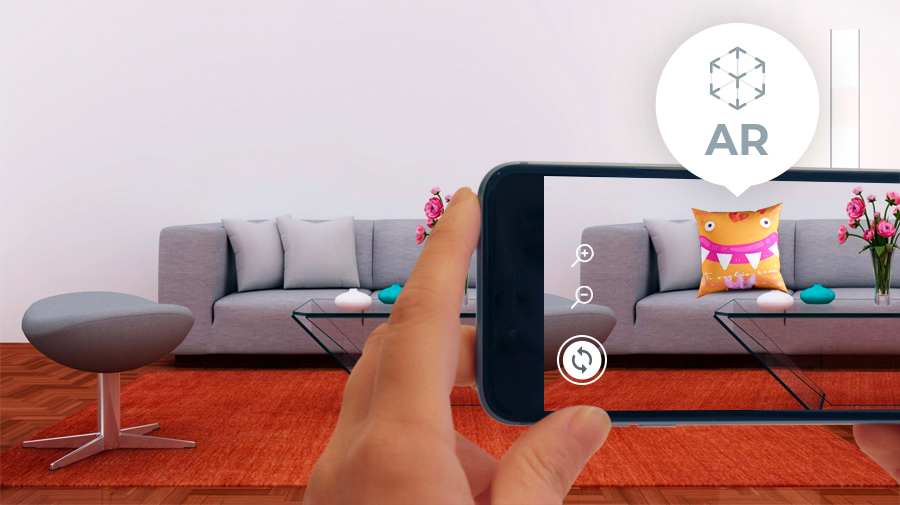
As technology continues to evolve, businesses from all industries need to keep up with these advancements constantly or risk losing their customers to their competition. Over the past years, one of the biggest technological advancements has been the improvement and popularization of 3D visualization software and Augmented Reality (AR).  Now, you may have heard of augmented reality as it continues to become more and more influential in social media as well as marketing efforts, but if you have not, essentially, AR uses existing objects in our environments and digitally enhances them in real-time. Augmented Reality vs Virtual Reality It is important to distinguish between augmented reality and virtual reality — especially because a number of people get these two concepts mixed up or use them interchangeably. While both types of technology enhance your view with augmented digital images, virtual reality completely replaces the natural world you are in with these images.Ā  In other words, if you were to think about it in terms of well-known games (pretending, of course, that all you can see is the screen itself and none of your surroundings), augmented reality would be PokĆ©mon GO, and virtual reality would be Grand Theft Auto (GTA).  An example of augmented reality would be when you are looking for a new pair of glasses, and the online website you are buying them from allows you to ā€œtryā€ them on by allowing access to your phone camera. They will then enhance your phone’s camera view by showing you what you would look like with those glasses.  There are, of course, a number of other use cases of AR 3D software, and businesses of all kinds can benefit from implementing this kind of software into their repertoire by providing a more unique and personalized experience for their customers as well as allowing them to see the items they are purchasing in more detail.  Since web AR visualization software solutions can be such a valuable addition to your business’s product descriptions and advertisements, it is no surprise that there are a number of solutions available on the market today that can help you become a leader in augmented reality marketing before all of your competitors are doing it too. How to use Augmented Reality in your e-commerce You are likely wondering why augmented reality technology is so important today and what it means to use AR in your business. Well, in respect of importance, augmented reality is essentially the new big advancement in technology, and for a society that heavily values technology and its advancements, AR is simply the best way for you to appeal best to your target audience.  AR technology enhances customers’ experience with your products and gives them a better idea of what they are buying and makes them feel more confident about that decision. AR for your online products can dramatically increase customer engagement, increase the likelihood of sales, improve customer satisfaction and retention, reduce the number of returns and enhance your brand identity. So, now that you know some of the benefits of AR technology for your business, you may be wondering how to make augmented reality a part of your online shopping experience. Luckily, there are a number of tools and software solutions, like Zakeke, available on the market today that can help you to do just this.  But what exactly does implementing AR into your online store mean for your website? Essentially augmented reality can be used as a way to help your customers view your products more clearly and thoroughly. This can help them to feel more comfortable with their purchase decisions because they will know exactly what they are purchasing before they do so.  This is much like being able to pick up and inspect a product in person in a traditional brick-and-mortar store and can ensure more confidence in their purchases and fewer returns of your products. Additionally, AR views of your products can help your customers to see what the product will look like in their environment in real time. For example, if they are looking to buy an armchair, they can see what it will look like with their other furniture and ensure that it is what they are looking for before they purchase. Web AR examples: Flex Arcade case study Before diving into some examples of Web AR, it is important to know exactly what this term means. Basically, Web AR is a technology that allows you to easily view and share AR experiences over the internet — without a specialized app to view the AR experience — on multiple devices.  This is incredibly valuable in the world of e-commerce because not everyone is going to have the same apps downloaded on their devices and many people will not want to download an app simply to view a product when there are other businesses that allow them to view those products without having to download anything. So, what is a good example of where a Web AR framework, like Zakeke, has been used well? We can talk about one of our customers, Flex Arcade, who sells customizable arcade cabinets and was able to use Zakeke’s platform to offer easily customizable 3D models of their products that the customer can personalize themselves easily online.  Before using Zakeke, Flex Arcade’s team had to do all of the customization themselves and they were drowning in the manual work that entails. But today, Flex Arcade is one of many successful augmented reality examples that use the technology to not only make their customers happy but also lessen their internal workload as well. How to choose your AR Visualization software Since augmented reality software can be so incredibly useful for businesses of all sizes and industries, it is no surprise that there are more than a few different platforms and tools available that can help a business to create these AR-enhanced online storefronts.  Now, while having a number of different options can often be a good thing because it means that you can

Read More >
AR in fashion e-commerce
3D Configuration

A New Era of Digital Reality: From 3D to AR and Beyond

In this post, we’ll delve into the crux of 3D Visualization and explain how it impacts consumer behavior. We’ll also examine how AR and 3D Visualization are redefining retail and what the future holds for these technologies.Ā  The world is changing, and the way customers experience products has also changed. As consumers demand more customization and yearn for more personalized products, forward-thinking companies are leveraging visualization tech to achieve a competitive edge.Ā  Technologies like 3D visualization and augmented reality (AR) have opened up a new realm of possibilities, improving customer experience and saving costs in the long run. And companies adopting these technologies are seeing a quantum leap in revenue and sales.  For instance, recent research has found that augmented reality boosts online shopping sales by up to 200%. That’s because the modern consumer, particularly millennials and Gen Z’ers, prefer shopping on sites that replace physical interactions with more engaging virtual experiences. And this is where 3D visualization comes in. So, what is 3D visualization? What is 3D Visualization? The goal of 3D visualization is to provide a digital representation of what the object would look like in the real world. A good example is companies that use try-on technology, like Guerlain. When shopping at their store, you can see realistic 3D imagery of the product you want to buy without visiting a physical store.  2D and 3D Visualization: What’s the Difference? Online retailers focus heavily on putting their products in front of the customers.  However, online shopping suffers a major drawback; it can be difficult to determine whether the product will meet the client’s expectations by viewing the product images. And this is where 2D and 3D visualization comes into play.  In contrast, 3D Visualization allows shoppers to view product visuals from every angle and see how each part would look. Customers can interact with the product to see every detail. They can spin it, turn it, zoom in, zoom out, and do more.Ā  What are the Advantages of 3D and AR Visualization? The use of AR and 3D product visualization in e-commerce greatly impacts the customer shopping experience. Here are a few advantages of using 3D and AR in e-commerce. 1. It Increases the Confidence of Shoppers Trust is the foundation of the brand-customer relationship. But how do you build trust with your customers? 56% of consumers say that additional product information inspires them to trust a brand more and make a more informed purchase decision.  In an age where consumers first research a product online before committing to buy, 3D visualization and augmented reality can help them make more informed decisions. These technologies make them envision how a product would look and feel in their home, encouraging them to buy.  2. Increase Your Conversion Rates The longer the customers stay on your website and explore your products, the more likely they’ll make a purchase.  With a photorealistic 3D model integrated into your site, your customers can truly experience your products virtually, accelerating their conversion journey. Research shows that interacting with AR can boost your conversion rates by up to 94% as shoppers feel more connected to your brand.  3. Reduce the Product Returns As the move to online shopping intensifies, high return rates are one of the biggest problems faced by online retailers. Research conducted by Mintel, a market research company, found that 49% of online shoppers had returned products bought in the previous year.  Addressing the question of why consumers return the goods, UPS surveyed 18,000 global online shoppers. Among the top reasons were faulty or damaged products (30%), followed closely by goods not matching the description at 27%.Ā  The product return problem can easily be solved with the use of AR and 3D visualization. AR, for instance, offers virtual try-on and product demos, providing shoppers with an opportunity to try before they buy. As a result, customers can make more informed buying decisions, reducing the high customer return rates.  Redefining Retail: How Is 3D Closing the Loop? The impact of 3D renderings is being felt in virtually all industries, and the retail sector is no exception. As Allan Cook, the MD at Deloitte Consulting, puts it, ā€œThe massive shift to 3D will completely transform retail and change how people shop.ā€ 3D technology is already making waves in retail. Savvy businesses are using 3D visualization to improve customer experience and drive sales.  3D assets can also be used to create different forms of content—from key visuals to social content, CGI product shots, product customizations, etc. Investing in quality 3D designs and technology can also save your business money.  For instance, using CGIs in your catalog can remove the need for expensive photoshoots while allowing the users to view true-to-scale imagery in their homes.  The Future of 3D and AR Visualization: A Huge Global Market As more companies realize the benefits of using 3D visualization and AR in their platforms, the 3D rendering market continues to grow.Ā  The 3D visualization market exceeded $2 billion in 2019 and is projected to grow at an over 20% CAGR up to 2026.  The advancement in 3D modeling and emerging augmented reality/virtual reality technologies are driving the demand for efficient 3D visualization solutions. The future of 3D will take design work to a new level of quality and speed.  3D visualization coupled with augmented reality has led to the development of what tech nerds call ā€œproduct display 2.0.ā€ Taking furniture in retail as an example, 3D Visualization and AR help customers envision the products as if they have already bought them and placed them in their apartment. Only physical stores were able to offer this kind of experience a few years ago.Ā  Companies like Flex Arcade have already implemented AR into their e-commerce platform. The company enables shoppers to visualize their arcades while configure them in 3D and AR. Customers can choose to bring more changes to the design or complete a purchase.Ā  By enabling a 3D product configurator, online shops can simulate the unique feeling of a product—virtually from

Read More >
customize furniture
Augmented Reality

Taking AR from online eCommerce to eCommerce in the Metaverse

Today, many brands are interested in using or are already starting to use AR for marketing in the metaverse. Online stores today use AR-based product visualizations that deliver interactive product experiences that connect with customers on an emotional level and potential customers can use the technology to check out products from practically any location. For businesses, moving augmented reality from online shopping to the metaverse may be the incentive needed to move AR-based marketing to the masses. Augmented Reality in ecommerce Most people have already experienced AR technology through a smartphone app with over 50% of smartphone owners claiming to have already used AR apps when shopping. In this post we will define and focus on augmented reality as a virtual interactive experience of a real-world environment where real objects are enhanced by digitalized perceptual information, and virtual objects can also appear within the real-world environment. AR enables brands to create an online store where shoppers can move around and interact with virtual and real objects. For marketers, AI enables the creation of new advertising and product interaction experiences such as virtual storefronts, signs and billboards that are visible to all who are within a defined area of the metaverse. Why Augmented Reality? When using augmented reality the real world becomes metaverse-enhanced and doesn’t require people to leave reality to visit. That’s a key reason why AR and its blended real world and virtual world experience will likely become a part of our own world. The viewing experience is also more relaxed and more palatable to most people than say a VR experience as there are few people who are willing to stare for hours at screens a half-inch from their eyes and remain detached from the world around them. AR as a Marketing Tool In order for there to be an effective AR-based marketing campaign, there must be an audience to which to market. Today you may not know anyone that regularly spends time in the metaverse or perhaps you know someone that spends a regular amount of time in a metaverse wearing AR glasses or using an AR app. Looking ahead we expect that most people will experience AR and the metaverse. This doesn’t mean that brands should wait for broad adoption of AR as now is the time to start preparing for emerging marketing trends in the current environment and in the metaverse. Businesses and marketers need to study the trends of the metaverse now so they don’t find themselves left behind when the technology is mainstream. The initial interest in the metaverse reveals a major opportunity for brands to start experimenting with sales and marketing strategies. The widespread use of AR is here and now as the hardware has now become technologically advanced and low enough in cost to be adopted by a mass market. Widespread adoption will largely depend on whether there are enough easily identifiable use cases for AR.  AR has the potential to enable marketers to position their products in the best light possible, as it enables marketers to provide a narrative of their products in real-life and allows customers to experience this reality.When used properly, AR is a powerful tool for businesses and marketers as it allows customers to experience products in a variety of use cases that may not be immediately obvious and it gives them the freedom of how to engage with a brand. AR in the Metaverse Consumers have high expectations for brand experiences in the metaverse and they expect to be receiving more dynamic, enriching product information in this new environment. The brands that will win out are those that are willing to try out the technology now, so they can deliver positive experiences when consumers start rushing to join. The biggest advantage of using AR is that it opens up a world of possibilities that don’t exist in real life and it is available to use now. A consumer can create virtual artwork that appears on the wall or ceiling, and may be animated or continually changing and is always available for anyone with AR glasses to see and engage. For those skittish about needles perhaps virtual tattoos will be more to their liking and yes, they may be animated. As consumers walk down a store aisle, they may look at a product to see an AR enabled product descriptions, pricing, available accessories, and so forth.In your home, instead of sitting in a particular room with a TV, one could sit anywhere, indoors or outdoors, to watch a movie on a wall-sized screen. When working on your car, you could look at the area being worked on to see a schematic overlay. For almost any item a person can purchase, they can use AR to view it in their home or on their body. This metaverse vision is about being in real places where mixed reality glasses can reveal otherwise invisible digital layers. For businesses, marketers and advertisers, these types of scenarios present opportunities to interact with prospects and customers.  Currently, many brands use augmented reality to enhance their marketing efforts through the use of AR-enhanced mobile apps that allows potential customers to try out clothing, makeup and hairstyles on themselves or see a piece of furniture in their own homes. Many consumers have stated that they prefer shopping online over in person, however, there is an element missing from much of today’s online shopping and that is the act of trying on, and interacting with a product before you buy it. AR allows consumers to experience and interact with a product before purchasing it, creating a strong bond between the buyer and the product. Consumers can do that today with current AR experiences and that capability will become even more rich in the metaverse. In stores, retail spaces, online and in the metaverse, shoppers can use virtual try-on filters to simulate how they might look any type of apparel (hats, shoes, watches and jewelry) without visiting a store. This allows users to purchase with confidence,

Read More >
configured furniture
3D Configuration

Augmented Reality Furniture: Benefits & Starting Guide for eCommerce

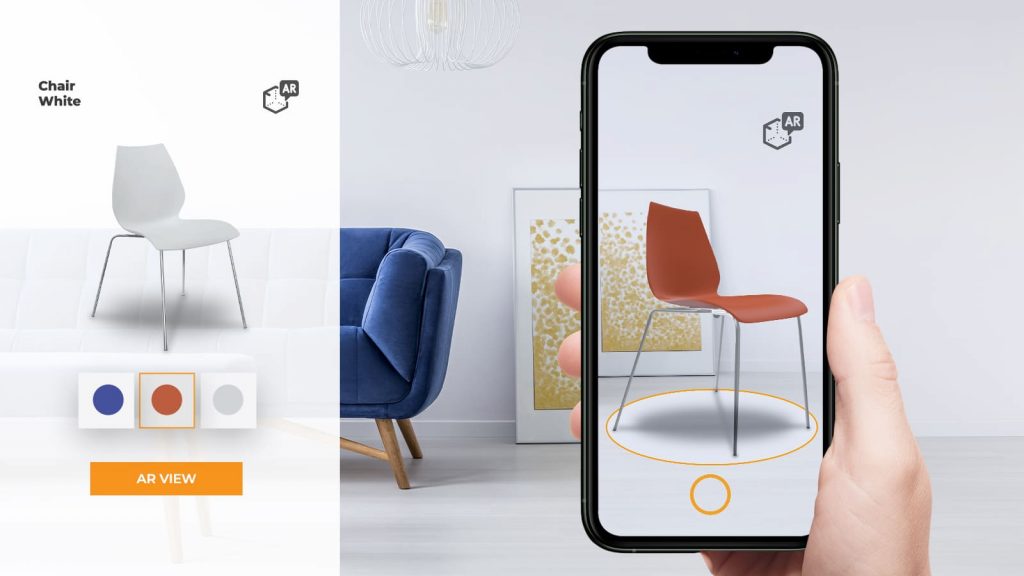
The wise say, ā€œA picture is worth a thousand words.ā€Ā  But there’s no guarantee that furniture will look good in your living room or that the refrigerator will properly fit in your kitchen. Most online retail marketplaces are built on static images. While these images can be stunning and catchy to the eye, they lack tactile perception – a reality that makes you see and experience a product as if you were physically present.Ā Enter the world of Augmented Reality furniture. 3D and Augmented Reality technologies allow furniture brands to provide their customers with a try-before-you-buy shopping experience with realistic product visualization that drives sales.Ā  The use of Augmented Reality in furniture stores has gained traction over the past few years. A recent study conducted by Centric Digital found that 60% of shoppers want to use augmented reality as part of their furniture shopping experience.Ā  But how can brands drive sales with AR? We’ll delve into the crux of 3D and AR in furniture stores and explain how these technologies can be used to drive engagement and sales. We’ll also walk you through the steps to implementing AR in your furniture store.Ā  The Rise of Augmented Reality (AR) in Online Shopping Augmented reality (AR) is an emerging technology that has truly revolutionized the way we shop, communicate, and even play games. Despite being around since 1968 – when the first AR headset was developed by scientists at Harvard University, AR only gained significant traction with the success of PokĆ©mon Go. The game uses AR to make PokĆ©mon appear anchored to the real-world right in front of you. The onset of COVID-19 further changed the game for AR and VR, as online shopping stole the spotlight. Research shows that global spending on AR and VR headsets grew 50% in 2020 to reach a staggering $12 billion.Ā  Today, customers are less hesitant and widely use augmented reality to facilitate shopping. Used in shopping, AR gives consumers the power to change some elements of their surroundings without changing them.Ā  For instance, AR allows consumers to try out furniture virtually. Shoppers can stage the furniture and experience how it would appear in their rooms. Most importantly, it helps shoppers determine whether the furniture would fit their room or not. In the realm of e-commerce, furniture businesses should harness the power of 3D & AR to distinguish themselves from competitors. How to Drive Online Sales with 3D & Augmented Reality for Furniture Thanks to technologies like AR and 3D rendering, the furniture industry is having its online moment. Here are some stats to enumerate the impact of AR on furniture sales: These stats should give insights into how the application of AI can help boost your furniture sales online. But how exactly are 3D visualization and AR pushing online furniture sales? 1. AR Enables Customers to Virtually ā€œTryā€ Out Furniture One of the big challenges when buying furniture is trying to visualize what it will look like in your home. While returning a dress that doesn’t fit is a straightforward process, sending back a bulky item, like a furniture set, can present a lot of challenges.  And this is where AR comes in. Leveraging the 3D and AR technologies allows you to bring the in-store experience to online shopping and see furniture in your room from your screen. With 3D modeling, retailers can use interactive, graphical representations of their furniture items. Customers can rotate the object, zoom in or out, and even view it in motion right from their mobile app or browser. This gives them a greater understanding of the features and functionalities of the product while envisioning what it looks like in real life.  In a nutshell, the use of 3D And Augmented Reality furniture allows customers to: With these immersive capabilities, augmented reality and 3D renderings increase the customer satisfaction level, leading to more sales and fewer returns. These technologies also help to eliminate the guesswork out of the furniture shopping experience.  2. Customers Can Determine the Size of Furniture Before Buying Nothing can be more frustrating than buying a piece of furniture, only to realize later that it can’t fit its designated space.  Augmented Reality furniture apps help to avoid this problem by allowing customers to determine the size of the furniture right within their desktop or mobile app. Through AR and 3D rendering, your smartphone becomes your measuring device.Ā  As you start to encode the product in a 3D environment, you also capture the measurements of those products. As such, your phone doubles as a measuring device, allowing you to measure dimensions and only settle with products that are the right fit for your house. 3. AR Imparts that Emotional Experience That Static Images Can’t Provide The number one driving force behind most purchases is emotions.  Connecting emotionally with a product increases your likelihood of buying it. And that’s where AR outshines the conventional means of advertising.  Interacting with a product in a virtual space builds up emotions that connect consumers to products they’re viewing, making them want to experience similar emotions in the future. AR creates more positive feelings about a product. By providing an unparalleled shopping experience with AR, furniture retailers increase the likelihood that consumers will want to create those experiences.  4. AR Increases Buyer Confidence Consumers trust their emotions and logic when buying products.  They weigh the product’s pros and cons, give clues about their emotions, and decide on the items that make the most sense to them.  Without technology that elicits the actual perception of the product, it can be hard to impart emotions and clues that will make customers trust your products. AR’s visualization capabilities help consumers eliminate doubt about a product they intend to buy.Ā  As mentioned, AR elicits feelings that help build a connection with a product. This increases buyer confidence as shoppers are more likely to purchase items they have built a connection with, which ultimately increases the likelihood of a sale. Get Started With Augmented Reality Furniture Visualizer Now that

Read More >
AR in fashion e-commerce
Augmented Reality

What Is Augmented Reality (AR)? A Practical Guide

The History of Augmented Reality The term “augmented reality” was coined by Tom Caudell in 1990 and popularized by Boeing researcher Ronald Azuma in 1997. However, the technology dates back much further than that. The earliest known example of AR is from 1950 and the work of Morton Heilig. Heilig was a cinematographer and designed what he called the “Sensorama Simulator.” The Sensorama Simulator was a machine that allowed users to experience movies in a completely immersive way. The machine had stereo speakers, a stereoscopic 3D display, fans, smell generators, and a vibrating chair. Heilig only built one prototype of the Sensorama Simulator, but it’s considered the first example of AR. Other early examples of AR include: Telespace Mask: Created in 1960, the Telespace Mask was one of the first head-mounted displays (HMDs). The mask displayed simple computer-generated images and was intended for use in teleconferencing. Heads Up Display: In 1968, Pierre Pestieau patented the Heads Up Display (HUD). HUDs are now common in aircraft and allow pilots to see the information without looking away from their field of view. Sword of Damocles: In 1968, computer scientist Ivan Sutherland also created an HMD called the “Sword of Damocles”. The device was so named because it was too heavy to be worn for long periods of time. The Sword of Damocles was the first AR system that allowed user interaction. Of course, today’s AR is much more accessible and doesn’t require the machinery that older versions required. Now, AR is easily accessible with mobile phones, tablets, computers, and handheld devices. What AR Is and What AR Isn’t One of the most common misconceptions about AR is that it is sometimes confused with VR (virtual reality). Though sometimes used interchangeably, the two technologies are very different in both application and technologies. What Augmented Reality Is Augmented reality uses existing reality and physical objects in our environment to develop digital enhancements in real-time. This digital information is then layered on top of the physical world to change or improve it in some way. For example, an everyday use of AR is to display text messages or social media notifications on top of our view of the physical world. This allows us to see the information without taking our eyes off what we’re doing. The goal of AR is to make it seem like the additions are part of the actual environment that can be interacted with. To experience AR, users have to operate a device loaded with AR software and a built-in camera. The camera and software work together to analyze the environment and determine where to place digital enhancements. Through the technology, the enhancements can often be manipulated or engaged with somehow. Augmented reality is used in many ways across various industries.  What Augmented Reality Isn’t As mentioned, AR is sometimes confused with VR. Virtual reality is not a digital enhancement of a real environment. Instead, VR completely replaces the natural environment with only digital images. Through a device (like a headset), a VR experience is all-encompassing and shows its user only what the software has been programmed for the user to see. Users can engage with virtual objects in VR using controllers or movements.  Oculus Rift, Playstation VR, HTC Vive, and others are examples of virtual reality equipment. Though it is often used for gaming, there are many other applications of VR used by many industries, including health, science, and humanities. AR is also not 360-degree videos–though AR can use 360-degree video software to enhance the experience. 360-degree videos are also immersive, but just in the way that you can view different parts of the world by moving your phone or another device around. Mixed reality (MR) is perhaps the closest to augmented reality. The key difference between MR and AR is that MR produces synthetic content that reacts with real-world content. Mixed reality used to be a term used more often but now augmented reality has almost completely replaced it.   How Augmented Reality is Used Today With the technology becoming more and more popular worldwide, augmented reality can be found across many different industries, platforms, and devices. Today, many people use AR without much thought about it. Digital Information Displays What used to be the work of science fiction and movies, where display screens shared important information, is now found in cars and other transport vehicles. You can get real-time directions, information about accidents or upcoming road hazards, the weather, and just about anything else pertinent to your operational success directly from your dashboard. Inserting Labels Products utilize AR technology to make their marketing more interesting and bring to life their brands. The wine brand 19 Crimes, for example, allows users to scan their phone across a label and receive an augmented reality video of the character being displayed. The character goes into a story about their history and creates a level of intrigue that doesn’t exist anywhere else on the wine shelf.  Backs of cereal boxes also offer a full AR experience right at the breakfast table. See The Product In Your Space or On Your Face With some apps, furniture and home goods brands now offer the opportunity to see specific products as they would live in your space or home. While you can’t sit on a virtual couch (yet!), you can see if it matches the rest of your belongings or see how it might fit in a specific space. Warby Parker launched their AR app in 2019 as a way for customers to see how they’d look in certain eyewear. Instead of waiting for a package to arrive, only to be disappointed, users can check out firsthand whether they like the style or color they chose. Social Media Filters Snapchat, Instagram, and TikTok all currently use AR technology to help social media users manipulate the way they look or the space around them. Some are silly and meant to entertain, while others offer truly remarkable transformations that flow seamlessly as though part of the real

Read More >
furniture AR
Augmented Reality

(Re)Defining Augmented Reality: Strategies for Optimizing Innovation in Retail

In the last year, the E-Commerce industry hit an inflection point as lockdown restrictions forced consumers into their homes. During this time, while other economies suffered, E-Commerce’s share of global retail trade hit 17% in 2020, as compared to 14% the previous year. Global online retail sales hit a whopping $8.1 trillion during 2026 as consumers preferred buying their goods online instead of brick-and-mortar stores. While a main driver for the E-Commerce boom could be the onset of the coronavirus pandemic, there are many reasons why customers turn to online stores instead of their physical counterparts when they are in need of a shopping spree. Emerging technologies like virtual reality (VR) and augmented reality (AR) have made their way into the retail world. These new advancements have augmented shopping capabilities that are able to enhance the customer experience and mimic in-person traits of shopping in a brick-and-mortar store.Ā  That, and they are able to do it within the comfort of their own home. Innovation in retail to deliver the ultimate customer experience In the modern world, customer experience has moved to the forefront of every branding and business strategy. In a nutshell, customer experience encompasses all the touchpoints that an individual has with a business and how it forms their relationship with the brand. Optimizing the customer experience can go a long way in finding sales opportunities, promoting customer loyalty and word-of-mouth marketing. 52% of customers say that they have made repeating purchases after a positive customer experience. Retail brands need to do more to provide a pleasant experience, one of which takes place during the shopping process. Augmented shopping as a strategy to drive sales The opportunity to visualise a product prior to purchase or a visit to a brick-and-mortar store is a massive advantage to retailers and customers alike. On the other hand, digital commerce sites have a massive impact on time saved shopping, an impulse desire to buy, and how the customer interacts with products. This will enable marketers and retailers to really understand who, when, and what purchases are being made. However, the caveat is: customers are not able to actually hold the product in their hands, or see it in real life. As a result, there could be disappointment when they receive the actual product in the mail or during delivery. By addressing these potential challenges in E-Commerce, product visualisation through AR and 3D modelling on websites and mobile apps are a game changer for e-retailers everywhere. Bringing the products to customers with Augmented Reality To tap in on sale opportunities, retailers need to help their customers visualise the way they will use the product. For instance, furniture buyers can leverage augmented reality to see how certain furniture will look in familiar environments. AR technologies make this possible by imitating home environments and altering the design and aesthetic of each presentation. To put things in perspective, this experience is similar to that of a furniture showroom where shoppers are put in familiar settings like the bedroom or living room. This makes them more likely to make an impulse purchase online, while also avoiding the ā€œit looked better in picturesā€ conversation. According to Apple, AR has the ability to increase the likelihood of purchases by 11 times.  Another product where a physical try-on has a significant impact on the purchase decision is clothing. Previously, clothing buyers could only imagine what a certain dress, or a pair of pants, would look like on them based on a modelled version. However, given the diverse body type, this was limiting people’s options. Now, retailers can create a live prototype of the buyer’s body type based on their individual measurements. Shoppers can have a better visualisation of how clothing will look on them, similar to a try on at a physical store, through a 3D and Augmented Reality viewer. Getting retailers up to speed When consumers experience AR technology such as this, which allows them to try on products with ease, they begin to expect this experience in different brands. Because of these expectations, retailers need to work to meet this new standard. The new era of consumers means higher expectations and new preferences. As more consumers move online, e-retailers need to leverage on this consumer shift to get ahead of the competition. Their customers will continue to expect shopping experiences that are equal to, if not better, than that of a brick-and-mortar solution.  Zakeke works with online businesses to deliver the ultimate augmented shopping experience. With seamless integration to major e-commerce systems like Shopify, Woocommerce, Salesforce, Opencart, Etsy and Bigcommerce, Zakeke enables retailers to offer personalised product visualisation. Whether it’s clothing, shoes, jewelry or watches, shoppers are able to know what they’re going to get before checking out, which means fewer refunds, complaints, and a lot more satisfaction.

Read More >
B2B AR
Augmented Reality

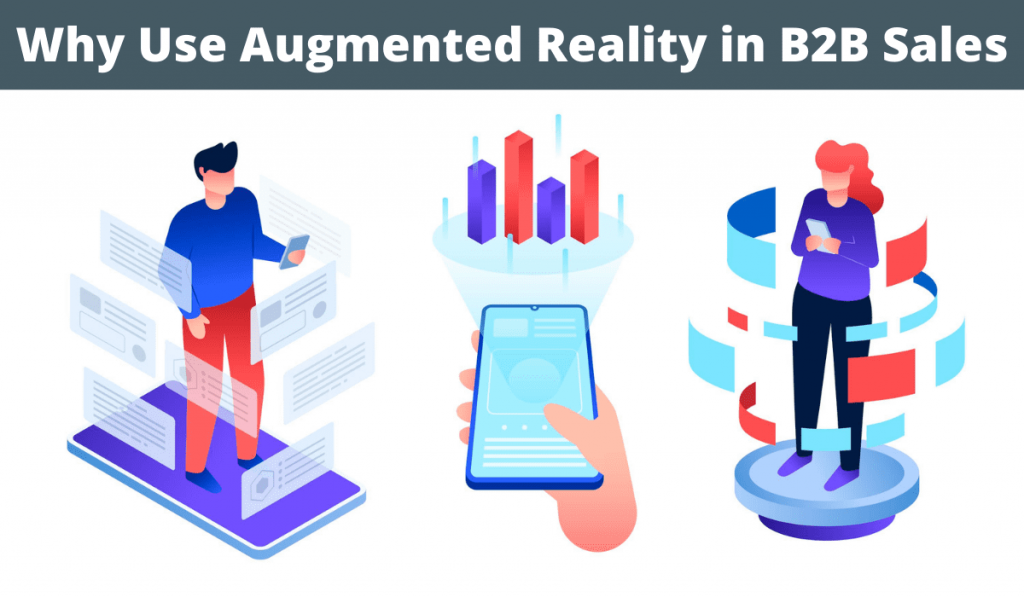
Why Use Augmented Reality in B2B Sales

Augmented reality is ready to transform the relationship between customer and supplier in the B2B market. Discover how a 3D & AR Product Configurator can help you in your sales process.

Read More >
AR furniture
Augmented Reality

How Augmented Reality Is Shaping the New eCommerce Ecosystem

Technology is always evolving and finding ways to impact people’s lives. Among its more recent contributions is Augmented Reality or AR, the lesser cousin of virtual reality. While this technology is nothing new, its application to the e-commerce ecosystem fairly is. With increasing demand, improving device capability, and the growing urgency for contactless transactions, AR is being touted by industry experts as the next big thing in the tech world. Online retailers have been reaping the benefits of AR since it first came out, but there are many more ways that AR can impact consumer behavior. The Growing Problem of Online Product Returns As an online shopper waits for a product to arrive, the anxiety mounts along with the anticipation. Is the size just right? Will it fit perfectly? Does it look exactly as it does on the website? These are just some of the questions that chip away at a consumer’s confidence in online shopping. When the package finally arrives, the anxiety has usually mounted to a level where the slightest disconnect between expectation and reality is amplified, enough to return the product to the seller. For many years, this inability to interact physically with a product is one of the biggest disadvantages of online shopping. It is the driving force behind the 30% product return rate in the UK and the $550 billion loss in the US. E-commerce companies could not replicate the level of interaction that customers can get at brick-and-mortar shops. Still, there are ways to create an entirely new shopping experience that can increase consumer confidence in the products they are purchasing online. This is where AR technology comes in. The Power of Product Personalization The integration of augmented reality into e-commerce has given many retail brands the tools needed to engage consumers in meaningful ways. This has the potential to translate not only into reduced product returns but to a significant boost in product sales. One of the most important features of AR in the context of online shopping is the ability of the shoppers to see what an item looks like on them or in their home. For instance, a user can superimpose virtual lamp models and other decorative items into their own space. It allows them to visualize ownership of the product in ways that even brick-and-mortar shops could not.   AR has also found its way into the automotive industry. Online customers are given the ability to personalize the style of trim, the accessories, the interior, and the color of a vehicle they intend to buy. This level of engagement makes customers more likely to make a purchase, whether outright, on succeeding visits, or with a trip to the nearest retail branch. Amazon has already taken significant leaps in this direction. In its effort to revolutionize product customization, the massive retail company purchased Body Labs, a 3-D body scanning company. They are also set to acquire an AR-driven service capable of delivering a perfect fit for all online shoppers. With these and upcoming developments in AR and e-commerce, there has never been a more exciting time to shop online. Using the Right Tools Using the right tools and solutions, you can enable product customization, reducing product returns and protecting your brand image in the process. One such tool is Zakeke, a web empowering service that helps businesses optimize product visual personalization to enhance customer satisfaction. Thanks toĀ Augmented RealityĀ features andĀ 3D photorealistic models, customers can see exactly what they are buying. They can zoom in, rotate it and see item from every angle. How it works? Request a demoĀ hereĀ orĀ Start a free trial now! Stay up to date and follow us onĀ LinkedIn,Ā FacebookĀ andĀ Instagram

Read More >
AR bottle
Augmented Reality

Augmented Reality in e-commerce: why is it important?

The e-commerce future is Augmented Reality (AR). It is estimated that about 100 million consumers will use AR for online and in-store shopping by 2020. That’s why Zakeke now supports Augmented Reality.Ā  The big brands have already begun to integrate AR into their mobile applications and in physical stores. Why? The advantages of AR are endless. Augmented reality consists in enhancing the customer experience by showing the object they wish to purchase where they will use it. This is even more important for online sales, especially if an object can be customized as you can do it with Zakeke.Ā  So, why Augmented Reality is important in e-commerce?Ā  Ā  MORE CUSTOMER ENGAGEMENTĀ  Online sales are spreading. However, the virtual has a limit: it is virtual. The product cannot be touched or tested before buying it. Augmented Reality overcomes this eternal limit and consolidates customer engagement by offering a personalized experience. It is a solution halfway between physical contact, typical of face-to-face selling, and online shopping, where the seller-customer relationship is almost nonexistent.Ā  In addition, the customer is personally involved since he can customize the product through the 3D visualization by Zakeke. In this way, the customer becomes the main actor in the realization process. The customer loves customization and this active role is charming.Ā  Ā  MORE POSSIBILITIES TO SELLĀ  Augmented Reality makes the customer more inclined to purchase. What does it mean? Let’s take an example. I like a lamp, I can change its colour to adapt to my furniture, but a question comes to my mind: “Is it suitable for that table in my room?”. This question may stop the purchase process.Ā  Thanks to AR, the answer to that question will be easy. The customer has just to open the camera of his smartphone and see the desired lamp on the table he wants. The more the user is sure of what he is buying, the higher the chance that he will buy.Ā  Ā  CUSTOMER RETENTIONĀ  Technological development is invading every field and online sellers know it more than others. The technologically advanced experience offered by augmented reality retains customers, especially the younger ones.Ā  Customer prefers online sales channels. The combination of in-store and online experience gives to the user such a unique experience that will lead him to trust the brand and the company.Ā  Ā  ENHANCE BRAND IDENTITYĀ  Augmented reality allows the customer to live unforgettable and unique experiences. This helps him make informed choices considering his preferences. AR is an element that goes hand in hand with the 3D visualization of the products that offers the customer the possibility to make customizations in real-time and to test them in the real world.Ā  Augmented reality is an extension of the brand experience that makes possible to create a relationship with the customer. AR allows the customer to explore and learn more about the products offered by the company.Ā  Ā  MORE SALES, FEWER COSTSĀ  Zekeke’s goal is to provide e-commerce vendors with a tool that can help them increase sales. Augmented reality with all the advantages listed above is heading towards this goal. In addition, augmented reality enables personalized experiences that reduce the costs of returns of a product.Ā  The equation is simple:Ā augmented reality + personalized experience + consumer engagement = MORE SALES Want to try the Zakeke Augmented Reality? Go to our demo page or start a 14 Free Trial!

Read More >