✦ AI AGENT STUDIO IS OFFICIALLY LIVE!

Your AI creative team is now in Zakeke.

Industry Trends

Zakeke_getapp_categoryleader
Industry Trends

Zakeke Included in Gartner’s GetApp Category Leaders Report for CPQ Software 2021

Zakeke has been placed on GetApp’s newly released Category Leaders Report for CPQ Software by GetApp, a free online service that helps organizations find the right software. Category Leaders is published on GetApp, the recommendation engine for SMBs needing to make the right software choice. Category Leaders rankings highlight top-ranked North American software products based on ratings from end-users in five key areas: ease of use, value for money, functionality, customer support, and likelihood to recommend. The research methodology is available here. Scores for each dimension are scaled to a maximum of 20 points, resulting in a total maximum score of 100. Featuring in the GetApp Category Leaders top software solutions reports, Zakeke has been given a score of 99 out of 100 (not bad, ah?). With an overall rating of 4.9 out of 5, Zakeke has been a top-rated product on GetApp. ā€œWe’re very excited that Zakeke has been named as one of the Best CPQ for 2021. Customization & Configuration is so much more than just offering personalized products. An intuitive, easy-to-use, and powerful multifunctional solution helps manage work processes, reduce and control the number of repetitive tasks, and concentrate on communication with team members and customers. In addition, using a powerful CPQ also increases workflow efficiency and quality by eliminating small human errors,ā€ said Zakeke’s CEO Angelo Coletta. Automation is one of the main benefits of CPQ. Zakeke workflow enables businesses to reduce admin work, easily set up and unify all configuration tools, including supporting apps and integrations, and customize the offer specifically for the needs of the clients & teams involved. Want to review Zakeke on GetApp? Click here. Stay up to date and follow us on LinkedIn, Facebook and Instagram. About GetApp GetApp is an online resource for businesses exploring software-as-a-service (SaaS) products. Buyers easily compare software products side-by-side with GetApp’s free interactive tools and detailed product data. GetApp features research, insights, trends, and validated user reviews, giving buyers the tools they need to make informed decisions for their organisation. GetApp is a Gartner company. For more information, visit GetApp.com Disclaimer GetApp Category Leaders constitute the subjective opinions of individual end-user reviews, ratings, and data applied against a documented methodology; they neither represent the views of, nor constitute an endorsement by, GetApp or its affiliates. All Category Leaders for Best CPQ are available here.

Read More >
Web2print-customizer-min
Industry Trends

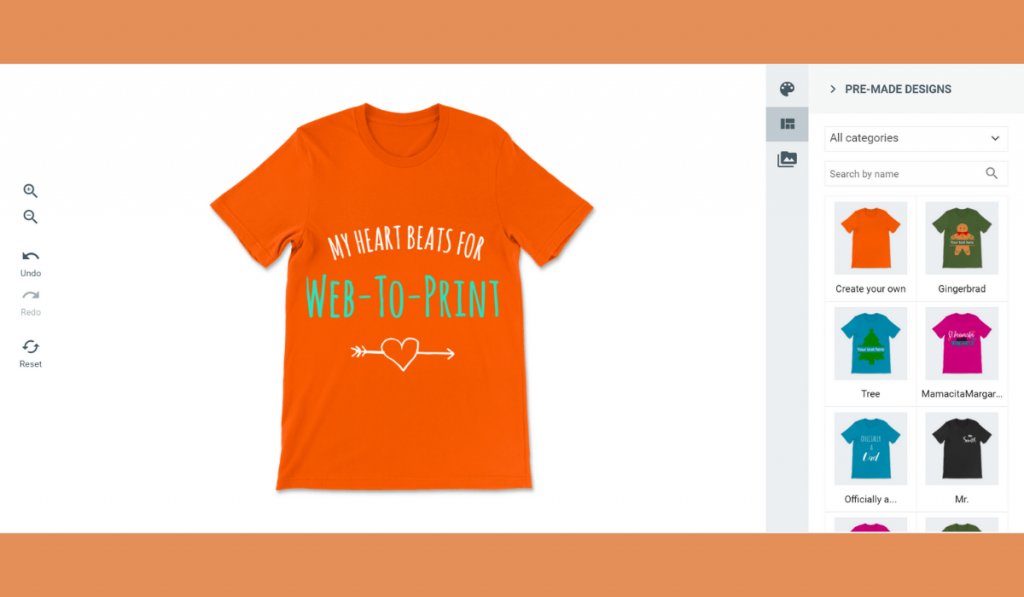
Visual Product Customizer: the perfect tool for Web-to-Print Business

When it comes to product customization, it is impossible not to think of the web-to-print world. The merging of classic and digital printing is no longer an option. It is a solution that print service providers just have to offer. Today, not maintaining web-to-print means being outside the logic of the market. It is not enough just to offer a web printing service. You need to offer a smooth and satisfying experience to the customer that encourages him to come back. The advantages of web-to-print Web2Print offers a wide range of benefits for both you and your customer. It is a win-to-win operation. The main advantages are: Cost savings: the online printing process reduces the cost of order processing and customers naturally expect part of this savings to be passed on to them, and this actually happens; Service efficiency: the customer can order 24/7 on your online store and receive the product directly at home. This means that you can reach more potential clients; Sales increase: the creation of an online showcase allows you to show your large catalog quickly and intuitively, making it easier for the customer to search for the product; Cash flow improvement thanks to online payment options; Automation: a web-to-print solution with a good product customizer automates ordering, payment and accounting processes; Customer loyalty: if a customer uses your ecommerce site for typography and is satisfied with it, they will most likely return to using it. After all, why should it change? Therefore, you have the opportunity to guarantee the customer a longer-term commitment and to sell more and more products over time. Choosing the perfect Visual Product Customizer Let’s define what a Visual Product Customizer is. It is a software application that allows customers to customize the products directly on your online store. The experience can be enhanced by 3D and AR technology to let customers interact with the product and investigate every details before purchase. Visual Product Customizer has advantages in terms of conversion rate, customer engagement, cost-effectiveness and return rate. That’s why it enhances customer experience and helps your business reduces costs if your business stocks – or dropships – generic items that can be simply configured through a print on demand service. You can find a lot of software solutions but it is important to choose the right partner to avoid wasting time and money, but also losing customers. A Visual Product Customizer can be a tremendous experience if not accompanied by speed and ease of use. In addition to these, the features that can just make the experience wonderful are: Unlimited configuration options: this is a must. That it to say you have to be able to sell as many products as you want and to set multiple colors, sizes and style of the same product. You must be able to define rules and restrictions for each design and to set complex pricing rules and show different prices based on quantity, setup costs, number of colors, and personalization areas; Flexible printing methods: you have to be able to set unlimited printing methods for one or more products, sides and variants. You can define settings for your print-ready files that can be used for engraving, embroidery, and personalization methods other than printing; Print-on-Demand & Dropshipping Service Integration: a good Visual Product Customizer must support your POD & Sdropshipping services; 3D Preview & AR: these technologies let customers make informed purchase by interacting with the products and visualizing how they really look. How to integrate Visual Product Customizer into your online store? As we said, you can find a lot of software solutions but you should be sure that they have all the features you need. You can enjoy Demo Store to see how a Visual Product Customizer works. Whether you are a small company or a large company, Zakeke has the solution for you and unlike other software products, it is applicable both online and in a physical store. First steps to integrate Zakeke Visual Product Customizer Take a look at the DEMO STORE showing off Zakeke in action Start the 14-day FREE Trial NOW Schedule a call with one of our Visual Customization experts

Read More >
Wine-Day-min
Industry Trends

Wine Day: being creative with customized wine designs

Here comes the Wine Day: the best moment to celebrate the return to normal by drinking a glass of wine with friends and family. Wine is the central part of any celebration. It’s the answer to all gift dilemmas. A birthday party, bring the wine. A dinner, bring the wine. A special thanks to colleagues, bring the wine. Wine is the solution. Even more if the gift is personalized and unique. In an ultra-competitive market like that of wine, you know well how the differentiating element is essential to position yourselves on the market. The new commercial logics (production fragmentation, changes in the distribution field, the increase in eCommerce, etc.) show that not only the liquid inside the bottle is fundamental in the purchase of the wine product, but also everything that is around it. And this is where product customization & engraving comes in. Not only of the wine bottle but also of the box that contains it, of the accessories such as glasses, corks and much more. Thus, the bottles of wine take on a value of conviviality. Personalized wine bottles are noticed, discussed, and generally make people smile. Visual Product Customizer for Wine Bottles Today, the world of eCommerce feels even more the need to customize. Everything is customized. Many wine retailers offer the possibility to customize their product: from the simple printing of the label to the engraving of initials. Even though product customization is the answer, it must be accompanied by an easy-to-use tool that does not worsen the user experience. For the customer, personalization must be fun and challenging. A game. Not a nuisance. So, here a selection of some key features that should not be missing in a Visual Product Customizer tool: AR & 3D view: customers have to be able to see the personalized item in their own space in real size via Augmented Reality and see a live and realistic 3D model of the product that they can zoom in on, rotate and interact with. Unlimited configuration options: you have to be able to set multiple colors, sizes and style of the same product; to create templates of editable area of your product instead of letting customers personalize it from scratch; to define rules and restrictions for each design, to make customizable all sides and angles of your product or more. Flexible printing methods: you have to be able to set unlimited printing methods for one or more products, sides and variants. You can define settings for your print-ready files that can be used for personalization methods other than printing like engraving. CPQ: the term stands for Configure, Price & Quote that means you can add a button to receive a request for quotation by demanding customers with special need. Pros of using a Visual Product Customizer Visual Product Customizer enhances customer experience and gives you an advantage over competition. Your brand becomes recognizable. Among the main pros of using a Visual product Customizer these are the most important: Conversion rate: sales increase by up to 35% thanks to the Visual Product Configuration that shows the customer exactly what they are buying. Customers are willing to pay more for the products they have designed and customized Customer engagement: Interactive product customization engage customer and entertain him longer on your store. This increases the chances of that customer will actually buy your product. Product customization lets customer become more attached to the product itself and to the brand Customer satisfaction: 80% of customers now consider the experience a company provides to be as important as its products and services Return rate is almost zero as customers see in real-time how product will look like How to integrate Visual Product Customizer into your online store? As we said, a Visual Product Customizer is a software application that allows customers to customize the products directly on your online store. You can rely on a reputable provider like Zakeke, a powerful and easy tool with incredible 2D imagery, cutting-edge 3D configuration and augmented reality functions. Whether you are a small company or a large company, Zakeke has the solution for you and unlike other software products, it is applicable both online and physical store. First steps to integrate Zakeke Visual Product Customizer Take a look at the DEMO STORE showing off Zakeke in action Start the 14-day FREE Trial NOW Schedule a call with one of our Visual Customization experts

Read More >
NFT art
Industry Trends

NFT: what it is and why it is important for Fashion

Virtual reality knows no boundaries, and fashion started to explore it in terms of business. From the world of cryptocurrencies to the art, the phenomenon of NFT (non-fungible token) is rising in fashion industry. Behind the acronym ‘NFT’ there is a range of products designed to be enjoyed exclusively in the virtual world, a world increasingly known by the shoppers of the future: the Z Generation. What is NFT? Non-fungible tokens, often abbreviated to the acronym NFT, are digital tokens. Their existence is documented within the blockchain. The blockchain is a register (distributed on the Internet) that is the basis of cryptocurrencies. Unlike other virtual currencies, such as Bitcoin, Ethereum, etc, Non-fungible tokens are unique and non-exchangeable. They can roughly be defined as digital certificates of authenticity. That’s why – through NFT – it is possible to certify that a digital asset is completely original, not replicable. Ā  Ā  The exclusivity of the purchase is ensured by a special blockchain technology, made up of unalterable codes capable of tracing any transition, ascertaining the cost and ownership of the goods. NFT also ensures intellectual property, just like a tangible asset. This opens the way to a market that did not exist before. In other words, owning an NTF – so, a digital original – is like having a unique, inimitable and iconic piece in real world. And as we well know, the sense of exclusivity and uniqueness attracts the customer. This is why product customization is becoming a common practice. Ā  NTF in fashion industry Art has taken NFT out of the cryptocurrency world. Recently, digital artist Mike Winkelmann, known as Beeple, sold an NFT digital collage called Everyday: The First 5000 Days through Christie’s for $69 million dollars. Ā  The luxury design and fashion market is taking an interest in this technology. Among the pioneers, there are the RTFKT design studio and 18-year-old digital designer Fewocious who have sold 613 pairs of shoes for a total of $ 3.1 million at prices ranging from $ 3 to $ 10,000 per pair. In this case, the shoppers received the shoes at home, but the real product to show off is the one visible using the smartphone. Ā  Gucci tried a similar operation, launching a pair of sneakers together in collaboration with the fashion-tech company Wanna Kicks. In the past, companies such as Reebok, Puma used the app of Wanna Kicks to allow their users virtual “fittings” on Snapchat. Ā  However, Gucci’s shoes do not have blockchain authentication. Therefore, despite being exclusively virtual at a cost of $12, the Gucci Virtual 25 are not pure NFTs, but rather a mass virtual product as replicable. To date, there are few traditional brands that have concretely implemented the new possibilities offered by NFT. This is why the application of NFT in fashion by traditional brands is not so intuitive. On the other hand, some specialized marketplaces – such as Digitalax and Dematerialised – are emerging as virtual fashion players instead of luxury brands. The digital fashion house Fabricant, for example, collaborated with the blockchain company Dapper Labs to create an NFT suit sold for $ 9,500. Despite the complexity, some traditional brands have come together to promote the use of blockchain in fashion. Giants such as LVMH, Prada and Cartier founded Aura Blockchain Consortium with the aim of providing customers with direct access to the history of the products and their guarantee of authenticity. Ā  Why use NFT in fashion? There are three main reasons to use NFT in your business: An NFT can make virtual fashion items as designer and unique as tangible products, solving the problem of the reproducibility of digital clothing. With NFT, the catalogue of unique products widens. A fashion brand could sell their own show video or individual backstage photos as NFT. In the case of digital copies, the NFT makes it possible to trace the original copy that could be purchased by a collector. NFT could have an impact on the resell market, not only by keeping an accurate map of changes in ownership of a certain item but also, for example, by providing brands with a royalty every time their product is sold in the second-hand luxury market. In short, the fact that a digital item can be as unique as a physical one is interesting for fashion as it makes digital assets monetizable and extends the control that the brand has over the product even beyond the sale. Ā  Future developments Of course, in order to take advantage of non-fungible tokens, traditional fashion brands must consider that not all customers are used to virtual environments or cryptocurrencies. If fashion brands want to embrace NFT, they will have to start satisfying the needs of a new clientele with a different set of preferences. Due to these barriers, fashion companies will have to collaborate with players with experience in the sector, Business of Fashion argues. A solution is the creation of original goods in limited quantities – such as digital clothing, shoes and fashion accessories – with an associated NFT that demonstrates the inherent value of its exclusivity as limited editions. Another solution is a ā€œphygitalā€ strategy, that is halfway between digital and real, as done by RTFKT with its shoes. In other words, you could sell a real product with an associated NFT that unlocks the same product in a digital version that can be used in virtual environments such as those of Fortnite and Roblox. The use of NFT in fashion is still in primordial and experimental phase. Technology goes on fast and brands need to be ready when it will become a must-have. To do this, fashion brands – and not only – should start today to offer its customers personalized shopping experiences that combine the real with the virtual using augmented reality technology. In this way, customers learn new ways of shopping. One solution is to use in shops – both online and offline – a 3D product configurator with highly realistic and


Read More >
Machinery 3D
Industry Trends

3D & AR Configuration: The Perfect fit to Custom Machinery Increasing Demand

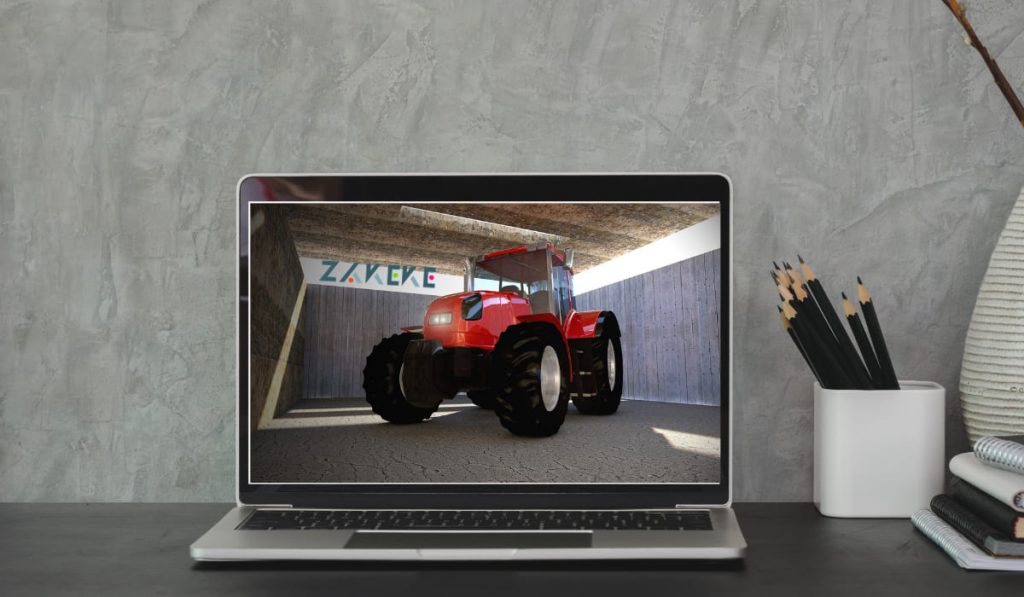
Consumer demand creates competition, and as competition becomes stiffer, customers become even more demanding. This cyclical consumption process is forcing businesses to catch up. For example, from being a luxury, a website is necessary for a business to survive today. However, the digital sphere has become saturated, and you need to adopt new technologies to compete. So, the increasing demand for 3D and AR product configuration in heavy machinery is not that surprising. The industrial machinery industry is seen to hit nearly $800 billion by 2027Ā from the $565.6 billion last year. The increase translates to a compound annual growth rate of five percent during the forecast period. What is 3D and AR Configurator, and Why Does Your Business Need One? As you migrate online, you will find that you are not the only fish on the pond. Worse, with more capital at their disposal, your competitors can afford to drop the item price. Meanwhile, doing so will hurt your bottom line in the long term. The only way to maintain an edge over your competition is by offering a customized customer experience. Customers do not mind paying more when they are satisfied with the service. They are willing to spend 17% more than the average price for a better customer experience. With the 3D and AR configurator, customers can now better appreciate the product they designed themselves on the website rather than imagine it on their heads. The 3D and AR configurator will be invaluable to ensure a customized customer experience. Purchasing heavy machinery is literally a huge investment. For example, an excavator can range between $100,000 and $500,000. They want all available information to help shape their decisions. You can give your store an edge through the use of a 3D or AR configurator. For example, you can simulate the experience for them by putting them right on the driver’s seat. Using the same technology, they can: Customize the color Change the seat fabric Take a virtual tour of the machinery Simulate how it works on the field The more they personalize the product, the more sense of ownership they have. As a result, you will only boost the chance of closing the sale. In the end, you can create an immersive and interactive experience for your customers. Customized Experience for Customized Machinery The machinery industry is a capital-intensive and highly demanding sector that serves multiple markets, including agriculture, construction, manufacturing, energy, transportation, and mining. It is demanding in the sense that customers know precisely what they want, and what they need may not exactly be available in the market yet. If you are selling customized engines, the AR configurator allows your customers to build their motors digitally. Customers can pick the components from the itemized list, then order the final product once completed. In that way, they can see the final engine even before it arrives at their doorsteps. The 3D Configurator will meet the mercurial demands of the customized machinery industry. Since the solution is intuitive, websites would not scare away their customers as they can go right away to personalizing or customizing the products to fit their needs. The configurator will ensure three things: The customers can visualize the design with high-quality 3D models and not just imagine it. They can play around with the product, such as starting the engine or hearing it run, for instance. For heavy machinery, customers can also see how the excavator moves or lifts. Make ordering straightforward. Once they find the item, the software solution also creates a convenient process of configuring the quotations, pricing, or special offers–all in real-time. More Ownership of Products Finally, the 3D & AR configurator will give your customers more ownership of their products. The mental make-up of the customer remains the same–they want their voices heard. The last thing you want is for the customers to feel that they are simply a tool for profit. Customers still want to feel special, whether or not they will shop at a physical store or from your website. The next step is to let them play a more significant role in the products they want to purchase. Conclusion Zakeke can help scale your business using its AR and 3D product configurator. Unlike other software products, it is applicable both online and physical store. As a result, you can help break down the silos between your engineering and sales departments. In the end, you reduce returns, increase customer loyalty, and improve your sales funnel.

Read More >
Tryon cosmetics
Industry Trends

Beauty Industry Can Leverage on Product Customization Solutions to Boost Sales

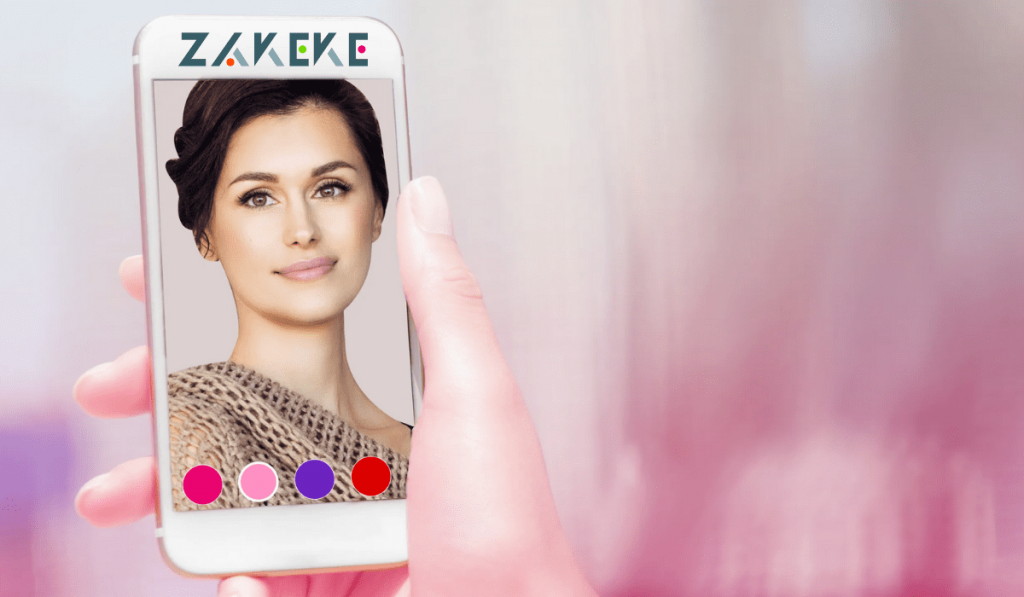
The beauty industry operates at face value. Consumers have higher expectations from the item they receive because of the attached promise–it is supposed to make them prettier. The $500-billion cosmetics industry, like most other sectors, was ravaged by the pandemic. While it is one of the most resilient industries, sales would likely fall by 20-30% in 2020, according to the report from McKinsey & Company. If the situation continues through 2021, the research and media company projects another 35% loss in revenues. But one thing that has remained consistent throughout the global pandemic is e-commerce sales, which is seen to jump 40% in 2020 over the previous year. While the brick-and-mortar shops suffered a severe body blow, manufacturers and distributors can move their cosmetics line to their online stores. One of the challenges of the online storefront is the inability of the consumers to inspect the product. Unfortunately, most e-commerce websites do not invest in product customization solutions to put their best foot forward. Here are some ways you can boost your revenues and limit product returns. Use high-resolution images — Nothing destroys a brand quicker than disappointment. With a grainy photo, you take away the option to zoom in on the product without the image breaking into several pixels. As a result, their expectations may not match the reality once they have the product in hand. 360-Degree Viewing — Using this product customization solution, the customer can inspect the product at every angle. As a result, they would not regret their decision to purchase the product since the image matches their expectations more accurately. Augmented Reality — More retailers are using AR solutions to enhance user experience. According to the Yahoo! report, AR sales from retail and e-commerce will hit $12 billion by 2025. For example, you can let customers digitally apply makeup on their uploaded faces to see if the product is ideal for them. Since they know what colours fit their skin tones, you avoid product returns and frustrated customers. 3D Configurator — The interactive solutions of the 3D Configurator will help turn your customers into creators rather than just passive viewers. For instance, they can mix and match colours and tints to produce the perfect shade that matches their skin tone. The best part is that you do not need to have a high learning curve since it is a plug-and-play solution. Product Customization Solutions for Your Online Cosmetics Store With stiff competition, you need to make sure your online storefront will address these challenges. In the age of social media, your brand reputation is always under threat. It takes only a single complaint from an unsatisfied customer to go viral to set back your marketing campaign. By using the Zakeke product customization solutions, you can enhance the user experience by matching expectations with reality. The customers can rotate, zoom in, and inspect the product from every possible angle. So, you limit the likelihood of ordering the wrong item. The wide array of visual customization options ensures that you find the one that fits your requirements. You can start your trial for the Zakeke plugin now! The best part is that it will cost you nothing.

Read More >
Uniforms customization
Industry Trends

Why Online Customization Helps Sporting Goods & Equipments Stores Thrive

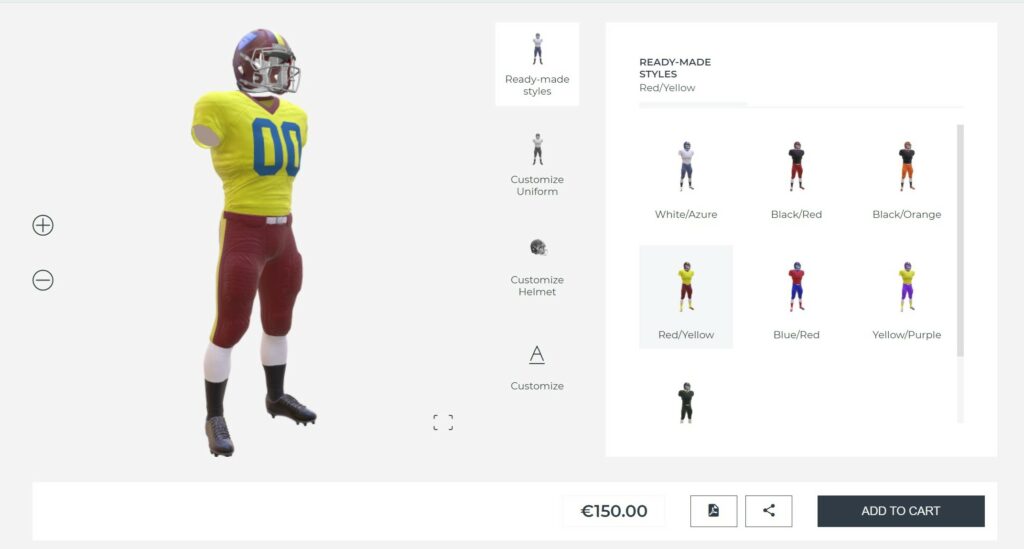
Online sporting goods and equipment stores typically enjoy brisk sales because they have a captured market. But e-commerce retailers are still hampered by several challenges, which impacted their bottom lines. The sports equipment industry has a market size of over $74 billion in 2020. But the sector has an estimated compound annual growth rate of 3.5% through 2025. The sector will expand to $89.2 billion by the end of the forecast period. But online stores are hounded by product returns. On average, the rate of product returns for e-commerce websites is 20%. The figure is twice the 8-10% return rate for brick-and-mortar stores. The good news is that you can drastically cut the rate of product returns with a simple visual customization tool. The plug-and-play plugin enables the e-commerce website to implement the solution without the time lag. Why use Visual Customization? Here are the reasons why visual customization helps boost sales for sporting goods and equipment stores: Dynamic pricing — The 3D Configuration tool allows the customer to see the approximate price when adding product changes. The dynamic pricing feature will reflect the changes based on the number of customizations. A more fun way to browse — Rather than the boring static images, you can elevate their experience by allowing them to interact with the product. They can rotate and zoom in or out to view the item from every angle. Digitally visit the store — A store tour will bring the customers right to your physical shop. They can see the item they want and add it to the cart, or mark it on their minds the next time they visit. The technology is not new, and it’s possible using Augmented Reality. Those who tried the AR feature of Google Maps will be familiar with how the store tour works. Immediately receive a quote — The auto-response generator will send an email to the customer who is requesting a price quotation for the product. The buyer can export the quotation in .csv format, which you can edit and saved in your desired extension. See order details at one glance — Customers want to make sure they ordered the right item before adding it to the cart. The 3D Configurator allows them to review the product at a single glance. Make your website more professional — Customers would rather spend their money on a sophisticated-looking website because of the perception that it is selling only high-quality items. The website is fully invested in product quality if it is investing money to beautify its storefront. Trust is a precious commodity in e-commerce. Retailers that improved their websites experience an increase in sales from between 15% and 50%. These are some of the ways how online customization can help your online sporting goods and equipment store. Zakeke will help you implement these features without spending too much time on integration and adoption. The visual customization tool seamlessly integrates with every shopping platform to avoid glitches and ensure a smoother experience. Read how Zakeke helps Sleefs drive 10% of their sales, without any paid or organic campaigns.Ā  Visit ZakekeĀ demoĀ to learn more andĀ Start a free trial now!

Read More >
Product-Customization-For-Home-Appliances
Industry Trends

Responding to Higher demand for Customized Home & Kitchen Appliances

Changes in customer habits are driving up the demand for customized home and kitchen appliances. In this regard, e-commerce stores also need to change their solutions to enhance the visitor experience. Stop populating your online shop with static product images because your customers demand more. Your competitors are more likely to use visual customization and other plugins for a more interactive experience. As a result, the lack of foresight to using a product customizer may just send your prospects directly to the lap of your competitors. According to data, the small kitchen appliances sector alone has a compound annual growth rate of 9%, or about $6 billion, through 2024. The primary driver of growth is the demand for more innovative products and smart appliances that address the increasing household demands. While e-commerce stores spell convenience for the buyer, one drawback is the lack of options to inspect the product meticulously. It is the primary reason why people still go to brick-and-mortar stores. The pandemic limited the movement of people, and e-commerce retail stores are enjoying the windfall. For example, global e-commerce sales jumped 40% in 2020 compared to 2019. How boost sales for home and kitchen appliances? Here are some ways to boost the sales for your customized home and kitchen appliances online store: Simulate engraving effects — This visual customization feature allows your prospective buyers to see how the engraving looks on the product. The personalized kitchen item is a great gift option to be given to your loved ones, colleagues, and boss. Intuitive interface — The last thing you need is to confuse your customers on how to use your website’s features. You have to cut the sales funnel so they will directly add to the cart rather than spend time browsing for items. Fun and interactive — Customers are more likely to return if you can make their visit a fun experience. You can customize the 3D Configurator in multiple ways. As such, your imagination will be the only limiting factor. Elevate your store — People tend to trust a professional-looking website compared to a haphazardly produced one. Customers will form an impression based on the quality of the images and their experiences. Use high-quality images — Customers may want to inspect each detail of your product. But they would not be able to do this if the image resolution breaks apart when they try to zoom in. The simple act of using only high-resolution photos will drastically improve your sales. Inspecting from every angle — The 3D Configurator will enable customers to examine the product from every possible angle. No stone will be left unturned with this visual customization tool, which helps shape their buying decision. Compatible with E-Commerce Platforms The Zakeke plugin will make it easier for you to ensure an interactive experience for your customers. The best part is that it is compatible with most e-commerce platforms like Shopify, Magento, Etsy, WooCommerce, and others. As a result, you do not need to purchase third-party solutions for Zakeke to seamlessly integrate into Magento or Shopify. Do you have more questions? Contact our customer service to learn more or book a demo call here. Meanwhile, learn more about Zakeke 3D Product Configurator here. Stay up to date and follow us on LinkedIn, Facebook and Instagram

Read More >
Conversion rate with 3D
Industry Trends

Why Interactive Product Customization Is Essential to Fashion Brands Today

Product Customization allows consumers to personalize an item’s appearance, fit, size, and other key features. It gives people a unique sense of ownership that could not be found in mass-produced goods. In the fashion industry, this capability can connect a business with its target customer in a meaningful and profitable way. The Unwavering Potential of Product Customization Over the years, many fashion brands have tried to tap into the vast potential of interactive customization. Its promise has never been fully realized. Whether the technology was not evolved enough, the market not mature enough, or the execution not good enough, mass customization never got the needed traction in the fashion industry. Still, despite the failed attempts in previous years, the potential of interactive product customization has not diminished. Studies show that today’s generation is willing to spend more on items that are bespoke or personalized. This includes clothing and jewelry items. The Role of Technology in Product Customization With the series of digital innovations in recent years, the time is ripe for another shot at interactive product customization. Today’s customization software technology can easily bridge the gap between user creativity and product supply chains, delivering a unique user experience that was not possible in the past. What is more, the last few years have seen a significant drop in the resources needed to develop a platform that can deliver customization options with high quality and reliability. This means that the software solutions are readily available and relatively cheap, adding very little to a clothing company’s overhead cost. The Benefits of Product Customization Customization software technology has found its way into the e-commerce industry. Fashion design software solutions are available in the market and can easily be integrated into e-commerce websites and online fashion brands. Apparel design software for designing clothes, shoes, and other items is empowering the fashion industry and enabling interactive product customization on a much wider scale. The emergence of this technology has allowed fashion brands to meet a consumer demand that has long been waiting to be gratified. Studies have shown that 80% of today’s consumers are more likely to purchase from sites that offer personalized experiences such as product customization. This is especially true in the fashion industry, where individuality and originality are the driving force behind virtually every purchasing decision. With the increasing demand for bespoke products, the improving ability of manufacturers to provide them, and the growing urgency for limited physical contact, it is safe to say that product customization is here to stay this time around. Information technology, responsive supply chains, and flexible organizational structures have allowed brands to deliver a wide range of products that meet the unique needs of each customer. Ideal market conditions, evolving manufacturing technology, and the availability of software solutions have aligned like never before, allowing brands to offer personalized products close to the price point of mass-produced goods. This is another factor that was not present in the previous iterations of wide-scale product customization and another reason why now is the right time for interactive customization. Choose the Right Partner For fashion brands today to thrive, they must find way to integrate product customization into their e-commerce websites. One way to do this is by using Zakeke, the cloud platform that empowers e-commerce stores by enabling live product customization. How it works?Ā Request a demoĀ hereĀ orĀ Start a free trial now!

Read More >
visual commerce in retail
Industry Trends

Using Visual E-Commerce Solutions to Reduce Product Returns

Most online consumers today look at an e-commerce website’s product return policy before making a purchasing decision. This behavior is driven by their inability to physically interact with a product that they intend to buy. For many years, product returns have been the bane of many online brands. It has damaged many reputations, caused billions of dollars in logistics reversal, and frustrated the e-commerce industry, whether you are a consumer or an online retailer. But what if e-commerce brands could provide a user experience that can rival what a brick-and-mortar shop offers? With the current state of digital technology, this is becoming more and more possible. Below are some visual e-commerce solutions that could change the face of product returns and online shopping. Integrate High-Quality Product Images Analysis from Invesp shows that 22% of product returns are due to a disconnect between the customer’s expectations and the item’s actual appearance on the website. This could point to an inaccuracy in the visual depiction of the product. It could also be a sign of an unrealistic expectation on the side of the consumer. Whatever the case, the burden falls on the online retailer to resolve the issue. While having a robust return policy goes a long way in assuring potential customers, there are ways to minimize the mismatch between expectations and reality. One is by using high-resolution images of your products. High-quality images allow online users to examine even the most intimate details of the product, including the stitching, texture, and product material. This will help manage the expectations of online shoppers, even without holding the product itself. Incorporate Zoom Capabilities Aside from using high-quality photos, you must incorporate the capability to zoom on these images. Today’s customers have a certain level of expectation and have access to unlimited information about products that they intend to buy. They want to see up close if your products live up to the information they find through search engines and other sources. Offer 360 Degree ViewingĀ  Seeing a product from various angles enables online shoppers to visualize it more accurately. This will help online shoppers make a more informed purchasing decision that they are less likely to regret later. There are several plugins that can enable 360? viewing for e-commerce websites. All you need is some photographic skill to make the most of this capability. Alternatively, you can outsource this part of the process to a professional photographer. Use Photos Submitted by Actual Users While using professional photography is important, online shoppers also want to see images and even videos submitted by other users. This gives them a more realistic perception of how a product or item will look on them. Another study from Power Reviews shows that 88% of online consumers actively search for visual content uploaded by other users before making a decision. It helps online brands in two ways. First, it increases the brand’s conversion rate and improves. Second, it reduces the possibility of product returns. Both scenarios will boost a brand’s bottom line. Bring in the Professionals There are many ways to reduce product returns and protect your brand image. One is by using the Zakeke plugin, a web empowering service that optimizes product visual personalization to enhance customer satisfaction. Thanks to Augmented Reality features and 3D photorealistic models, customers can see exactly what they are buying. They can zoom in, rotate it and see item from every angle. How it works? Request a demo here orĀ Start a free trial now! Stay up to date and follow us onĀ LinkedIn,Ā FacebookĀ andĀ Instagram

Read More >