

Free lookbook

How 10 E-Commerce brands use personalization to stand out

Mass Customization

ecommerce customer experience
Industry Trends

10 ways to improve eCommerce Customer Experience

Did you know that 55% of consumers say they’d stop buying from an online store due to poor Customer Experience?  As competition in the online marketplace grows fiercer by the day, you must provide exceptional Customer Experience (CX) to win new clients and retain your existing customers.  Forward-thinking CX leaders are achieving significant revenue growth by creating memorable experiences and catering to their customers’ needs. And you can do it too!  But what exactly is Customer Experience? And why is it important for ecommerce businesses? Most importantly, how can you build a memorable ecommerce Customer Experience? Keep reading to find out.  What is eCommerce Customer Experience? Customer Experience is your customers’ holistic perception of your brand based on their interactions with it. Simply put, CX is how you make your customers feel.  In ecommerce, Customer Experience revolves around the online experience that anyone finding your website or landing pages go through. It encompasses every touchpoint customers have with your brand – from the moment they land on your site to their interaction with the products and sales staff to the checkout and post-purchase experience.  Why does ecommerce Customer Experience matter? When you give your customers a great experience, they’ll buy from you again, be loyal to your brand, and become your brand advocates. They’ll share their experiences with their family, friends, and colleagues online and offline, increasing your brand reputation and creating Brand Awareness.  As a result, you’ll see improvements in: Studies show that companies with superior ecommerce Customer Experience generate 5.7x more revenue than competitors that don’t invest in their CX.  How to improve ecommerce Customer Experience? 10 tips Without further ado, here are the different ways to improve your ecommerce Customer Experience. The first step in improving your ecommerce Customer Experience is to understand your customers. What does your ideal customer look like? What do they like? When do they shop? What challenges are they facing? How can you meet their needs and expectations? You can conduct in-depth customer surveys to identify their needs and preferences, then create customer personas that will help you understand their expectations.  It’s backed by data — companies that provide a streamlined shopping experience are 62% more likely to win a sale. Here’s how you can simplify the buying process: Since consumers are buying your products online, they’ll want exceptional customer support. This can easily be achieved by offering multiple channels for customer support, like live chats, phone, email, forums, and even social media.  Every ecommerce owner knows the importance of building trust and credibility for their online businesses. It helps establish the business as legit and reliable. Here are the various ways to build trust and credibility for your brand: An exceptional customer experience (CX) doesn’t end once the customer completes the purchase. It goes way beyond the checkout, ensuring goods are delivered on time and in excellent condition. Here are the various ways you can improve the post-purchase experience: Technology has revolutionized every aspect of our lives, including our shopping experiences. There are many ways you could use technology to improve CX.  For instance, you could use AI and machine learning to improve product recommendations. You could also implement Augmented Reality solutions to allow your customers to try on products before they buy and visualize how certain products will look in their homes.  Customers want more from brands they interact with online. Building a community gives them a place they can hang out, share community service ideas, and voice their opinions and concerns. Community members are advocates of your products and services. Social media is the most powerful channel to build a community since most of your fans and loyal customers have active accounts on these platforms.  Nothing can be more frustrating than finding a quality product only to realize your payment method isn’t supported. To improve the ecommerce Customer Experience, it’s highly recommended that you make the checkout process easier by providing multiple payment options. Beyond PayPal and Card payments, you can go the extra mile to include digital wallet payments, like Apple Pay, Samsung Pay, and Crypto payments. Your website can either make or break your business. To succeed in the ever-competitive e-commerce world, a user-friendly website is a must-have.  What do we mean by user-friendly? The website must be responsive and easy to navigate and search, with advanced filter options. Most importantly, it must be fast. As research has shown, a slow website will chase visitors away.  As mentioned, forward-thinking ecommerce owners are using Augmented Reality to increase their users’ experiences.  But it doesn’t end here: the next step to improve your ecommerce experience is Product Customization! You can give customers the ability to create their own products, choose colors, materials, and details… What could be better to meet their expectations? Get started with Product Customization Personalization is a key element of the ecommerce CX. An overwhelming 80% of customers say they’re more likely to do business with a company that offers personalized experiences.  What are the benefits of product personalization in ecommerce? It increases user engagement, which often leads to an increase in sales. If you have a product customizer in your store, your customers will spend more time engaging with your website. The result? Increased Customer Satisfaction! They can personalize any product while seeing a live preview, so they’ll play around with it and try out different options to see which one works for them before buying. Offer them a fun shopping experience, and they’ll surely come back for more.  How do you get started with product customization in your store? By simply investing in a software solution designed for product customizations! Zakeke Visual Customizer allows customers to customize any product (clothing, jewellery, shoes, watches, custom gifts, etc.) and visualize its appearance before buying.  Ready to get started with product customization? Our product customizer integrates well with all major e-commerce platforms and is easy to use for both the customer and the merchant. Contact us today and take advantage of our 14-day free trial. 
Read More >
Best Woocommerce Customizer
Mass Customization

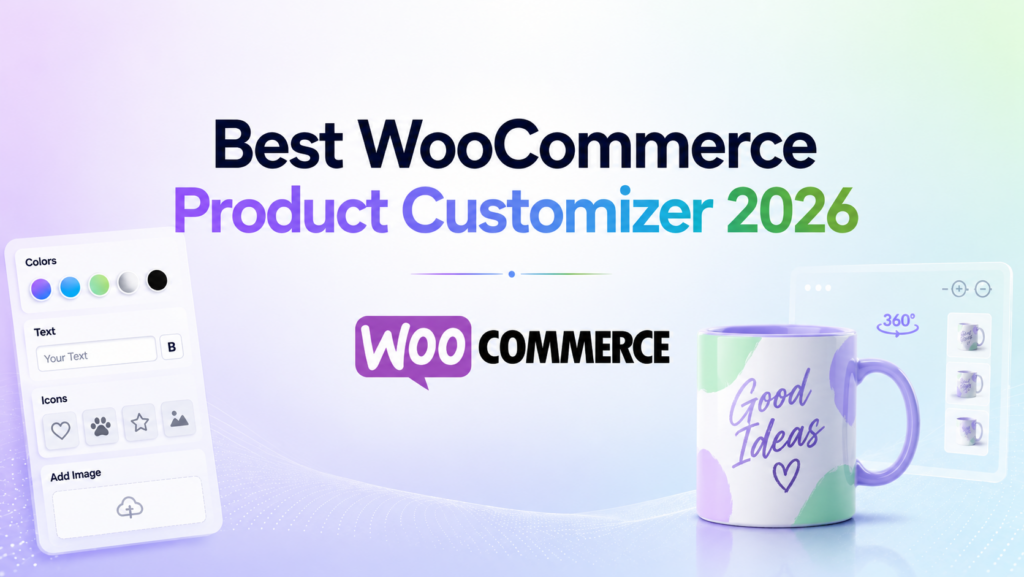
Best WooCommerce Product Customizer in 2026: 7 Tools Compared

Updated September 2026 The best WooCommerce product customizer depends on what customers need to personalize and what your business needs after the order. For businesses that need visual customization, automated print-ready files, 3D product configuration and AR in one platform, Zakeke is our top all-in-one choice. Fancy Product Designer and Lumise are more traditional WooCommerce product designer plugins, Kickflip focuses on interactive visual configuration, Customily and Teeinblue are strong options for personalized-product workflows, while Expivi is particularly relevant for complex 3D configuration and CPQ. We compared 7 WooCommerce product customizers based on live preview, personalization options, 3D support, dynamic pricing, print-ready output, WooCommerce integration, scalability and price. Best WooCommerce Product Customizers: Quick Comparison Product customizer Best for Starting price Live personalization 3D Print-ready output WooCommerce Zakeke All-in-one customization & visual commerce €59/mo billed annually Yes Yes Yes Native integration Fancy Product Designer Flexible 2D design canvas License-based Yes No Yes Native integration Lumise Self-hosted 2D product design $69 one-time license Yes No Yes Native plugin Kickflip Interactive visual customization $59/mo Yes No real-time 3D Production data available Integration available Expivi Complex 3D configuration & CPQ Custom Yes Yes Yes Native plugin Customily Personalized products & print workflows $49/mo Yes Available for supported experiences Yes Supported Teeinblue High-volume print personalization $396/mo or $297/mo annually Yes Limited Yes Via Boundless Pricing and product capabilities checked in September 2026. Prices, features and limits can change, so always verify current vendor information before purchasing. Best WooCommerce product customizers at a glance Best overall for WooCommerce: ZakekeBest for visual product customization: ZakekeBest for customization + 3D configuration: ZakekeBest traditional design canvas: Fancy Product DesignerBest self-hosted designer: LumiseBest for interactive 2D configuration: KickflipBest for complex 3D configuration and CPQ: ExpiviBest for template-driven personalization: CustomilyBest for high-volume print personalization: Teeinblue How We Compared These WooCommerce Product Customizers We evaluated the seven platforms based on the capabilities that matter beyond simply adding a text field to a WooCommerce product. Our comparison considers: Pricing and product information were reviewed in September 2026 using vendor websites, documentation and official marketplace listings where available. The right product customizer should not only create a good customer experience. It should also fit the workflow that begins after the customer clicks Add to Cart. What Is a WooCommerce Product Customizer? A WooCommerce product customizer is software that lets customers visually personalize a product before purchasing it, usually by adding or changing text, images, logos, colors, artwork and other design elements. Instead of selecting only standard WooCommerce variations such as size or color, shoppers can see their personalized product update in real time. For example, customers might: More advanced WooCommerce product customization software can also automatically calculate prices, generate print-ready files, display products in 3D or AR and send order data into production workflows. WooCommerce Product Customizer vs Product Options Plugin A product customizer is not the same as a product options plugin. A standard WooCommerce product options plugin collects selections or information from customers. For example: Name: AlessiaColor: BlackLogo: uploaded-file.png A visual product customizer goes further by showing those selections directly on the product preview. Tool type Main purpose Live visual preview Production output Product options plugin Collect product choices Usually no Usually no Product customizer Visually personalize a product Yes Often Product configurator Combine components according to rules Yes Depends 3D configurator Configure components in interactive 3D Yes, in 3D Depends If you only need customers to choose predefined options, a basic WooCommerce add-ons plugin may be enough. If the customer needs to see the final personalized product before ordering, a visual product customizer is usually the better fit. 1. Zakeke: Best Overall WooCommerce Product Customizer Best for: businesses that need visual personalization, automated production output, 3D configuration and immersive product experiences in one platform. Zakeke is more than a WooCommerce product customizer. It is a visual commerce platform combining a Visual Product Customizer, 3D Product Configurator, 3D & AR Viewer and Virtual Try-On. For WooCommerce businesses, this means customers can personalize products with text, images, logos and other design elements while seeing the result in real time. Zakeke can then connect that customer-facing experience to the order workflow by automatically generating production-ready files. Zakeke key features Where Zakeke is strongest Zakeke is particularly strong when product customization needs to become part of a complete commerce and production workflow. A customer can personalize a product visually, approve the design and place the order while the business receives the files and data required to continue processing it. This can be especially useful for: Zakeke also goes beyond traditional 2D product designers by supporting 3D configuration and AR within the same platform. That matters for businesses selling both personalized and configurable products, because they do not necessarily need separate systems for each experience. Zakeke limitations Zakeke may be more than you need if customers only need to enter a few simple text fields or choose standard product options without a visual preview. Its 3D capabilities also require suitable 3D assets. Businesses without existing models need to create or source those assets before launching 3D experiences. Companies looking exclusively for a locally hosted, one-time-purchase WordPress plugin may prefer a traditional plugin such as Lumise. Zakeke pricing Zakeke offers both self-service plans and custom Enterprise solutions. Self-service plans currently include: These prices are billed annually. A 14-day free trial is available with no credit card required. For larger companies, Zakeke Enterprise is available with custom pricing, designed for businesses requiring larger or more complex catalogues, advanced integrations, dedicated support and implementation requirements beyond standard self-service plans. Choose Zakeke if: you want to connect visual product customization with 3D configuration, immersive visualization and production workflows rather than simply adding personalization fields to WooCommerce. 2. Fancy Product Designer: Best for a Flexible 2D Design Canvas Best for: WooCommerce stores that want customers to freely design products on a traditional 2D canvas. Fancy Product Designer is a long-established WooCommerce product designer focused on canvas-based product personalization. Customers can add and manipulate text, images and design elements while merchants control

Read More >
custom gift
Mass Customization

Top customized gift ideas for every occasion

Giving a gift is one of the greatest joys in life. It’s an expression of love and appreciation that can have a lasting impact on the recipient. But when it comes to finding the perfect gift, it can be difficult to find something that truly stands out – something unique, meaningful and special. That’s why customized gifts are so popular today. They offer an opportunity for you to create something totally original with your own personal touch – whether it’s for someone close or far away, family or friends, birthdays or anniversaries. From custom jewellery and monogrammed items to engraved glassware and creative artwork, there are plenty of options available when it comes to creating good customized gift ideas! In this article, we’ll explore the most popular customized gift ideas that customers want to find for their friends and family. Personalized gifts for different occasions Finding the perfect gift for someone special can be a daunting task. Fortunately, there are plenty of options when it comes to customized gifts. Customers are increasingly looking for custom gifts, let’s find out what are the most popular for every occasion: Custom birthday gift ideas Customized jewellery is one of the most popular choices for birthdays, as pieces can be tailored to suit individual tastes and styles and include a personal message from the gift giver.  Other popular customized gift ideas include a custom photo album, custom mugs or gadgets, or a personalized cake topper. These make perfect gifts to make an already special day even more memorable. Custom wedding gift ideas What do you get the perfect couple? Perhaps something that no other couple in the world has – that’s the power of customization. Just think about customized kitchen accessories, photo albums, furniture or home decorations.  These gifts not only provide something fun and interesting to look at every day but can become part of their everyday lives as they embark on their lifelong journeys together. Custom anniversary gift ideas As we grow older with the love of our life, our relationships evolve and become more special. What is the best gift for an anniversary? Consider an engraved message on a piece of jewellery or a wood-engraved portrait. People also love to customize pillows or household items with love quotes, important dates, or just something fun. Custom graduation gift ideas Graduation is a significant occasion and deserves to be celebrated with a special gift. Consider something like a customized diploma frame, engraved jewellery or keychain, or even something unique like a customized smartphone case or laptop skin. Mother’s or Father’s day gift ideas Finding the perfect gift for mum or dad can be difficult, but customizing something special is sure to make them smile. People generally choose a personalized photo album, a customized book of memories, or perhaps something fun and unique like an engraved beer mug or wine bottle! Custom “just because” gift ideas Sometimes, the best gift is one given “just because” with no occasion in mind. Consider customizing t-shirts, mugs or wine glasses with a special message. Let your customers create their unique dream products and increase their satisfaction and loyalty. The importance of Product Customization Customized products provide people with an opportunity to show someone how much they care about them. Sure, they could’ve just grabbed something off a shelf, but instead, they went the extra mile and made something truly unique for the person they care about. Similarly, businesses that offer product customization benefit too. Instead of product offerings that are the same as other stores, they can stand out and offer something more interesting and unique for the buyer.  In addition to providing a great way to differentiate your store, product customization also increases customer engagement, as customers are more likely to be interested in personalizing their own products. How to get started with Product Customization Product customization is a good way for businesses to differentiate their offerings from competitors, add value to products and services, and boost customer loyalty. Businesses can offer product customization in a variety of ways, such as allowing customers to design their own items or offering personalized engravings on existing products. How to get started? Simply by investing in software solutions specifically designed for product customization! By choosing the right software businesses can streamline the process while still ensuring high-quality output and customer satisfaction levels remain consistently high. With Zakeke, you can get started with product customization without adding extra work hours to your design team. Let customers personalize your products directly on your e-commerce, you’ll get the print-ready file in your back-office! Zakekeke integrates seamlessly with all the leading e-commerce platforms and is easy to use both for customers and for the merchant. Get in touch with us today and take advantage of our 14-day free trial to test the software and see whether it can work for your business.  

Read More >
Trending customizable products
Mass Customization

Best Customizable Products To Sell Online in 2024

It’s common knowledge now. Shoppers don’t just want the same old buying experience anymore. They’re looking for something special, made just for them. This is where the magic of product customization in e-commerce steps in. How do you make shoppers happy? Let them design their dream product! Here comes an important question for those thinking about adding personalized items to their online store. What customizable products do customers really want? What are some awesome ideas for customized products that you can bring to your online shop? You’re in the right place to find out! Today, we’re going to show you some of the coolest, most popular customizable products out there. These are the ones that will definitely help you get more sales. But first, let’s quickly dive into the basics of product customization. Are you sure you know all about it? What is Product Personalization in e-commerce? In its most basic form, product customization is simply enabling customers to personalize a product according to their needs and tastes. Essentially, it’s when businesses sell personalized promotional items, allowing shoppers to create their dream products by choosing from a variety of designs, colors, elements, and more. Product customization for e-commerce aims to deliver unique tailored customer experiences that meet the growing expectations of consumers. Today’s customers not only enjoy but expect the ability to customize their purchases. They prefer shopping with brands that provide options to personalize products. But don’t just take our word for it – here are some significant stats from the world of product customization: What are the benefits of selling customizable products? There is a reason many e-commerce store owners are implementing product customizers on their websites. Let’s find out together what the main benefits of product personalization in e-commerce are and why you need to sell custom products now: One of the obvious benefits of selling customizable products is increased sales. According to recent Deloitte research, 36% of consumers prefer to purchase customized products, and 20% of consumers are willing to pay up to 20% more for custom products. This results in repeat purchases and an increase in sales for e-commerce stores. Imagine giving customers the possibility to design their personalized gifts or items. Isn’t that the ultimate Shopping Experience? By offering product customization, you’re investing in your customers’ experiences. Customers love personalized experiences. If you can help them customize their products, you’ll have won their hearts. This often results in increased loyalty and brand advocacy.  Studying your customers’ buying habits will give you better insights into their likes and preferences. And to grow your sales, understanding your customers is paramount. Giving customers the chance to create their custom designed products, you’ll get to know what they like or dislike and what they’re looking for. You can then use this information to improve your product offerings and grow sales.  The e-commerce landscape has become very competitive in today’s world. Offering customizable products can help you stay ahead of the competition, as consumers prefer to shop with brands that offer personalized products. By letting customers create what they want, you can enhance your Brand Image, creating a new premium experience. 5+1 trending custom product examples Many of today’s leading retailers feature personalized and customized products on their websites. Here’s a detailed list of the most popular categories of custom products, the ones that customers are actively seeking and are likely to purchase online: Custom packaging, cards, custom boxes: printed products are likely the most common examples of mass customization. Consider the option of adding a customer’s name or photos to packaging, or even to a t-shirt. The Web-to-Print business is closely linked to the world of personalization. Think about all the promotional items with logos or custom merchandising a company can create and sell on its website thanks to product customization. Customers can select their products and customize them with anything they want. Another sector closely tied to the world of customization is fashion. Think printed custom t-shirts, made-to-order luxury bags (with customers choosing materials and finishes), and custom shoes. In the luxury world, customization means quality, and people love tailored products and high-quality items. Custom bracelets, rings and sunglasses are the most lovely customized product examples for customers. Think about gifts for partners or family members. How wonderful would it be to surprise someone with an engraved necklace or bracelet? Customers are actively looking for these kinds of products and a jewelry customizer is what you need! Personalized wine labels, bottles, and custom can labels are becoming increasingly popular in the food and beverage industry. Why you need a label customizer? Because personalization allows brands to differentiate themselves and create a premium perception of their products. Gadgets and gifts are undoubtedly one of the markets most closely linked to personalization. Think about a custom mug, a custom canvas, a custom pen, or a custom phone case. Personalization has become a key player in the world of gifts, and this makes it the perfect time for those in this market to implement it. Top Brands already selling custom products (and enhancing their performance) Here are some examples of brands that have taken the product customization game to the next level, providing exceptional customer experiences and growing sales: When you hear product personalization, Coca-Cola is the first name that comes to mind. The company created much buzz with its “Share a Coke” campaign.  The campaign started in Australia and consisted of some of Australia’s common first names, like Kylie and Luke. This made Coca-Cola very popular, with some even considering it a “household name.” The company then expanded its campaign to countries globally and saw significant growth in sales. Research shows that an overwhelming 1.25 million teens tried a Coke during the campaign. In the US alone, Coca-Cola sales grew by 11% in the summer.  Starbucks is another big-name company reaping the benefits of selling customizable products. The company allows customers to choose exactly how they want their drinks, which customers can do right within the Starbucks app. A real game-changing

Read More >
Custom pack
Mass Customization

Unboxing Success: Key Benefits of Custom Product Packaging

The days of packaging your products in unlabeled boxes and shipping them to customers are long gone. In today’s competitive business world, first impressions matter!  And a great first impression starts with product packaging. The number of brands opting for custom product packaging has grown significantly over the past few years. The reason? Customized product packaging attracts customers in big ways.  Studies show that an overwhelming 81% of consumers have tried a product because its packaging caught their eye. Better still, 52% of customers have switched brands because of new packaging. So, if you’re not giving your product packaging the attention it deserves, you’re losing a lot to the competition.  Custom packaging for products is a cost-effective way to wow your customers and leave a lasting impression. It allows brands to achieve exclusivity in the market with a distinctive Customer Experience.  In this brief article, we’ll discuss the importance of personalizing product packaging, including its benefits and some sustainable custom packaging options you can try out for your business.  What is Custom Product Packaging? Custom packaging refers to the packaging of products in a unique way tailored from scratch around a company’s specific needs rather than using standard boxes.  This type of packaging involves several processes, such as design, engineering, and mockup to ensure custom packaging fulfils its objectives. The packaging process may include modifying the package’s size, shape, material, color, style, varnish, and other specifications. The Importance of Custom Boxes in Product Presentation Design is a key factor in product packaging. How many times have you stopped to check a product because its packaging caught your attention? That’s the power of quality packaging design.  A good packaging design sets the stage for the product’s success. As mentioned, customers are attracted to products with quality packaging. The visual presence depicts not only the quality of the product but also suggests a warm personality – whether it’s quirky, charming or authentic. Another reason to give importance to packaging design is product differentiation. The shape and the material used in product design can be the differentiating factor – helping the product stand out in the competition. Think about sustainable boxes, it’s a great example of brand differentiator! How Packaging Impacts Customer Perception Good packaging influences consumer buying behavior.  If a product is packaged in a plain, old, and/or oversized box, this may give the consumer bad vibes about the product. But if the same product is packaged in a custom box with logo, brand colors and an inspiring description, it may compel the consumer to buy the item. In this case, the customer’s perception of the product will be positive, judging by how well it’s packaged.  Personalized Shipping Boxes: The Importance of Materials When you’re looking to package a product, one of the choices you’ll have to make is the packaging material to use. Essentially, there are different types of packaging materials – from cardboard boxes to plastics and foil. But which one should you use? Here are the most commonly used packaging materials: Deciding on the right packaging material to use is critical to successfully selling and distributing your products.  How To Choose Top Materials? Best Practices Since packaging materials play a critical role in protecting products, care should be taken when choosing the right material to use.  As with any other product, price is a primary concern. However, your choice shouldn’t be only based on price, especially since the deliberation process needs to consider transportation, storage, and safe delivery of the product to your customers.  Some products may need more protection than others, in which case you may need tougher packaging materials. Look for the following qualities in a packaging material before making the final decision: In addition to these factors, the material you choose should be easy (and cost-effective) to print product and brand information. Sustainable and Eco-friendly Packaging Options Consumers are increasingly becoming more environmentally conscious about their carbon footprint and more and more organizations are ditching conventional packaging materials in favor of environmentally-friendly materials. Therefore, an eco-friendly packaging solution can help you elevate your brand.  Some of the benefits of opting for an eco-friendly packing option include. To help your business meet the growing consumer demands, here are some eco-friendly packaging materials you could use for your packaging needs: Best Practices for Personalizing Custom Product Packages Custom packaging is one of the best ways to enhance Customer Experience and build brand loyalty. But for the best results, you’ll need to get it the right first time. So, let’s briefly share some practices you need to follow for effective custom printed boxes: Why Your Brand Should Go For Custom Packaging? Today’s successful businesses have one thing in common: they’ve mastered the art of Product Customization to improve their Customers’ Shopping Experience. If you want your business to stand tall among the competition, you’ll need to start offering custom packaging and products. Doing so can bring many benefits to your business, including: So, custom packaging can be a game-changer for small businesses looking to establish a footing in the industry and achieve a competitive edge. Smooth Packaging Personalization Today: Try Zakeke! Embarking on the journey of offering custom boxes with your logo or with your customers’ photos in your e-commerce store doesn’t have to be daunting. With the right box customizer tool, setting up a personalization feature is straightforward and quick. Enter Zakeke, your go-to for hassle-free integration of product customization. This efficient plug-in can be added to your platform in under 10 minutes, offering a cost-effective solution for any business size. Zakeke’s Visual Product Customizer enhances the Shopping Experience, allowing your customers to craft their ideal packaging on a versatile and user-friendly interface. It provides unlimited creative freedom, from selecting colors to adding unique texts and images, all while you retain control over the customization parameters. What’s more, Zakeke streamlines your workflow. As customers finalize their designs, you receive a high-resolution, print-ready file, bypassing the need for complex communications or manual design efforts. Compatible with major e-commerce

Read More >
Average ecommerce conversion rate
Industry Trends

How to Increase Your Average eCommerce Conversion Rate with Customization

The success of any eCommerce business depends on its ability to convert visitors into customers. You can significantly increase your average conversion rate and maximize sales with the right strategies and tactics.  There are many strategies for boosting your ecommerce average conversion rate. Today we want to focus our attention on product customization – Did you know that by allowing your customers to customize their products according to their needs, you can create a unique customer experience that drives them down the purchase funnel faster? Let’s dive in to discover how to increase your average eCommerce conversion rate with customization (but not only!) and what steps you should take to get the best results from your store. What is the average conversion rate for ecommerce? The ecommerce conversion rate is the percentage of visitors to your online store who take a desired action, such as purchasing a product. Understanding an optimal conversion rate and how it compares to your own can help ecommerce sites by guiding them on where they need to improve and where they may currently be lacking in their ecommerce processes. But making an action doesn’t mean only purchase a product. Let’s find out what are the other typical conversions in an ecommerce store: If you’re wondering how to reach a good conversion rate for e-commerce, maybe you have to think about optimizing all these metrics. Let’s find out how! Why is conversion rate optimization important? Achieving a normal conversion rate for ecommerce is crucial for any business seeking to increase its digital sales and reach more customers: Ultimately, increasing one’s ecommerce conversion rates requires active effort, but when done right leads to increased profitability for online retailers who take advantage of this powerful metric for growth purposes. How is the ecommerce conversion rate calculated? The formula for calculating the ecommerce conversion rate is relatively simple: (Number of Conversions / Total visitors) X 100 For example, if you had 1000 visitors and 25 sales, then your conversion rate would be 2.5%. This percentage indicates how many people have completed a desired action (in this case, making a purchase) on your website compared to the total amount of traffic you’ve received. The advice is to constantly monitor your average ecommerce conversion rate to understand the performance of your store. How can you do it? You could monitor the conversion rate on a weekly, monthly, or quarterly basis, adjusting and adapting your strategies based on the results. Ecommerce conversion rate benchmarks An essential aspect of tracking the average e-commerce conversion rate is understanding what constitutes an optimal rate for online stores. Generally speaking, the average e-commerce conversion rates for ecommerce are around 2.5-3%. Of course, many factors go into a higher or lower rate, but typically if you find yourself at 3% or above, you are ready to tackle more advanced conversion rate tactics. While there is no single “right” answer when it comes to measuring success concerning ecommerce performance metrics, having benchmarks explicitly related to your industry can offer valuable insights into how well (or not so well) you are doing compared with competitors in terms of attracting new customers and increasing sales on your website or app store platform(s). Average ecommerce conversion rate per Industry If you are looking for a benchmark to measure the performance of your ecommerce, here are some good conversion rates according to the analysis by Dynamic Yeld: And more, here is an infographic from TIDIO’s study with the average conversion rate across industries in Q4, 2022: Additional metrics to measure e-commerce conversions In addition to examining industry standards, several other key metrics should be tracked to gain a deeper insight into customer behaviour and preferences. These include: The bounce rate shows how many people leave a website after looking at just one page. This is not good because it means that visitors are not staying long enough to find what they need. If the bounce rate is high, people are not finding what they want on that website and are leaving right away. Exit rate and bounce rate are similar. However, the exit rate reveals how many visitors leave your website after viewing a specific page, while the latter indicates those who depart from any page without engaging. A very high exit rate on one of your pages could suggest that it needs to be optimized to retain more visitors. By striving for a lower exit rate, you can aim to maximize engagement and ultimately drive conversions! Want to draw more people to your website and get them to take action? Focus on boosting your click-through rate! This metric reveals the number of individuals who followed a link from an ad or email, heading straight for your site. AdWords optimization and email marketing campaigns can be tailored around increasing click-throughs—and even social media engagement. When assessing user engagement, average session duration is a key metric to measure. A high bounce rate signals that your visitors are not engaging with your site for long enough periods of time and thus cannot be appropriately converted into customers. Cart abandon rates measure the number of shoppers starting but not finishing their shopping journey. High cart abandonment can reveal a flaw in your shopping experience or indicate that shoppers are leaving to do further research before purchasing. Knowing your abandoned cart rate can help you identify potential areas for improvement and make the necessary changes to reduce abandonment. By monitoring these additional factors, merchants can better understand why customers may be dropping off during checkout, allowing them to make changes that improve user experience — ultimately leading to increased conversions over time. How to increase your ecommerce conversion rate Now that you understand the mechanics behind measuring ecommerce success, here are 5 tips to use those metrics to increase your average ecommerce conversion rate: An optimized website should be fast and intuitive to navigate, or customers will leave for a better experience elsewhere. Making sure your website loads quickly and runs smoothly is essential, as

Read More >
Etsy Print on Demand customizer
Mass Customization

How to choose the best Etsy Print On Demand solution for your store

Print On Demand (POD) is one of the most famous business models for merchants working with Web-to-Print. It allows online stores and independent sellers to sell custom products without the need for physical inventory.  This interest in POD services has led to an increase in POD applications on the market, making it difficult to choose the right one to integrate with each online marketplace or e-commerce platform.  In this article, we focus on the Etsy marketplace finding the best Etsy Print On Demand solutions that allow merchants to expand their offerings of custom products and grow their businesses quickly and easily. What is the Print On Demand business and how does it work? Before discovering how to choose the best Etsy Print On Demand provider, you should understand how the POD business works. As we have already mentioned, the Print On Demand model allows merchants to sell personalized products on Etsy and other online marketplaces or e-commerce without having to keep inventory or manage production. How does it work? Simply choose a POD provider/partner who handles all product production and shipping directly to customers. When choosing, it’s crucial to consider whether the service can integrate seamlessly with the e-commerce or marketplace platform in question, in this case, Etsy. What products can you sell? The choice is extremely wide, ranging from mugs to t-shirts, mobile phone covers to sports accessories. Just create a personalized product and list it within the Etsy marketplace. Once a customer places an order, the provider earns a fee on each product sold, while the merchant receives the other portion of the sale price. Print On Demand benefits Why use a Print On Demand service on Etsy? There are several benefits, some of which include: How to choose the best Print On Demand Etsy solution As we have already mentioned, there are several Print On Demand companies and services for Etsy on the market – how to choose the best one? Here are the main decision-making values to take into account: The quality of products is a crucial factor when selecting the best Etsy Print On Demand solution. Some POD services offer free product samples or mockups before placing an order, which is a good feature to evaluate product quality. When choosing the best Etsy Print On Demand solution, you should consider that the service integrates seamlessly with your platform (as well as other third-party services). Not all POD services have the same level of integration with Etsy, so you should check if the service has a native integration or requires a third-party integration tool. A good integration allows you to automate your order fulfilment process and reduce manual tasks. It’s crucial to choose a POD supplier that offers quality customer service to avoid problems, particularly during the setup and onboarding stage. Additionally, you should check if the service has a knowledge base or support channel where you can find answers independently. Best Etsy POD solution: selection guide How to start a Print On Demand business on Etsy? Here’s a selection of the best POD services for Etsy stores: Printful is currently the leading Print On Demand platform on the market, providing over 300 custom products (you can find apparel, accessories, home decor, etc.). Selling on Etsy is pretty straightforward. There are no monthly subscription fees for sellers: there are applied fees only when a customer places an order on the Etsy store. Printful also integrates seamlessly with Amazon, as well as the most common e-commerce platforms such as Shopify and WooCommerce. Additionally, the service offers shipping through international well-known partners like UPS and DHL. Printify is a versatile POD platform offering a particularly wide range of products, including over 600 items such as apparel, fashion accessories, and homeware products.  The Mock-up generator allows for previewing products. Printify provides worldwide delivery and integrates well with marketplaces such as Etsy and eBay, as well as e-commerce platforms like Wix and WooCommerce.  Like Printful, there are no membership fees, with fees only being charged on actual product sales. Printify also has a quality Customer Support Team. Teelaunch is a POD platform specializing in custom products such as mugs, phone cases, and canvases. This is a particularly good Etsy Print On Demand service for independent sellers looking to sell custom apparel or clothing.  The service is straightforward to use and integrates seamlessly with both Etsy and Shopify. Teelaunch offers efficient and speedy worldwide shipping, as well as an available Customer Support Team.  Again, there are no fixed affiliation costs, with fees only being applied to actual sales, depending on the product, shipping, and customization options. Gooten is another recommended POD platform for Etsy sellers, offering multiple customization options (with text and images chosen directly by the merchant) for nearly 150 products.  Gooten enables users to create their own personalizations, as well as access those created by other artists, and the service provides a mockup generator for previewing customized products.  Gooten integrates seamlessly with Etsy, Shopify, and WooCommerce, and as with the other services, there are no fixed costs, only costs tied to the products sold. The best Visual Product Customizer for Web-to-Print Product customization will probably remain popular for some time and any e-commerce or online seller should consider implementing a product customization solution. Additionally, to make the service effective and reduce returns, it’s important to provide a preview of the customized product, showing the customer the final result. But there is an even more innovative solution for those who want to sell customized products on Etsy: Zakeke Visual Product Customizer. With Zakeke, you can offer customers the opportunity to independently customize their products with unlimited customization options and the ability to see a real-time 3D preview of the final product before purchasing it. Zakeke is much more than a Product Customizer. Zakeke is a platform that helps online businesses to grow and increase sales through the use of product customization, 3D configuration, Augmented Reality, and Virtual Try-On. It integrates seamlessly (Plug&Play) with the most common e-commerce platforms and marketplaces such as

Read More >
Personalization in ecommerce
Mass Customization

What are the main benefits of personalization in eCommerce?

As the shift to eCommerce intensifies across the globe, more and more businesses are looking to provide personalized eCommerce experiences. The reason? A study by McKinsey has shown that 78% of shoppers in 2021 chose to pay more for brands which provide custom services or personalized experiences. What do these eCommerce personalization trends tell us? Personalization should be an integral part of your eCommerce marketing strategy. What are the benefits of personalization in eCommerce? When used efficiently, it can increase customer interactions with your brand, boost conversions and give you a better understanding of your customers.  But what exactly is personalization in eCommerce, and why should you care? In this article, we’ll delve into the crux of personalization in eCommerce and outline all the benefits that can accrue to your business when you provide personalized experiences. What is eCommerce personalization? Before we dive into the benefits of eCommerce personalization, let’s first define it.  Ecommerce personalization is simply creating a personalized customer experience. Personalization can take many forms:  8 benefits of personalization in eCommerce By leveraging eCommerce personalization, you can enjoy the following benefits. 1. Increased Conversions and Sales A recent Demand Gen study found that leads nurtured with targeted content produce a 20% increase in sales opportunities.  Personalization helps your eCommerce to better target prospects and nurture them well to convert them into sales. Through personalization, you’re helping your customers cut through the clutter and find exactly what they’re looking for.  For instance, a personalized home page helps reduce the bounce rate. That’s because the page has been curated according to the shopper’s preferences or buying habits, which increases engagement and conversions. In addition, offering customers the opportunity to create custom products helps to increase sales. Customized products allow customers to perceive a higher value and eliminate traditional price uncertainties. 2. Improved Customer Experience Personalized product recommendations, offers, and promotions help customers narrow down their choices. Studies show that nearly 40% of shoppers have left an online store because they were overwhelmed by too many options.  If you offer a wide variety of products catering to different demographics and target groups, designing your website in a way that allows customers to filter content and get curated recommendations can increase their shopping experience. Or, in addition, offering customers the possibility to customize their products and create them exactly as they want enables them to improve the Customer Experience by making it interactive and innovative. 3. Improved Customer Loyalty Ecommerce personalization improves Customer Loyalty. By showing your customers you care about their needs and going the extra mile to provide personalized offers or products, you’ll improve their shopping experience. And better Customer Experience leads to Brand Loyalty.  Satisfied customers will not only repeat purchases but also recommend your business to their friends.  4. Increased average order size Providing personalized experiences leads customers to purchase more every time they visit your website. How does it happen? Personalization displays the items customers love based on their past purchases and search history. For example, a customer looking to purchase a PlayStation 5 can end up buying controllers, a PS5 bag, and a few games.  Before directing the shopper to the checkout page, you can always throw in a few recommendations based on what they’ve put in the cart.  5. A better understanding of your customers The customers’ data collected on your eCommerce site provides valuable insights into your customers’ behaviour-product preferences, buying habits, motivation, etc.  You can use these insights to revamp your personalization strategies and serve your customers better. Customer insights can also help you determine which products to discontinue and/or restock in bulk. 6. A competitive advantage With the stiff competition in the eCommerce space, the one thing that can truly set your website apart is the experience you offer your customers.  Ecommerce personalization helps you achieve just that. Customers can sometimes change their minds in the blink of an eye. However, if you provide a personalized experience they can’t find elsewhere, they’re more likely to stick around and become your brand advocates.  7. Increased Engagement Many shoppers feel frustrated when an eCommerce website is not personalized. But if a website is personalized and shoppers can interact with it better, they’ll naturally want to spend more time on it.  In other words, customers will engage more with a website that offers product customization or Customer Experience personalization.  For instance, giving the customer the possibility to customize a product and create it from scratch according to his needs makes the Shopping Experience interactive and makes the customer feel at the centre of attention. 8. More traffic to your store When you provide personalized experiences to your customers, they’ll automatically want to spend more time on your website and visit it frequently.  If your website is personalized in a way that piques buyers’ interest, you’ll not only experience a spike in traffic but conversions too. Ecommerce personalization: let’s start with Product Customizer software Now that we know what are the main benefits of personalization in eCommerce, it’s easy to understand why offering a personalized experience is the best way to increase sales and stay competitive in today’s fast-paced business environment.  How to start offering a custom Shopping Experience? Let’s start with Product Customizer Software! Offering customers the ability to create and customize their products with real-time visualization allows your eCommerce to build a better Customer Experience, improve Customer Satisfaction and boost sales. You can start trying our Zakeke, our eCommerce Visual Product Customizer. Zakeke helps eCommerce businesses scale up their business by building an innovative and interactive Shopping Experience for consumers thanks to 2D customization, 3D visualization and Augmented Reality. How to start? Quite simply, Zakeke is a plug-in and it integrates seamlessly with all leading eCommerce platforms. Also, setup becomes even easier with the help of the Support Team and the ability to book a free Demo to understand which of our platform’s features best meet your needs.

Read More >
Product Visualization ecommerce
3D Configuration

How a better Product Visualization can improve Customer Experience

Even though the stay-at-home orders and mandatory nationwide isolation have subsided, many of the habits and practices that society adopted during the height of the COVID-19 pandemic have shown every sign of sticking around. One example of this is the increased popularization of online shopping and e-commerce.  While there are people who are happy to be able to go back to a store to buy their groceries or other essentials, there is a large group of people who are still all-in on the convenience of having their products delivered right to their doors.  Because of this, many businesses are finding themselves needing to constantly adopt new technologies and techniques that make their online websites easier to navigate and more engaging for their customers. This is where the importance of product visualization comes in. The importance of improving Customer Experience Think about it this way, if your business’s previous selling point was that it was the local retailer and it was easy and convenient for our customers to get to, find their items, and go home, shopping at home has taken away this selling point for your business. Now consumers can shop from anywhere and have things delivered to them.  So, how are you going to get them to shop with you rather than your competitors online? Simple. Focus on your customers themselves. Work on creating a more unique and memorable customer experience. This will separate you from your competitors and increase the likelihood of maintaining your customer loyalty. But how can you do this? In a brick-and-mortar store, customers are able to inspect products from multiple angles and make more informed decisions about whether or not they want to make a purchase. This can be difficult to do online — especially if all a customer has to use are a few static pictures and – maybe – a size guide. One incredibly useful tool that you can use is to offer more detailed product visualization options for your products.  The importance of Product Visualization While artistically photographed 2-dimensional images of your products may be a good way to initially grab the attention of a customer, if this is the only visualization you are offering, your customer may be filled with more questions than answers. This can leave them hesitant to actually make a purchase — which is not the goal. So, how can you improve your customers’ confidence in your product and in their purchasing decisions? Offering a 3D visualization of an object where customers can easily view, zoom in, rotate, and otherwise interact with the object in a more meaningful way can be an incredible boost to the customer experience and allow your customers to feel much more comfortable making a purchase. Humans interact with the world in 3-dimensions, so by offering 3D and non-static views of your products, your customers will be able to more intuitively understand what they are and what they are going to actually look like when they get them delivered. A platform like Zakeke can help you to create this fully customized and engaging product experience that allows your customers to easily interact with and inspect your products more like they would be able to do in a traditional brick-and-mortar store (only better because they can do it from the comfort of their own homes). Zakeke software can easily integrate into your existing workflows, and it works seamlessly with popular e-commerce platforms — like Shopify and WooCommerce. What are the benefits of 3D Product Visualization? There are a number of benefits of 3D product visualization that your business can use to ultimately increase your sales and customer retention: For this reason, many businesses are finding that 3D visualization companies, like Zakeke, can be an essential tool moving forward in the continually competitive online marketplace. How to do 3D Product Rendering The word “rendering” comes from art. In the art world, a painter would “render” a face (or another painting subject) which means filling in the details that make the 2-dimensional painting look like a real face — this would be adding shadows, highlights, and otherwise making the face look like a face and not just a series of skin-toned blobs on a canvas. In software, the process is quite similar to the art process. You take the basic model of your product (3-dimensional model), and you start bringing in those details that make the image look less like a series of points and flat surfaces and more like whatever product you are offering your customers.  Oftentimes, without going through the rendering process, your customer may not know what to make of a 3D model, so not only does rendering make a product visualization more appealing to your customers (thus increasing their desire to purchase it), it can also be essential to making your product visualization understandable. Not only visualization: benefits of 3D Product Configurator What is a 3D product configurator, and what does this type of technology do for your business? Some of the benefits of 3D product visualization for e-commerce stated above require the use of a 3D product configurator to work. Namely, any type of e-commerce customization options that you want to offer your customers will require the use of one of these configurator tools.  This is because a 3D product configurator is a piece of interactive software that allows you to customize a product — based on the available configuration (or customization) options — online. In other words, if you are selling home goods and you have a kitchen cabinet that can come in different types of wood, different finishes, and maybe even have different numbers of shelves or drawers, you could use a 3D product configurator to allow your customer to create the cabinet exactly as they want it to look. This product configurator will also allow your customers to be able to see the product from all angles, zoom in, and view details. This can help them feel much more confident about their purchase and lead to fewer

Read More >
zakeke shopware product customizer
Mass Customization

Sell customizable products on Shopware with Zakeke

Today we are pleased to announce the release of the integration of Zakeke with Shopware, one of the most important player in the eCommerce industry. Shopware is a leading digital commerce system and used by some of the largest brands, retailers and manufacturers across B2C, D2C and B2B industries, including Philips, Jägermeister and Aston Martin. Shopware’s open commerce platform gives its customers the freedom to quickly and easily realise their growth potential – with greater flexibility to deal with complex challenges. Today, merchants all around the world rely on Shopware solutions – from start-ups to enterprises – generating a Gross Merchandise Value (GMV) of close to USD 20 billion in 2021. From its headquarters in Schöppingen, Germany, and its US office in New York City, Shopware employs 400 people and relies on a global network of 1,200 sales, technology and solution partners. A community with hundreds of thousands of members gives customers access to over 5,000 extensions and certified professional support. Through continuously high investments in research and development, Shopware is a leading driver of innovation in digital commerce. Now, you can personalize your products in a simpler and more effective way on Shopware, thanks to Zakeke. You can increase your sales, reduce product returns and automate your internal processes with our cutting-edge visual personalization tools. Shopware merchants will join the many satisfied sellers who already use Zakeke to sell personalized products around the world. Buyers will be able to view and edit customizable products using Zakeke’s AR and 3D technology. Product customization has huge advantages for your business: What you can do with Zakeke? Zakeke is a cutting-edge tool for Visual Product Customization. However, it is not just that. Zakeke is more than just visual customization. It is a business partner that enhances your brand offer and simplifies your internal processes. Possibilities are endless. Visit our demo to learn more or Start a free trial now! Need more info? Our friendly team is here for you, book a demo with our experts here and see the installation process in this guide

Read More >